E-Paper



'Everyone gone, now no hope': Sonam Wangchuk says CJP leaders wanted to end protest after July 20 crackdown
Wangchuk said CJP's leadership was deeply demoralised after the police action at Jantar Mantar and had asked him to help craft a message encouraging protesters.

 Prefer HTon Google


Sonam Wangchuk has revealed that Cockroach Janta Party (CJP) members were looking for a way to end their protest after a police crackdown at Delhi's Jantar Mantar on July 20, when the movement's stage was dismantled and many protesters left the site.
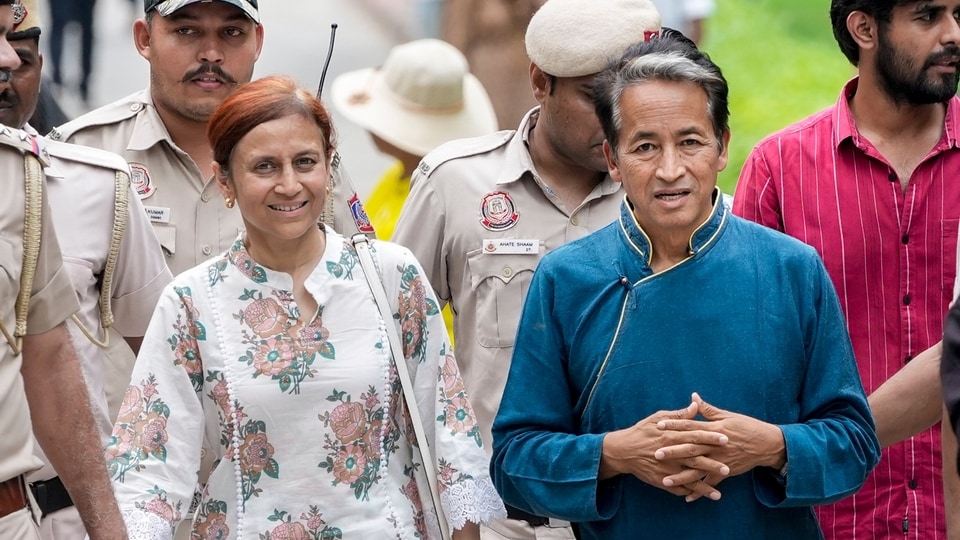
Wangchuk, speaking to Prakhar Gupta on the PGX podcast, said CJP's leadership was deeply demoralised after the action and had asked him to help craft a message encouraging protesters to leave Jantar Mantar and return home.
“Now everyone has gone, our stage has also been broken, now there is no hope,” Wangchuk recalled the CJP leadership telling him after the July 20 action.
According to Wangchuk, the organisers wanted him to post a message telling protesters that they were tired and should take a break.
“They wanted me to post something saying that you need a good rest now, go sleep at home, don't stay at Jantar Mantar, we can see tomorrow what to do,” he said.
Wangchuk said he did write such a message, although it was ultimately not posted.
CJP leadership was ‘very disappointed’, says Wangchuk
The July 20 crackdown came after a large mobilisation around the protest. Wangchuk said the immediate aftermath left the CJP leadership believing that the movement had effectively collapsed.
“Everyone thought that whatever one or two lakh people had come, they had all left that night, so everything was over,” he said.
He said the organisers were in a situation where they believed the protest might never resume.
“Now if it starts again sometime, then it starts; otherwise not,” Wangchuk recalled.
However, according to Wangchuk, the situation changed the following day as young protesters began returning to Jantar Mantar.
He said the return of the protesters restored the confidence of the CJP leadership, which had been shaken after the crackdown.
‘The youth did something remarkable’: Wangchuk
Wangchuk credited the young protesters for returning despite having faced police action.
“The youth did something remarkable,” he said, praising those who returned after being subjected to lathi-charge.
He said the CJP leadership's morale tended to rise and fall depending on the number of people present at the protest.
“The leadership looks at people's faces and their morale sometimes goes up and sometimes goes down,” Wangchuk said.
“When they left, it had gone down. When the youth came back the next day, their morale went up.”
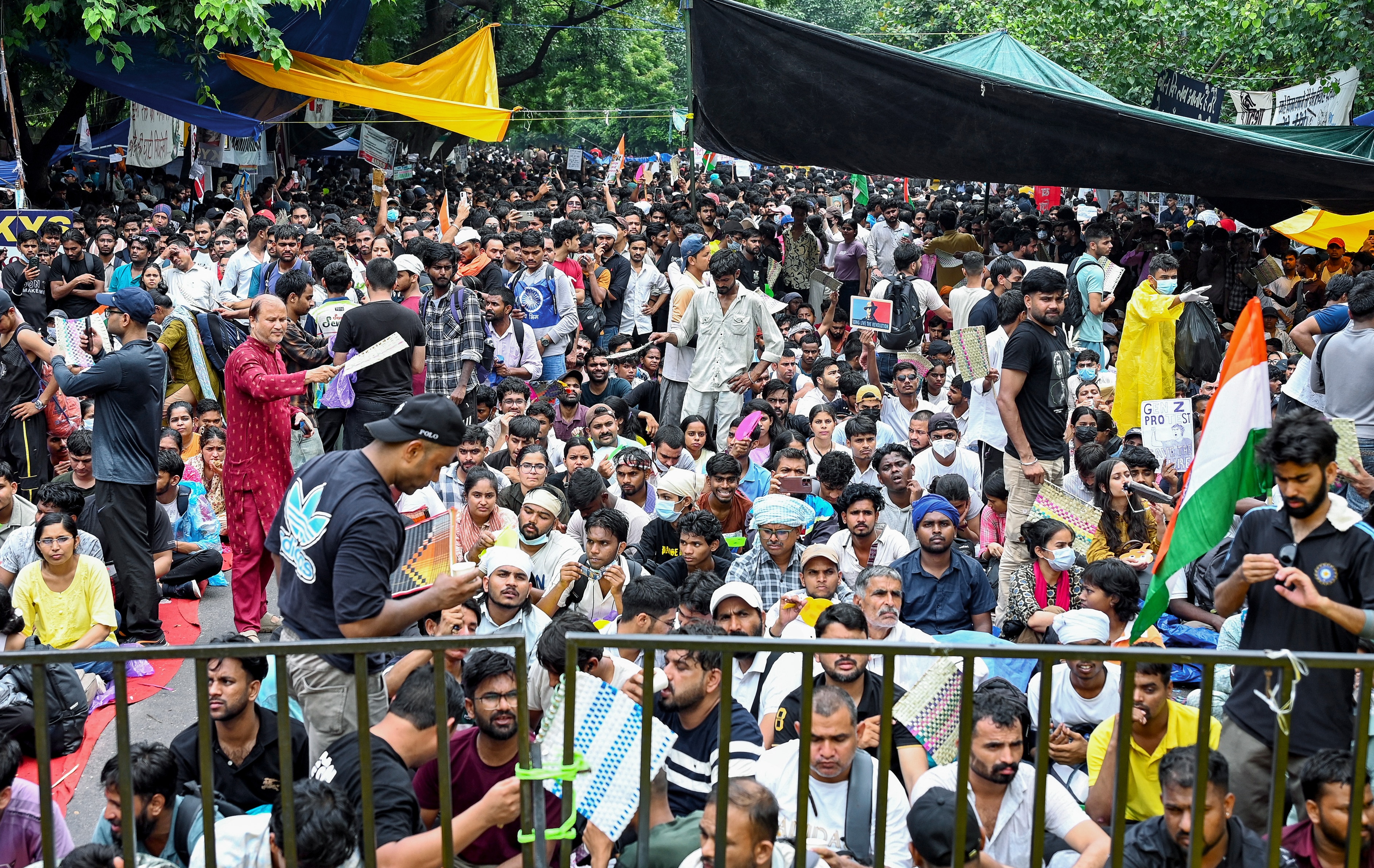
Wangchuk said the young protesters who returned after the crackdown ultimately gave the organisers the confidence to continue.
“I would give credit to those youth who came back after everything had been broken, even after being hit with lathis, because they boosted their morale too,” he said.
CJP had been considering an exit before government talks
Wangchuk's account also provides an insight into the uncertainty within the protest camp before the government opened negotiations.
He said the organisers had been considering different ways of bringing the agitation to an end, including seeking Opposition support for breaking his hunger strike.
Wangchuk said their initial plan had been to approach Congress leader Rahul Gandhi and ask him to break the fast in Parliament. However, he said attempts to contact Gandhi's side did not produce a positive response.
The government subsequently opened communication with Wangchuk through Intelligence Bureau officials. On the night of July 21, Union ministers JP Nadda and Jitendra Singh met him at the hospital and urged him to end his hunger strike.
Wangchuk said he initially put forward demands including accountability through resignation, compensation and a parliamentary discussion on finding long-term solutions.
He later made protection of the protesting students from FIRs and legal harassment his key non-negotiable demand.
CJP continued after Wangchuk broke his fast
Despite the uncertainty immediately after the July 20 crackdown, Wangchuk said the decision by CJP leaders to continue the agitation after his hunger strike was eventually a good one.
He said he was not aware while being treated at the hospital that crowds were returning to Jantar Mantar.
Wangchuk said that once the protesters returned in large numbers, CJP's core group regained confidence and decided to continue the movement.
After his fast was broken, the group continued to demand the resignation of education minister Dharmendra Pradhan.
Wangchuk said he supported that decision because, even if the resignation did not lead to an immediate improvement in education, it represented accountability for what had happened.
He described the outcome as a limited success: there was accountability and some government responsiveness, but he did not see evidence of a major transformation in the education system.