
 E-Paper



Explainer: Anti-conversion laws
At least ten states have laws against forcible conversion, but the apex court is yet to come out with a definitive legal interpretation of the term “propagate”

 Prefer HTon Google


“India is a melting pot of civilisations, cultures, religions, and languages”: this proposition of the Supreme Court is unfailingly underlined whenever the long-standing debate over the fundamental right to “propagate” one’s religious faith presents itself.
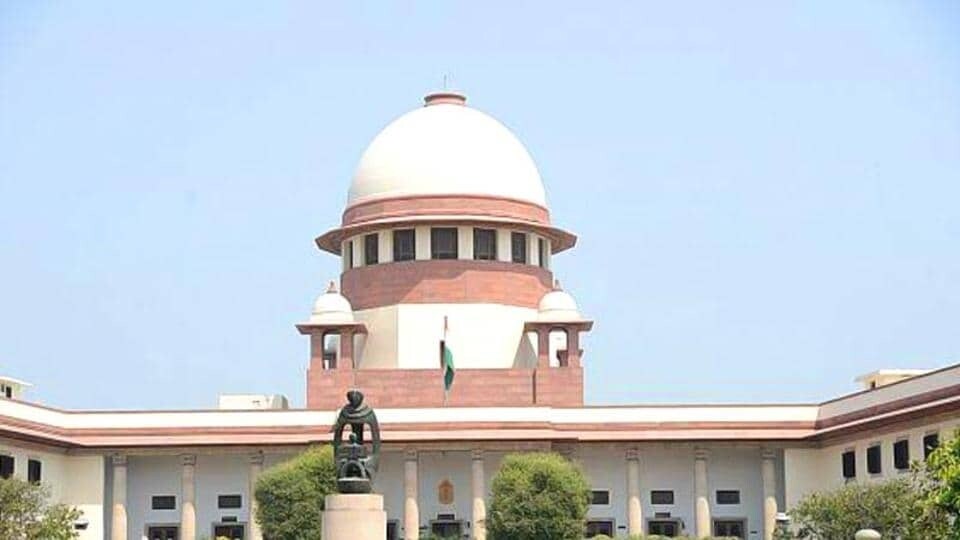
Even as the legislative history and judicial precedents have remained wary of the tipping point when the fundamental right to propagate religion transforms into “illegal conversion”, the Preamble of the Indian Constitution highlighting the “secular” nature of our democratic republic and the fundamental rights guaranteeing freedom of conscience and choice have anchored the Supreme Court in striking a balance.
While adjudicating a petition filed by advocate Ashwini Kumar Upadhyay demanding a Central law against forced conversions in the wake of alleged mass conversions of socially and economically underprivileged people across the country, the apex court in January registered suo motu (on its own motion) proceedings into the matter, seeking attorney general’s assistance.
In these proceedings, the Tami Nadu government recently filed an affidavit maintaining there is nothing illegal about missionaries spreading Christianity unless they employ unlawful means to do so. The Dravida Munnetra Kazhagam (DMK)- led government added that the Constitution of India gives people a right to “spread their religion peacefully” and “change their beliefs”.
The proceedings before the top court in this case have cast a spotlight on the right to “propagate” religion which is tricky not just for its social ramifications but also for the constitutional and legal interpretations it involves.
The Indian Constitution on freedom of religion
The word “propagate” was contentious even when the constituent assembly debated the fundamental right to practise and propagate religion on the morning of December 6, 1948. At that time, it was Article 19 of the draft Constitution. Several members moved amendments to remove the word “propagate” ore revise this clause.
Tajamul Hussain, a Muslim representative, suggested replacing the words “practise and propagate religion” by “practise religion privately.” “Why should you interfere with my religion,” he asked, “and why should I interfere with your religion?” Lokanath Misra called the religious freedom clause “a charter for Hindu enslavement”, which he claimed, would pave the way for the “complete annihilation of Hindu culture, the Hindu way of life and manners.” Assamese delegate Rohini Kumar Chaudhari complained “there is no provision in this Constitution to prevent the so-called propagandist of his religion from throwing mud at some other religion.” KT Shah advocated for prohibition against propagation of religion in educational institutions, asylums and hospitals, institutions for the elderly, etc.
But Pandit Lakshmi Kanta Maitra favoured the provision, arguing that the fundamental right to propagate may probably work to remove the misconceptions in the minds of the people about other co-existing religions in this land of different faiths. HV Kamath, on his part, emphasised that even as no particular religion should receive state patronage, “…we must be very careful to see that in this land of ours, we do not deny anybody the right not only to profess or practise but also to propagate any particular religion.”
As the chair of the Drafting Committee, BR Ambedkar was called upon to make final comments on the amendments proposed in the impugned constitutional provision. Ambedkar rejected the modifications sought against the right to propagate religion and thus, the original provision, as mentioned under draft Article 19, was incorporated into Article 25 of the Constitution.
Article 25 maintains that all persons are equally entitled to freedom of conscience and the right freely to profess, practise and propagate religion, subject to public order, morality and health. Apart from the caveats mentioned above, the provision adds that the state shall still be entitled to regulate or restrict any economic, financial, political or other secular activity which may be associated with religious practice.
Similarly, Article 26 entitles every religious denomination to manage its own affairs in matters of religion, but this right is also subject to public order, morality and health. Articles 27 to 30 also guarantee freedom to manage religious affairs, monetarily contribute to promotion of any religion, and to set up and administer educational institutions.
From early decisions, the Supreme Court has protected the rights under Articles 25 and 26, stressing how the right to choose religion is a natural right of choice.
In Ratilal Panachand Gandhi Vs The State of Bombay and others, 1954, the Supreme Court held that every person has a fundamental right under our Constitution not merely to entertain such religious belief as may be approved of by his judgment or conscience but to exhibit his belief and ideas in such overt acts as are enjoined or sanctioned by his religion and further to propagate his religious views for edification of others.
“With man’s relations to his Maker and the obligations he may think they impose, and the manner in which an expression shall be made by him of his belief on those subjects, no interference can be permitted, provided always the laws of society, designed to secure its peace and prosperity, and the morals of its people, are not interfered with,” emphasised the top court in SP Mittal Vs Union of India, 1983.
In Punjabrao Vs DP Meshram (1965), the Supreme Court interpreted what professing a religion means. “A declaration of one's belief must necessarily mean a declaration in such a way that it would be known to those whom it may interest,” held the court.
The legal position, the Supreme Court held in Masud Alam Vs Commissioner of Police (1956), is thus clear that while the state must protect religious faith and belief, if religious practices run counter to public order, morality or health, then they must give way before the good of the people of the state as a whole.
History of anti-conversion law in India
India has a long history of anti-conversion laws which date back to the pre-Independence era. While the British did not enact any law, many princely states did so to restrict the missionary activity. Some of the examples of such legislations are: Raigarh State Conversion Act, 1936, Patna Freedom of Religion Act, 1942, Sarguja State Apostasy Act, 1945, Udaipur State Anti-Conversion Act, 1946. Further, specific laws against conversion to Christianity were enacted in Bikaner, Jodhpur, Kalahandi and Kota.
After Independence, in 1954, Parliament took up for consideration the Indian Conversion (Regulation and Registration) Bill. Six years later, another law, the Backward Communities (Religious Protection) Bill, 1960, was proposed to stop conversion. Both bills failed in the Parliament for want of support. The last attempt made at a Central legislation was in 1978 when an All India Freedom of Religion Bill was introduced in Lok Sabha by Morarji Desai’s Janata Party government. However, it was never discussed, and was dropped after the government fell in July 1979.
Orissa, Madhya Pradesh and Arunachal Pradesh passed anti-conversion laws in 1967, 1968 and 1978 respectively.
States with anti-conversion laws
At present, there are at least 10 states in the country where similar legislations on unlawful conversions are in force. States of Odisha (1967 Act), Madhya Pradesh (1968 Act), Arunachal Pradesh (1978 Act), Gujarat (2003 Act, amended in 2021), Himachal Pradesh (2006 Act, re-enacted in 2019), Chhattisgarh (1968 Act, amended in 2006), Jharkhand (2017), Uttarakhand (2018) and Uttar Pradesh (2020) have specific legislation against unlawful conversion, which provide for penal consequences in case of conviction.
Rajasthan had also promulgated an anti-conversion law in 2006 but it has not come into force till date for want of assent of the Governor. However, a set of guidelines issued by the high court in December 2017 allows scrutiny and prior approval by the state machinery into interfaith marriages. The high court said that till the time the state government came up with a law, the court had a duty to issue some guidelines to “check the problem of forcible conversion of religion for the purpose of solemnising marriage only”.
Two years ago, Uttar Pradesh joined the league of states having such laws. The UP government passed the law, famously known as the ‘love-jihad’ law in February this year, following enacting the ordinance on the same subject in November 2020. The law prescribes a jail term up to 10 years and fine up to ₹50,000 for conversion under marriage, fraud, coercion or enticement.
Karnataka too, framed a law of its own last year, incorporating some of the harshest provisions in terms of jail term. While most states have not provided for a minimum jail term, the Karnataka anti-conversion law prescribed a minimum punishment of three years behind bars upon conviction. While the minimum punishment in UP is one year, in Karnataka, it is three years.
Legal challenges to anti-conversion laws
In Punjabrao Vs DP Meshram, 1965, the Supreme Court interpreted what professing a religion means as it explained that if a public declaration is made by a person that he has ceased to belong to his old religion and has accepted another religion, he will be taken as professing the other religion.
The first major case in which the Supreme Court ruled on the freedom of religion and on conversions related to petitions challenging the conversion laws of Orissa and MP in 1967-68. In 1977, a constitution bench in Rev Stainislaus Vs State of Madhya Pradesh upheld the validity of the laws, saying freedom to propagate one’s religion, as stipulated under Article 25 (1), did not grant a fundamental right to convert another person. The bench ruled that a purposive conversion would impinge on the “freedom of conscience” guaranteed to all citizens. The court dissected Article 25 to hold that “the Article does not grant the right to convert other persons to one’s own religion but to transmit or spread one’s religion by an exposition of its tenets.” “What is freedom for one is freedom for the other in equal measure and there can, therefore, be no such thing as a fundamental right to convert any person to one’s own religion,” it said.
In the Sarla Mudgal case (1995), the Supreme Court held that conversion to Islam was not valid if done only in order to be able to practise polygamy. It was held to be an act of bigamy prohibited under Section 17 of Hindu Marriage Act, 1955, and punishable under Section 494 of the Indian Penal Code. The second marriage would be void, the SC said.
This position was reaffirmed by the apex court’s judgment in the Lilly Thomas case in 2000, which clarified that prosecution for bigamy was not a violation of the freedom of religion under Article 25. “A person who mockingly adopts another religion where plurality of marriage is permitted so as to renounce the previous marriage and desert the wife, he cannot be permitted to take advantage of his exploitation as religion is not a commodity to be exploited,” said this judgment.
In M Chandra Vs M Thangamuthu & Another, 2010, the Supreme Court laid down the following test to prove conversion: “It is a settled principle of law that to prove a conversion from one religion to another, two elements need to be satisfied. First, there has to be a conversion and second, acceptance into the community to which the person converted. It is obvious that the need for conversion cannot be all together done away with.”
In its 2011 judgment on the murders of Graham Staines - an Australian missionary who worked with the tribal people in Orissa, and his two sons – the apex court said: “It is undisputed that there is no justification for interfering in someone’s belief by way of use of force, provocation, conversion, incitement or upon a flawed premise that one religion is better than the other.”
Two recent Supreme Court judgments, particularly the nine-judge bench ruling in the right to privacy case, could be a turning point in the entire discourse.
In the 2017 right to privacy judgment, the nine-judge bench held: “The constitutional right to the freedom of religion under Article 25, thus has implicit within it the ability to choose a faith and the freedom to express or not express those choices to the world.”
“Choosing a faith is the substratum of individuality and sans it, the right of choice becomes a shadow,” the Supreme Court said in a 2018 judgment in a case where a Hindu adult woman accepted Islam after she married a Muslim man.
Ever since the Stainislaus (1977) judgement that has occupied the field so far, the nine-judge bench ruling of 2017 in the right to privacy case could be the most pertinent development which lays down a set of modern judicial standards. These standards underscore apart from the requirement of a legislation to achieve a legitimate State aim and a rational nexus between the objects and the means adopted to achieve them, the extent of State’s interference must be proportionate to its need (proportionality test).
While the Supreme Court is yet to come out with a definitive ruling on a legal interpretation of the term “propagate”, more than a dozen petitions pending before it on various aspects of religious conversion and challenging the laws framed by different states make it pressing for the highest court of the land to lay down a precedent capable guiding the courts, the executive as well as citizens of the country.



