
 E-Paper



For Qureshi’s China visit, Imran Khan scripted a 3-point proposal for Prez Xi
Shah Mahmood Qureshi and Chinese foreign minister Wang Yi are expected to hold a one-on-one meeting as well as delegation-level discussions as part of the second round of China-Pakistan foreign ministers’ strategic dialogue.

 Prefer HTon Google


Pakistan foreign minister Makhdoom Shah Mahmood Qureshi landed in the island province of Hainan late on Thursday to begin a “very important” visit that is designed to deepen the strategic partnership between the two countries that often call themselves ‘iron brothers’. Qureshi and Chinese foreign minister Wang Yi are expected to hold a one-on-one meeting as well as delegation-level discussions as part of the second round of China-Pakistan foreign ministers’ strategic dialogue.
“The visit aims to project Pakistan’s political and military leadership’s vision,” Qureshi said in a video message before boarding the Pakistan Air Force flight to the island in the South China Sea. The province, sometimes marketed to tourists as the ‘Hawaii of China’, is also home to China’s strategic submarine base.
Qureshi, who has been in news for the past fortnight over his broadside at Saudi Arabia that led Prime Minister Imran Khan to depute Army chief Gen Qamar Javed Bajwa to firefight in Riyadh, added that he had discussed the China visit with PM Khan.
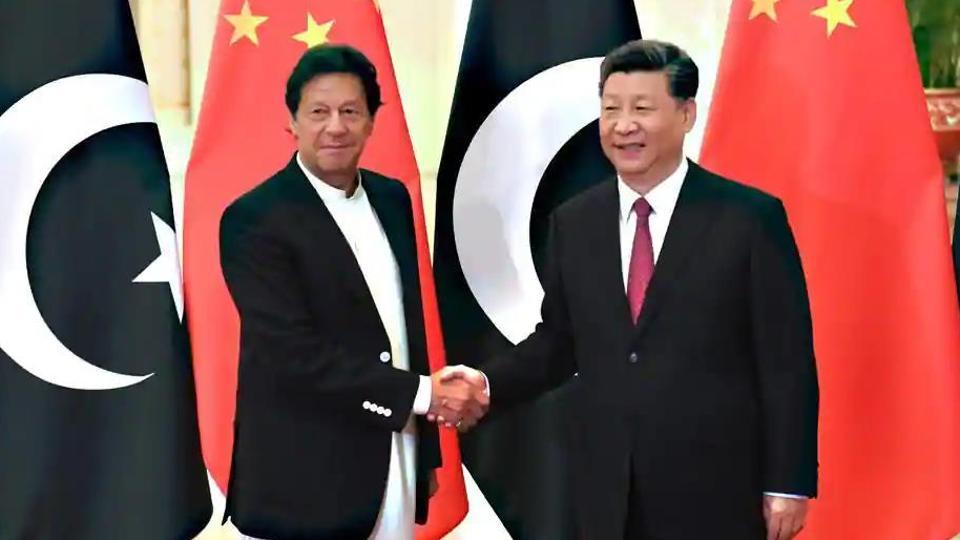
Qureshi and the accompanying team of officials led by foreign secretary Sohail Mahmood are also expected to prepare for President Xi Jinping’s visit to Islamabad. President Xi’s visit, initially expected earlier this year, was deferred due to the Covid-19 pandemic and is expected to take place soon next month.
A Pakistan watcher in New Delhi said Qureshi was travelling with a three-point plan in hand that included scaling up military cooperation between the two countries. The People’s Liberation Army and Pakistan army had, in August last year, signed a pact in Rawalpindi army headquarters for defence cooperation and capacity building of Pakistan Army. Islamabad is keen to upgrade this relationship to provide for what is being broadly referred to, in some quarters, as a joint military commission.
This idea, he said, appeared to be centred around setting up a mechanism to take strategic decisions on a military-to-military level so that the armed forces on the two sides are on the same page.
The Imran Khan government is also looking at discussions to expedite implementation of phase 2 of the China Pakistan Economic Corridor, or CPEC projects.
Qureshi, people familiar with the matter said, wants China to help upgrade the infrastructure in Sindh, Pakistan-occupied Kashmir and the Gilgit-Baltistan region, the last two regions controlled by Pakistan but claimed by India.
The $60 billion infrastructure projects in Pakistan proposed under CPEC are central to China’s wider Belt and Road Initiative to develop land and sea trade routes in Asia and beyond. Just two weeks back, Pakistan’s top economic body National Economic Council cleared a $6.8 billion project - its costliest CPEC project till date.- to upgrade its railway lines for the Islamabad-Beijing link. The CPEC seeks to connect Gwadar Port in Pakistan’s Balochistan with China’s Xinjiang province.
Qureshi is also expected to seek some sort of transport corridor between Nepal and Pakistan for trade with Kathmandu. Nepal had last year signed nearly 20 infrastructure-building agreements with China during President Xi’s visit including an upgraded all-weather road connection that includes building tunnels through the Himalayas.
India is expected to figure prominently in the discussions, given that the two ministers are meeting when Beijing and Islamabad’s ties with New Delhi are at an all-time low due to tensions along the Line of Actual Control and the Kashmir issue.
According to information available with New Delhi, China has already assured Islamabad full coordination and support over the Kashmir issue to Islamabad. The Imran Khan government wants Beijing to go one step further and raise the Kashmir issue at the forthcoming UN General Assembly session next month. Last year, Turkish President Recep Tayyip Erdogan and then Malaysian Prime Minister Mahathir Mohamad were the only ones to go this far.


