E-Paper



Four charts which explain the politics and economics of inflation
Understanding the problem of price rise in the country
Published on: Aug 22, 2023, 23:44:54 IST

 Prefer HTon Google
Share via


Copy link

How bad is the inflation problem in the Indian economy? First, RBI’s Monetary Policy Committee (MPC) issued some hawkish rhetoric on the inflation problem. This was followed by a higher than expected 7.44% inflation print in the month of July. We are now witnessing aggressive government intervention in food markets. An HT analysis shows that while the Indian economy is far from overheating, food price pressures are likely to keep the government on its toes as the 2024 elections come closer. Here are four charts which explain this in detail.

The charts that matter
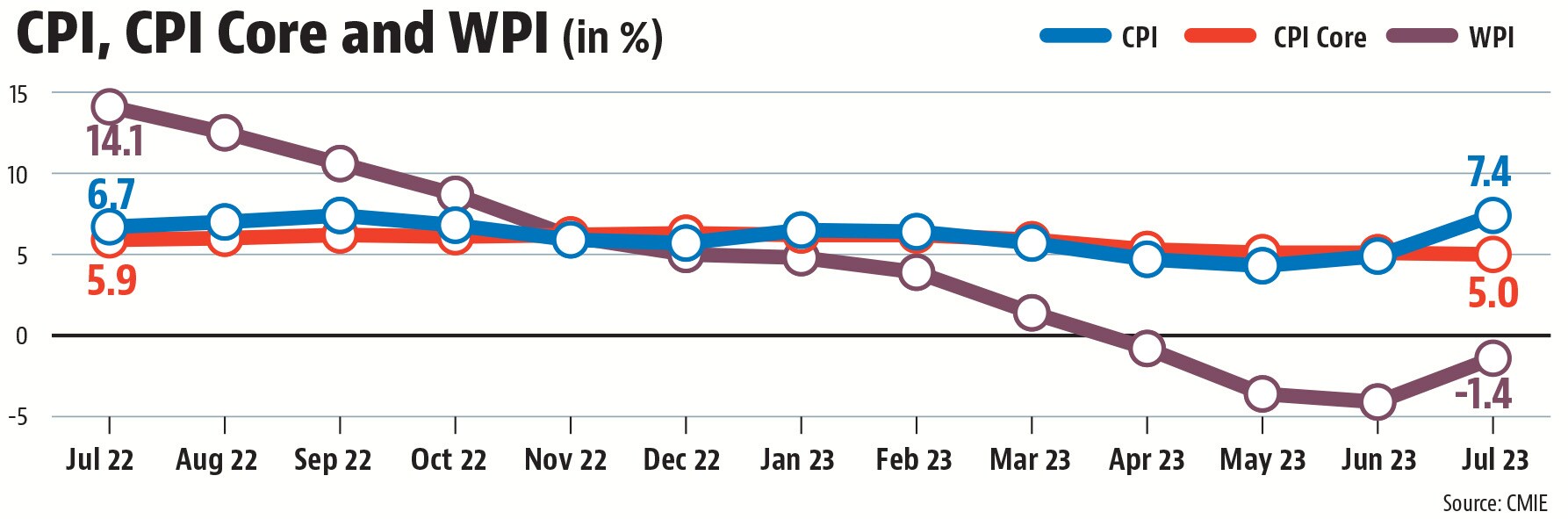
 Headline CPI spike in July is not seen in core inflation or wholesale pricesWhile the headline Consumer Price Index (CPI) jumped from 4.87% to 7.44% between June and July, there is good reason to argue that this is not representative of all prices in the economy. Core CPI inflation – it excludes the food and fuel component of the CPI basket – actually fell between June and July and the number came below 5% for the first time since May 2020. Wholesale Price Index (WPI) – it measures producer prices in the economy – was in contraction zone for the fourth consecutive month in July.
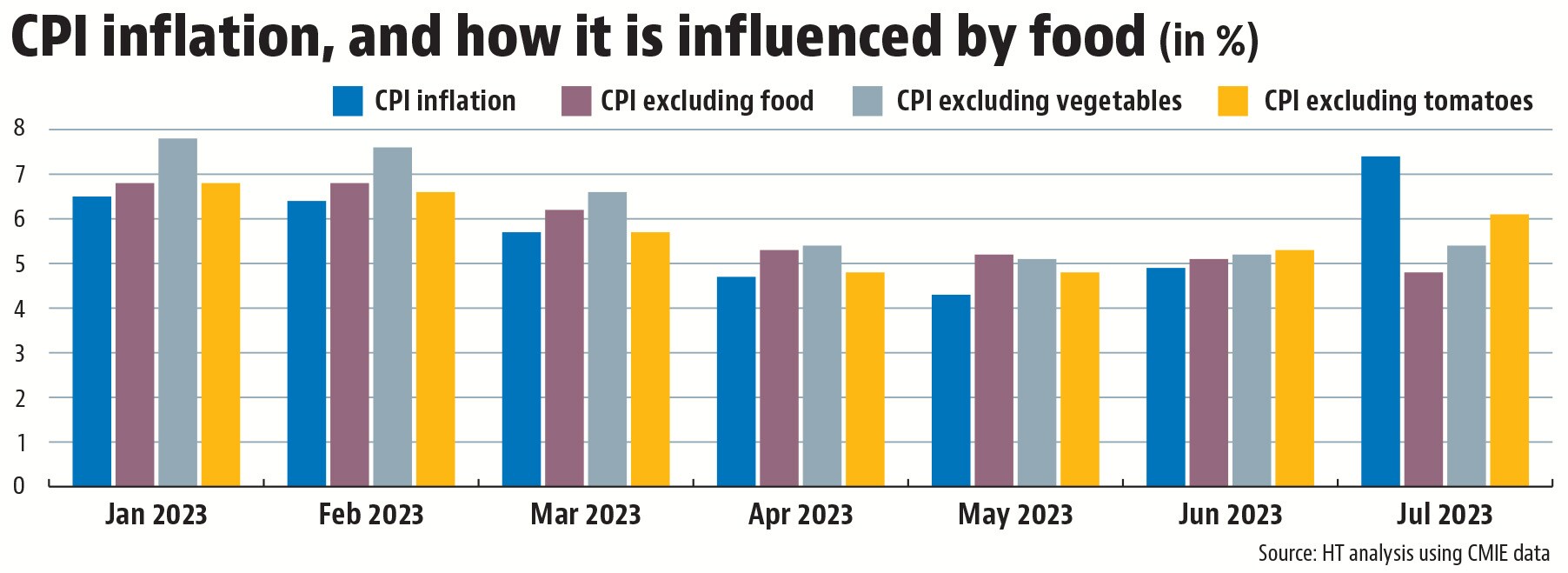
- Food prices are the biggest reason for rise in the July CPI printIf one were to take out just tomatoes from the CPI basket, the July CPI print would have been 6.1% instead of 7.4%. Taking out vegetables as a whole would bring the July inflation print to 5.4% and taking the entire food basket would give us a retail inflation print of just 4.8% . With tomato inflation giving way to onion inflation and cereal prices continuing to remain firm, food driven tailwinds to headline inflation are likely to continue. This is exactly why the government has become so proactive in the food markets. After all, there is very little RBI can do to control food prices. To be sure, the government’s hyperactive approach also has a political imperative.
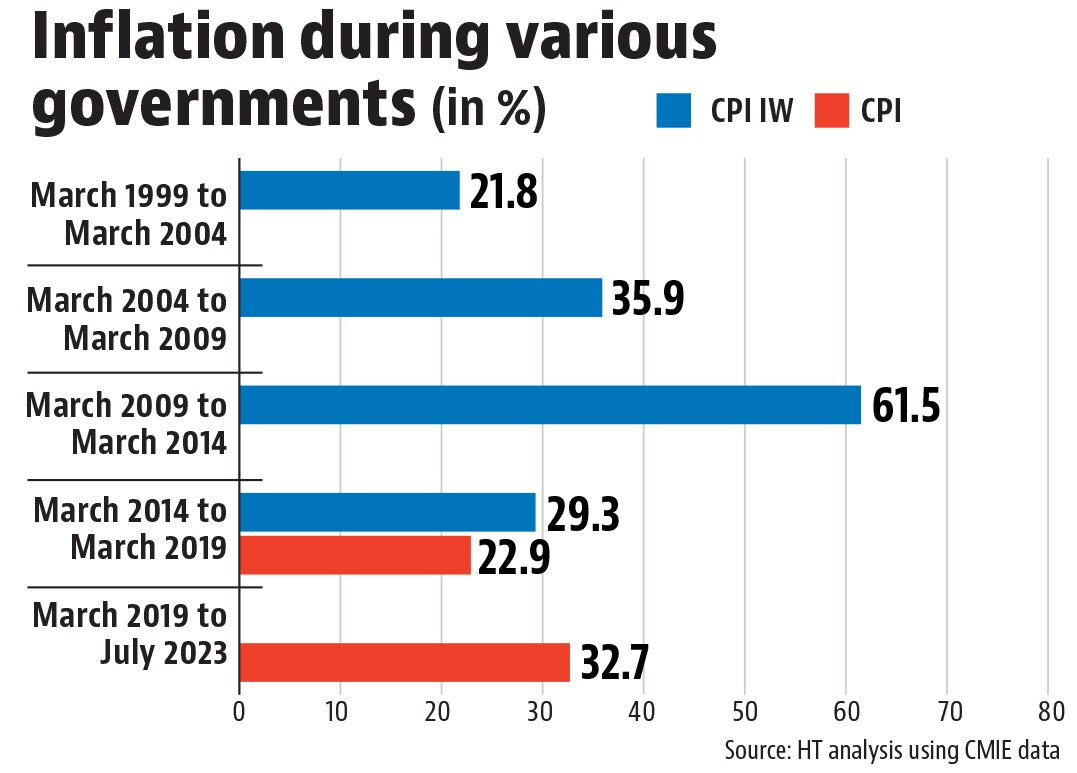
- It is almost a given the government will enter 2024 elections with higher inflation than 2019Given the fact that an overwhelming share of India’s workers are employed in the informal sector, there is some merit to the claim that inflation matters more than growth as far as politics is concerned. It is on this front that the BJP had it really good in the 2019 general elections. A simple comparison of inflation numbers makes this clear. The current CPI series has monthly inflation numbers from January 2011 onwards. Between January 2011 and March 2014, the headline CPI index increased by 27.6%. This number was just 22.9% between March 2014 and March 2019, which broadly captures the first term of the Narendra Modi government. Simply speaking, the country saw less inflation during first five years of the Narendra Modi government than what it saw in just three years of the second United progressive Alliance (UPA) government. With the headline CPI index at 186.3 in July 2023, inflation has already increased by 32.7% between March 2019 and July 2023, which makes it clear that the government will go to the 2024 elections with a higher inflation than what it faced in 2019.
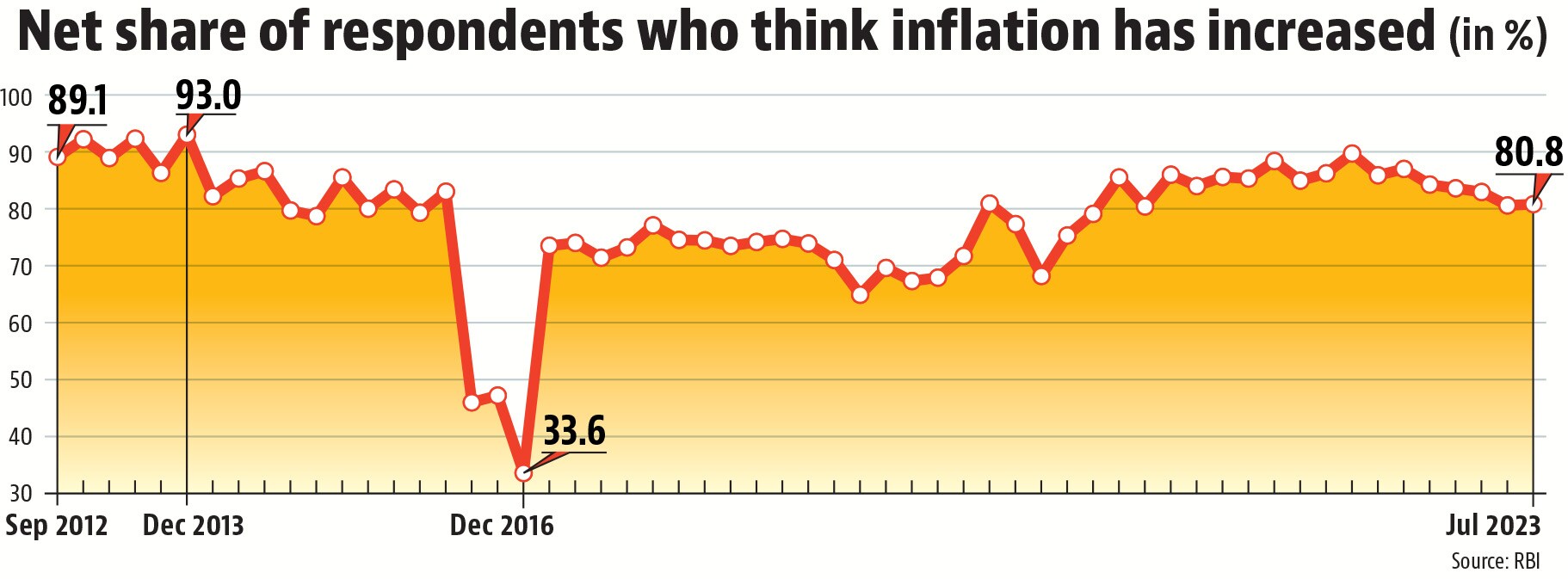
- And this is beginning to show in consumer perception on inflationFirst, the facts. At no point of time in the current CPI series, has inflation been as high as it was during the second half of the UPA II government. In the 27 months between January 2012 (the earliest month for which we have CPI data in the current series) and March 2014, headline inflation print was 9% or higher in 22 months and in double digits for 10 months. In 24 out of these 27 months, headline CPI was greater than 7.79%, the highest this number has been under the Narendra Modi government. However, the recent surge in inflation has made consumer perception on inflation much worse for the government than what it was during the 2019 elections. This is evident in the Consumer Confidence Survey (CCS) conducted by RBI. Net share of respondents who believed that inflation has increased was 80.8% in the July 2023 CCS round. This number was just 64.9% in March 2019. Clearly, it makes eminent political sense for the government to bring down this number as much as possible before the 2024 elections.