E-Paper



Freed of murder charge after 13 years, MP couple looks to pick up pieces
“When other kids were making childhood memories, my children were arranging for food to eat,” Sahodra told HT.

 Prefer HTon Google


For 13 years, 61-year-old Raju Yadav and his 58-year-old wife Sahodra Bai lived with the taint of murdering a family member, in and out of jail, serving a term of life imprisonment. But when the couple walked out of Sagar central jail on August 19 after being acquitted by the Supreme Court, the regret was less for themselves and more for their three children.
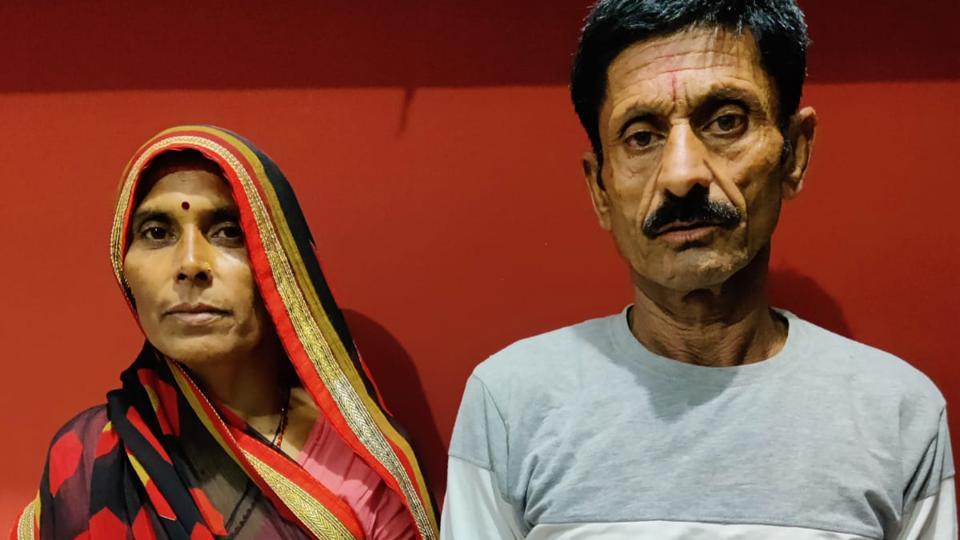
“When other kids were making childhood memories, my children were arranging for food to eat,” Sahodra told HT.
At 10:30 pm on May 13, 2008, Moti Nagar police station in Sagar received a call that a man named Pappu was attacked in his home at Subedar Ward. Sahodra, the victim’s sister-in-law, rushed him to a hospital where he succumbed to injuries. In the immediate aftermath, Sohadra and Raju filed a complaint against two persons.
However, in the next few days, the two accused were turned into prime witnesses while Raju, Sohadra and Raju’s brother, Madhav, were arrested and jailed for Pappu’s death. The police argued that Raju and Pappu fought over ₹250 rupees, which the latter allegedly owed to the former. In a fit of rage, the couple stabbed Pappu.
Booked under section 302 (murder) of the Indian Penal Code, they were convicted by a sessions court in 2009. While Sohadra received bail in 2015, Raju continued in jail for the entire period. In October 2018, the couple was found guilty by the high court.
For Raju, May 13 is a day that he can never forget. “I still remember that black day. My brother Pappu Yadav was attacked with knives and lathis by two persons and my wife Sahodra took him to the district hospital in an auto. When he died, we registered a complaint against them. But after three days, we were asked to come to the police station. We thought that they wanted to register our statement but we were shocked to see that the police had made us the accused,” he said.
With the duo in jail, the couple’s three children -- aged 15, 12 and 7 years old -- were left to fend for themselves.
“Who will return these 13 years of our lives? My children suffered a great deal. They spent many nights without food. Their enrollments at school were cancelled and for one year, they dropped out because they did not have the money to deposit the fee. They had to cope with the blot of having parents who were killers? Who will compensate for this?,” Sahodra said.
To meet ends, the eldest daughter found herself a job in a mobile phone shop and the 12-year-old at a jewellery shop while the 7-year-old cooked and did the household chores.
Sahodra said, “More than us in jail, my children bore the brunt. When they should have been creating childhood memories, my kids were making arrangements for food.”
Prior to the incident, Raju would work as the caretaker of a horse in a stable in Sagar, earning between ₹5,000 to ₹6,000 per month. The family lived in a two-room rented house.
“They were good in studies and we wanted to see them as officers but we didn’t know that something like this would change our lives,” Sahodra said.
Sahodra’s eldest daughter, now 28, is currently pursuing MBA from a private college in Sagar and works for a private company. “I didn’t know how to talk to advocates, what the police were or what a case even was, but had to pick up all of this once my parents were sent to jail. We were vilified by people in our locality for being the children of murderers. Our house had broken doors, and every night, with no adults in the house, we slept afraid wondering if we would be attacked. When people saw my brothers, they taunted them saying they would kill each other too, but we learnt not to respond. I had faith in the judiciary,” the daughter said, wishing not to be named.
In its judgement on August 18, the Supreme Court bench comprising justice Indira Banerjee and justice V Ramasubramanian said the police had worked on “extraneous considerations” and the investigation was designed to turn the informants into the accused. “We are clearly of the view that the investigation in this case was carried out by police not with the intention of unearthing the truth, but for burying the same fathom deep, for extraneous considerations and that it was designed to turn the informant and her family members as the accused and allow the real culprits named in the FIR to escape,” the judgement read.
Dismissing the police claims in the case, the court said the case was “foisted” against the very informant and their family members “due to political pressure”.
“It is unbelievable that the accused caused the death of Pappu due to the failure of the victim to return an amount of ₹250 due and payable to one of the main suspects. It is equally unbelievable that one of the persons who killed the victim, in the presence of witnesses, took the body of the victim to the hospital in an autorickshaw. The normal human behaviour in such circumstances will be either to flee the place of occurrence or to go to the police station to surrender, except in cases where they are intelligent and seasoned criminals. Neither did happen,” the judgment said.
“In court, we argued that the conviction was based entirely upon surmises and that such a conviction is wholly unsustainable in law. A close scrutiny of the sequence of events that happened from the date of occurrence of the crime, namely showed that the investigation in this case, instead of proceeding in pursuit of truth, had proceeded towards burying the truth,” the couple’s counsel Ardhendumauli Kumar Prasad said.
On the couple’s acquittal, superintendent of police, Sagar, and retired IPS officer Hari Singh Yadav said, “It was not a high profile case so I don’t remember anything.”
The current superintendent of police, Atul Singh, said, “We have not received any instruction from the court yet. If the court instructs us to probe the matter, we will act accordingly.”