
 E-Paper



From rebel to administrator: Why Anit Thapa’s 2026 campaign is a referendum on Gorkhaland’s new path
Anit Thapa, the BGPM leader and GTA Chief Executive, is vying for the Kurseong constituency in the 2026 elections.

 Prefer HTon Google


Bharatiya Gorkha Prajatantrik Morcha (BGPM) President and the current Chief Executive of the Gorkhaland Territorial Administration (GTA), Anit Thapa, is contesting the 2026 West Bengal Assembly elections from the Kurseong constituency. As the central political authority in the Darjeeling Hills, Thapa has overseen a significant shift in regional politics, moving the needle from years of unrest toward a model of stable administration and localized development.
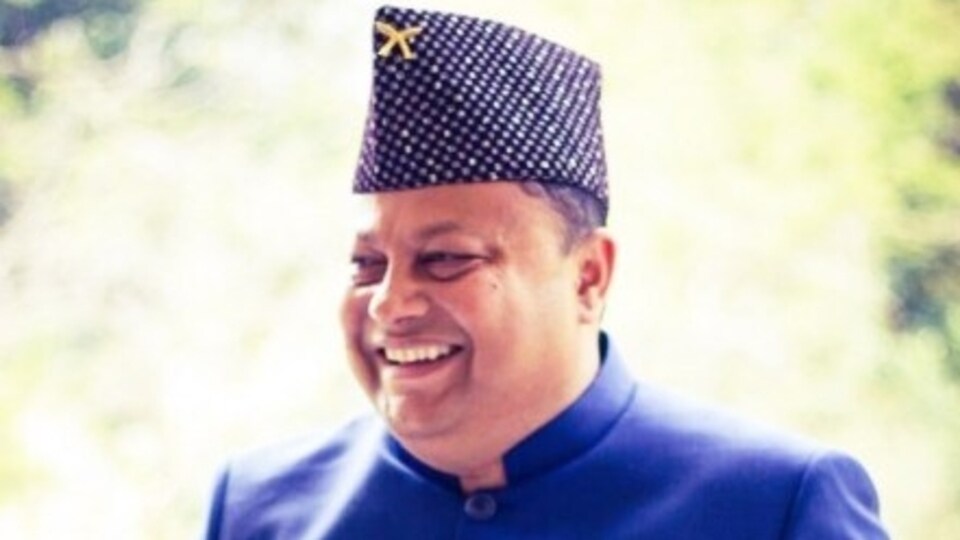
Thapa’s political journey reached a turning point in September 2021 when he founded the BGPM. Since leading the party to a decisive victory in the GTA elections, he has positioned himself as a pragmatic leader capable of maintaining peace while negotiating with the state government. On the campaign trail in 2026, Thapa has framed the election as a choice between "the politics of slogans" and "the politics of delivery," urging voters to maintain the current stability to protect the Hills' fragile economy.
Early Life
Born in Mungpoo, Darjeeling district, Anit Thapa was educated in Kurseong and Darjeeling, making him a true "son of the soil" in the eyes of his constituents. He began his political career in 2007 with the Gorkha Janmukti Morcha (GJM) and was elected uncontested to the GTA in 2013. However, during the violent 2017 Gorkhaland agitation, he famously broke ranks with the older leadership’s confrontational approach. Along with Binoy Tamang, he worked to reshape the regional narrative, eventually launching the BGPM to focus on administrative reforms and the revival of grassroots democracy.
About Kurseong Constituency
The Kurseong constituency, often called the 'Land of White Orchids,' is a vital segment that includes both urban hubs and sprawling tea estates. In his 2026 affidavit, Thapa declared total assets worth approximately ₹3.12 Crore, including residential properties in Kurseong and agricultural land.
For the 2026 polls, Thapa faces a challenge from a divided opposition. His campaign has centered on his record of restoring grassroots democracy, specifically highlighting the successful conduct of Panchayat elections after a 23-year gap, where the BGPM won a majority in most Gram Sabhas. If elected, he has promised to legalize land rights (Parcha-Patta) for tea garden workers and expand the powers of the regional staff selection commission to ensure transparent, localized recruitment for hill youth.
What Happened in the Previous Elections?
While the BJP won the Kurseong seat in the 2021 Assembly elections, the political landscape has since shifted entirely in favor of Thapa’s BGPM. In the 2022 GTA elections, his party won 27 out of 45 seats, effectively becoming the dominant political force in the region.
Prior to the 2026 cycle, Thapa consolidated control over municipal bodies and local governance institutions. His 2026 campaign marks his first major attempt to translate his administrative control of the GTA into a direct legislative presence in the West Bengal Assembly. Polling in the Hills took place during the early phases of the 2026 elections, with Thapa banking on his image as a "stable administrator" to secure a historic win for his fledgling party.
(With inputs from local bureaus and ECI affidavits)


