
 E-Paper



G20 Sherpas’ meet: India calls for joint solutions to global hurdles
G20 Sherpas, or representatives of heads of state, and government and officials of multilateral institutions such as the UN began deliberations to shape the agenda for India’s G20 presidency.


India on Monday proposed dovetailing implementation of the sustainable development goals (SDGs) with green transition under the G20 even as the country’s G20 Sherpa Amitabh Kant emphasised that the focus should be on developing countries as their needs are the greatest.
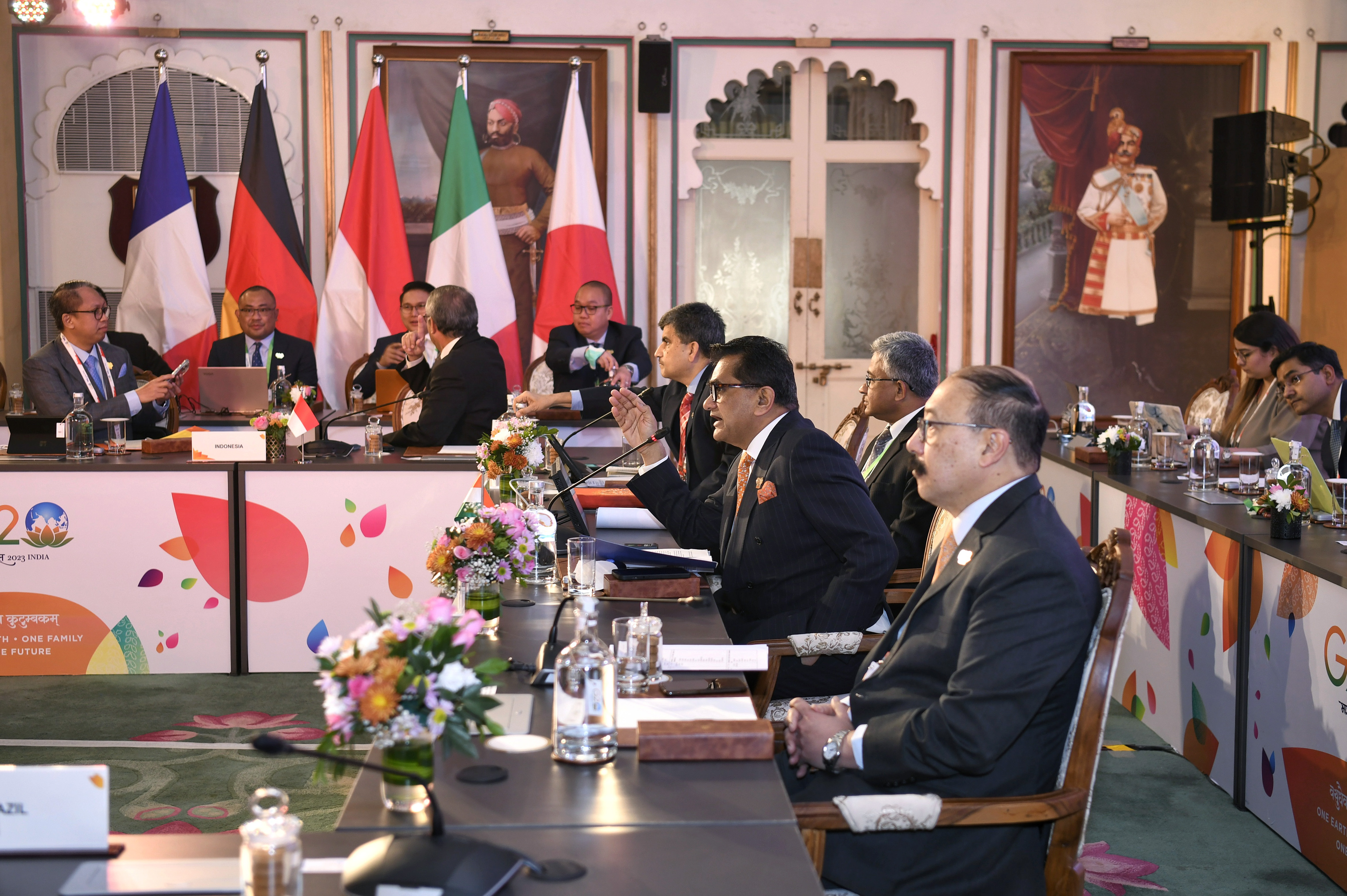
G20 Sherpas, or personal representatives of heads of state, and government and top officials of multilateral institutions such as the United Nations and World Bank began deliberations to shape the agenda for India’s G20 presidency, with the Indian side steering discussions towards finding collective solutions to key global challenges, including food and energy security.
In a speech outlining India’s priorities, Kant said the country’s G20 presidency will advocate oneness in line with the theme of “One Earth One Family One Future”, and reflect the aspirations of both G20 partners and the “Global South, whose voice is often unheard”.
“The challenges that we face today can be solved only by working together through hope, harmony and healing and our first concern should be towards those whose need is greatest,” he added. “Therefore, we need to focus on the Global South as well.”
India has proposed greater cohesiveness between green transition and implementing the SDGs, amid growing concern that some countries are lagging in the achievement of these goals, people familiar with the matter said.
While emphasising the need for greater international cooperation on SDGs, the Indian side pointed out that climate goals cannot be achieved without achieving development goals, they said, seeking anonymity.
“Climate and development are two sides of the same coin, and the G20 is about getting global focus on these issues, though some more push and follow-up is required,” one the people said.
Though the Ukraine crisis came up in Monday’s discussions behind closed doors, it was more in the context of the conflict’s continuing impact on food and energy security, and the issue did not bog down the overall deliberations, the people said. The mood at the discussions was largely constructive, though “implicit tensions” related to the Ukraine war continued to hover over the meetings, a diplomat from a G20 country said on condition of anonymity.
“The mood is upbeat. One has to remember that not too long ago, several of these countries were refusing to sit together. Having these discussions when the world is in turmoil is symbolic and also about building mutual trust,” a second person added.
US Sherpa Mike Pyle, who is also a deputy national security adviser, told reporters that the discussions on Monday were marked by a “spirit of cooperation and ambition” and the constructive spirit witnessed at the G20 Summit in Bali in November was continuing. “Huge credit to the Indonesian Sherpa and President Joko Widodo for having a constructive result in Bali and the same spirit of ambition, pragmatism and engagement is continuing here,” Pyle said.
India’s chief G20 coordinator Harsh Shringla said the Sherpas expressed “strong support” for India’s priorities and felt there was a “pressing need for G20 to act on some of these important priorities”. Climate finance, food security and rising energy prices are issues that the G20 can come together to tackle, he said.
Kant also noted in his opening remarks that the world is facing a “vast number of challenges” and the Sherpas will have to “shape an inclusive future”, for which India is ready to share its experiences in key areas such as the use of digital tools and financial inclusion initiatives.
“Our Prime Minister has said that we would like to be inclusive, ambitious, action-oriented and decisive. We will be, but that is not feasible nor possible without all of you. Therefore, we would like the positive and forward-looking support from all of you to make the G20 a very vibrant, very dynamic and a very positive group to drive global growth, global sustainability and digital transformation,” he said.
The first two sessions on Monday at Taj Fateh Prakash Hotel on the bank of Lake Pichola focused on technological transformation and green development. There was also a presentation on India’s finance track priorities by economic affairs secretary Ajay Seth. On Tuesday, there will be three sessions on accelerated, inclusive and resilient growth, multilateralism and food, fuel and fertilisers, and women-led development, tourism and culture.
The deliberations began as a Group of Seven (G7) price cap on Russian seaborne oil came into force on Monday as part of efforts by Western powers to limit Russia’s ability to finance its war in Ukraine.
The G20 Sherpas will focus on resilient global value chains in the field of trade and investment and accelerating progress in implementing the SDGs. The working group on employment will look at addressing global skill gaps, sustainable financing for social security, and gig and platform economy.
The working group on tourism will focus on green tourism and digitisation for transforming tourism, while the working group on agriculture will look at enhancing food security and a climate smart approach.
The working group on digital economy will look at digital public infrastructure, including India’s experience in creating digital identities, opening bank accounts to lift large segments of the population above the poverty line through direct benefit transfers, and fast payments.
On the health side, the discussions will focus on prevention, health emergencies, digital health for universal access and improved service delivery, and strengthening cooperation for vaccines, therapeutics and diagnostics.


