
 E-Paper



Global terrorist Masood Azhar is finally a wanted man in Pak. Dawood next?
Intel reports indicate Dawood Ibrahim’s daughter Mahrukh and her husband Junaid Miandad, son of ex-Pak cricket team captain Javed Miandad, have acquired a Portuguese passport and could move to Europe.

 Prefer HTon Google


The arrest warrant issued against Maulana Masood Azhar, the chief of the proscribed Jaish-e-Mohammed (JeM), is the first small step against the global terrorist who was claimed by Islamabad to have disappeared. Pakistani diplomats last year told the global anti-terror financing watchdog Financial Action Task Force (FATF) that it hadn’t been able to take action against Masood Azhar because he was missing. Indian officials had then rebutted Pakistan, pointing that he was still holed up in his bomb-proof house behind the terror group’s Bahawalpur headquarters at Markaz-e-Usman-o-Ali, Railway Link Road, in Pakistan.
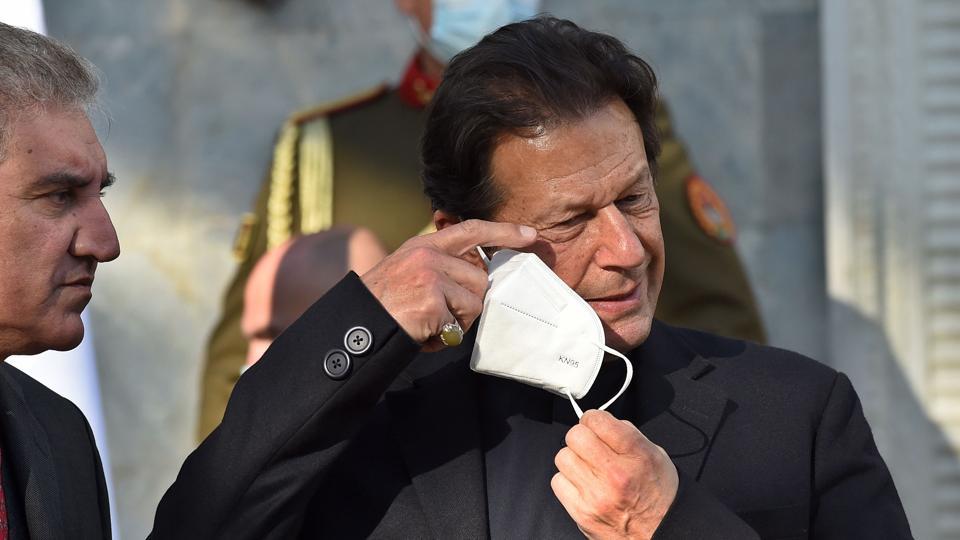
The FATF kept Islamabad in its ‘grey list’ that continued to make it difficult for Prime Minister Imran Khan’s government to get financial aid from international lending agencies such as the IMF. As he faces the most serious challenge from a combined opposition that has been mobilising public opinion against him, Pakistan watchers say that Imran Khan’s best chance to hold power is to get the economy back on rails to ensure that the opposition campaign doesn’t find traction with the people. By most accounts, it isn’t easy.
Indian officials explain Pakistan’s recent steps - a warrant against Azhar who had been shielded for a decade at UN Security Council meetings by Islamabad as well as Beijing and the arrest of Lashkar-e-Taiba’s operations commander Zaki-ur-Rehman Lakhvi - to indicate Islamabad’s desperation to get off the ‘grey list’.
Pakistan watchers believe that Islamabad would use its leverage with the Quetta-based Taliban Shura in Afghanistan to conclude a deal with the incoming Joe Biden administration to seek the US support for Islamabad at the FATF meetings in exchange for its support for the peace talks. Pakistan’s deep state is also expected to use its capacity to calibrate violence in Afghanistan to convince the US administration.
Also Read: ‘Brief the boss’: The backstory of Masood Azhar’s global terror tag
Officials underline that neither of the two of Pakistan’s most prominent faces of terrorism faces charges for terrorism and killing scores of people but for terror financing. Zaki-ur-Rehman Lakhvi was the Lashkar commander who had plotted and supervised the 26/11 Mumbai terror attack.
“But the baby steps are also important for the message they hold,” an Indian counter-terror official said, a reference to the pressure on the Imran Khan government to get off the FATF’s grey list. At the last meeting, the FATF had repeated its warning to his government to take more steps or risk being blacklisted.
The official said it was true that the arrest warrant against Azhar and Lakhvi’s arrest were reversible steps. Lakhvi did spend time behind bars after the 26/11 attacks - he lived in “relative luxury” and fathered a child while in prison on terror charges - but was set free when the global pressure on Islamabad eased.
“But at the same time, these steps also imply progress, however gradual it may be,” the official said.
It is in this context that Indian officials believe that pressure is mounting to take steps against Dawood Ibrahim, once the Mumbai don who crossed the line when he plotted the March 1993 bombings in the city before fleeing the country.
Dawood Ibrahim has been living in Karachi from where he has controlled South Asia’s biggest crime syndicate for most of the last two decades. Islamabad has all along claimed that Dawood Ibrahim was not in Pakistan despite documentary evidence produced by India that places him in Karachi.
Also Read: Why one of India’s most wanted Dawood Ibrahim continues to be a fugitive
Indian officials said action against Dawood Ibrahim would be the acid test for the Imran Khan government’s efforts to project that it was serious on acting against terrorism. Dawood Ibrahim is well-entrenched in Pakistan’s power circuit. In 2005, Dawood - also designated as a global terrorist by the UNSC and US - married off his daughter Mahrukh to Junaid Miandad, son of former Pakistani cricketer Javed Miandad. According to Indian intelligence, Mahrukh and Junaid have secured Portuguese passports that would let them leave the country if things get too hot.
Abu Salem, who was once a close associate of Dawood Ibrahim and had escaped to Pakistan after the 1993 before he fell out, had also moved to Portugal where he was finally arrested in 2002 and extradited to India three years later.
Incidentally, Masood Azhar had entered India on a fake Portuguese passport in January 1994 when he was arrested in Jammu and Kashmir two weeks later. He had dodged immigration officials’ queries about his Portugese passport, claiming that he was a Gujarati by birth.


