
 E-Paper



'Golden Temple head granthi allowed Indian Army to deploy air defence guns during Operation Sindoor': Officer
The Director General said the unprecedented cooperation from the Golden Temple authorities came after they were briefed on the gravity of the threat.

 Prefer HTon Google


Director General, Army Air Defence, Lt General Sumer Ivan D'Cunha, revealed on Monday that during Operation Sindoor, the management of the Golden Temple in Amritsar allowed the Indian Army to deploy air defence guns within the shrine to counter potential drone and missile threats from Pakistan.
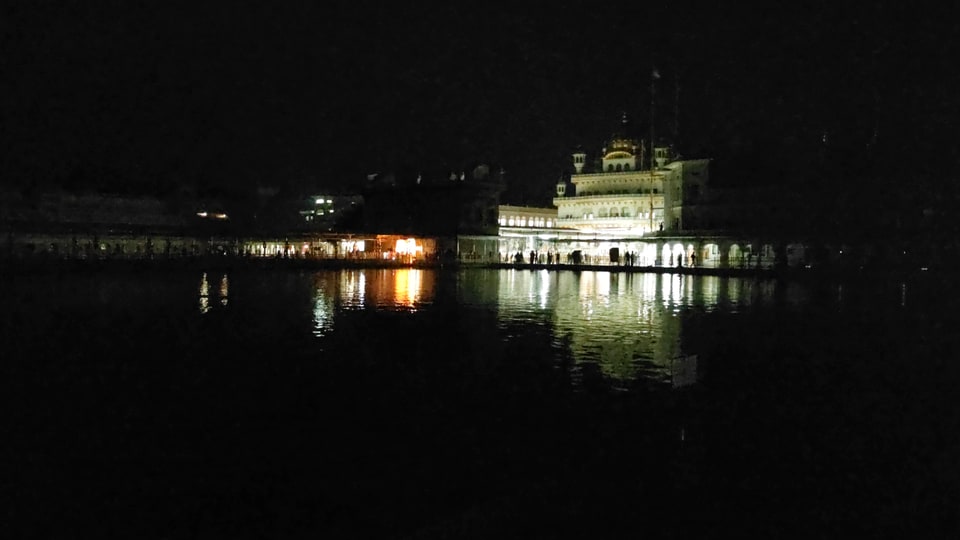
In an interview with news agency ANI, Lt General D'Cunha informed that the Golden Temple's lights were switched off for the first time in history to facilitate better detection and engagement of the drones coming from Pakistan. According to him, it helped the Indian defence forces spot and engage enemy drones more clearly.
"Fortunately, we visualised what they (Pakistan) were capable of doing. Realising that they would target it because they had no legitimate targets across the border. They were more interested in creating confusion, chaos internally, and hence, we visualised that they would target our civil population and our religious places of worship," Lieutenant General Sumer Ivan D'Cunha said in the interview.
Army officer credits head granthi
Lieutenant General D'Cunha gave the credit for the army getting to deploy air defence guns in the Golden Temple premises to the head granthi (head priest) of the holiest shrine for the Sikhs around the world.
"It was very nice that the Head Granthi of the Golden Temple allowed us to deploy our guns. It is possibly for the first time in many years that they switched off the Golden Temple lights so that we could see the drone coming," Lt General D'Cunha said in the ANI interview.
The Director General said the unprecedented cooperation from the Golden Temple authorities came after they were briefed on the gravity of the threat, following which Indian Army guns were deployed.
"The Golden Temple hierarchy realised there was possibly a threat when it was explained to them. They allowed us to deploy guns to secure and protect the monument of international fame, which is visited by hundreds and thousands of people every day. Hence, these guns were deployed, and the golden temple lights were switched off so that we could clearly visualise the drones as they were coming in. That gave us a greater clarity in the sky because as and when you saw the light, you knew what to engage," the top army officer said.
Drone attacks in Amritsar
In the aftermath of India's terror strikes at terror hubs in PoK and Pakistan’s Punjab province, Islamabad launched several missiles and drones in all border areas from Jammu and Kashmir to Gujarat.
Amritsar also bore the brunt of many such attacks over the course of four days from May 7 to May 10. Blackouts were announced in the area, and the lights of even the Golden Temple complex were switched off.
Almost all the attacks initiated by Pakistan were thwarted by the Indian Air Defence till a ceasefire understanding was reached between both countries on May 10.


