
 E-Paper



Govt: Fortified rice will carry health warning
In some instances, they found fortified rice packets without any mandatory labels, a member of the fact-finding team said.

 Prefer HTon Google


The Union government has said in a statement that rice fortified with three micronutrients — iron, folic acid and vitamin B12 — being distributed under state-run food schemes will carry mandatory label warnings for thalassemia patients, as was already being done in a pilot. However, a fact-finding team of well-known activists and experts has said it found indigenous Adivasi people with thalassemia — who are dependent on the government’s food handouts — being given fortified rice, which poses health risks.
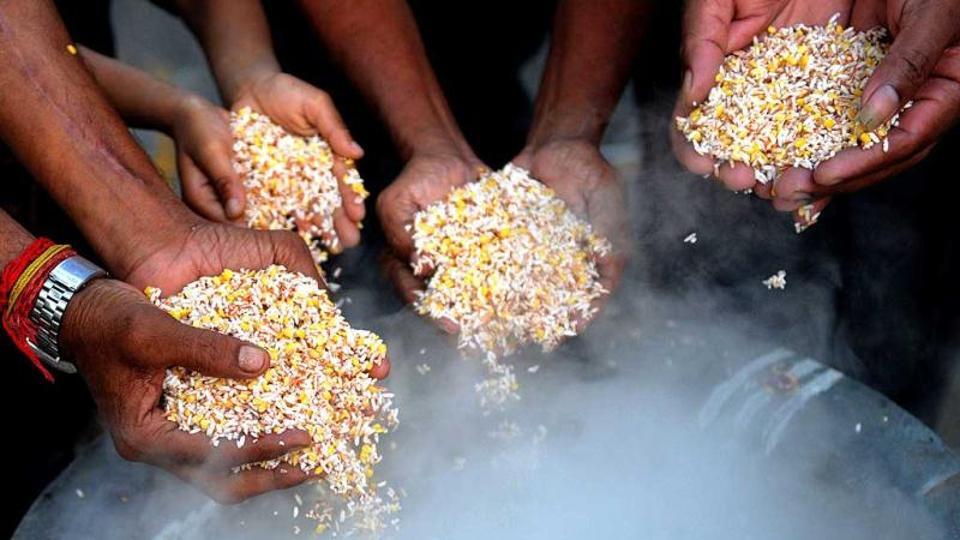
In some instances, they found fortified rice packets without any mandatory labels, a member of the fact-finding team said. The team had presented the report earlier this month after touring tribal belts of Jharkhand.
According to the Food Safety and Standards Authority of India, state-run food agencies and commercial manufacturers of fortified food must carry the “+F” logo along with a health warning on packaging for people with blood disorders such as sickle-cell anaemia and thalassaemia.
India has the largest number of children with “thalassemia major” in the world, with almost 42 million carriers of ß (beta) thalassemia trait, according to the National Health Mission.
Also read: Test soil before opting for direct seeding of rice: Agri experts
In 2018, the food-industry regulator notified standards of fortification for five staple product categories: milk, edible oil, rice, flour and salt. Clause 7(4) of the notification states: “Every package of food, fortified with Iron shall carry a statement ‘People with Thalassemia may take under medical supervision’.
The fact-finding team noted that neither thalassemic consumers and nor fair-price dealers, who sell subsidized grains, were aware of the health warnings. The government has made no provisions so far to distribute non-fortified rice to such recipients, it said.
The food ministry did not respond to a questionnaire sent by HT. However, in a statement on May 20, it said the government was stringently “overseeing the quality standards of finished product from procurement to its distribution” and it “strictly follows the guidelines of FSSAI and bags are imprinted with the +F logo and message” related to thalassemia.
“The least that is expected from the government is compliance to established medical knowledge of not giving iron to thalassemia, sickle-cell anaemia patients as well as several other kinds of patients, which is also related to compliance with Food Safety and Standards Act 2006,” said Kavita Kuruganti, a farm and food expert, said.
India is shifting to distributing only fortified rice through its public distribution programme, which provides cheap grains to nearly 800-million beneficiaries. The shift comes amid stubborn levels of malnutrition.
Also read: Fortified rice leading to side effects among Adivasis: Experts
According to the National Family Health Survey (NFHS) 2019-21, the fifth in the series, India has seen little improvement in health and nutritional outcomes. Anaemia among children under 5 has only worsened, with prevalence of nearly 67.1% compared to 58.6% according to NFHS’s fourth round, while 57% of women of reproductive age are anaemic.
“For people living with thalassemia, because too much iron may build up in the blood, foods high in iron may need to be limited,” according to the Centers for Disease Control. The activists’ fact-finding team included Vandana Prasad, a public health expert associated with the Right to Food Campaign, Kavitha Kuruganti, farmers’ rights activist with ASHA-Kisan Swaraj, Balram and James Herenz of the Right to Food Campaign, Jharkhand.


