E-Paper



Govt studying BCG vaccine use as Covid booster shot after Covaxin
BCG vaccine primarily provides protection against tuberculosis and has been administered to newborns as part of Centre’s National Immunization Programme for the least 50 years.

 Prefer HTon Google


The national Covid taskforce is reviewing a proposal to evaluate the efficacy of the Bacillus Calmette Guerin (BCG) vaccine as an immune booster with Covid-19 vaccine Covaxin, with a plan to possibly carry out a an open label randomised controlled trial to determine if it reduced incidence or severity of the viral disease.
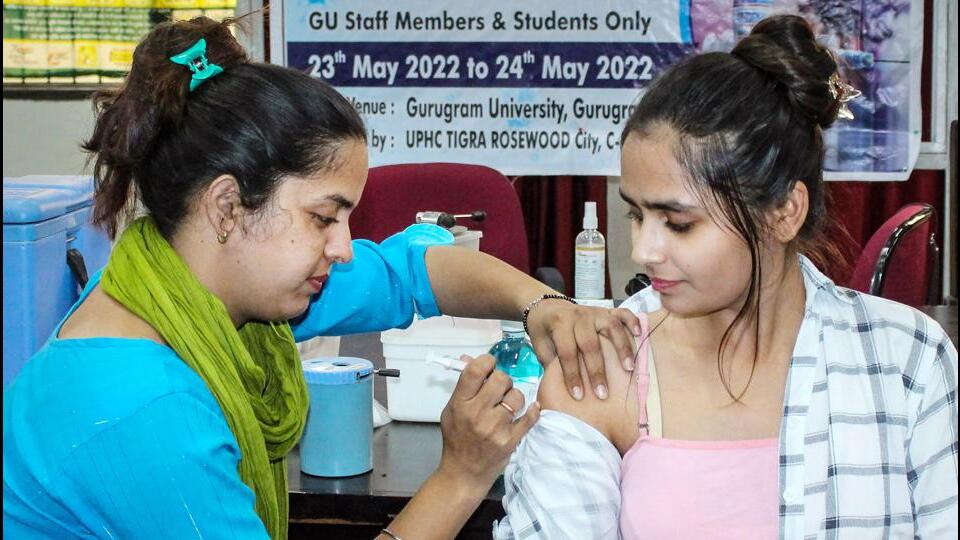
The trial was discussed during a meeting, according to minutes seen by HT, and is based on past signs that the BCG vaccine may offer some benefit in fighting of Covid-19. The new proposal concerns with using it as a booster.
“The proposal was floated in one of the task force meetings this year. There have been studies that found BCG showing some promise against Covid-19 among elderly. The fresh proposal was meant to see how well it works as a booster in those who have taken Covaxin as their primary dose,” said one of the members of the task force aware of the matter, requesting anonymity.
BCG vaccine primarily provides protection against tuberculosis and has been administered to newborns as part of Centre’s National Immunization Programme for the least 50 years. The dose is a live attenuated vaccine strain of mycobacterium bovis, which is meant to protect against mycobacterial infections such as tuberculosis and leprosy. The vaccine is also known to protect against heterologous – or more than one – infection of the pathogen it is designed against.
With BCG there have been two trials in India as well— one is to evaluate efficacy of BCG in reducing the incidence and severity of Covid-19 in the high-risk population. The other study has been to evaluate the effectiveness of BCG vaccine in reducing morbidity and mortality in elderly individuals in Covid-19 hotspots in the country.
The Indian Council of Medical Research (ICMR) has been spearheading the studies.
In September last year, the ICMR also published a paper based on results of the second study (on elderly population) in the International Journal of Infectious Diseases which showed that the BCG could improve the response to vaccines directed against viral infections most likely by protecting against unrelated infections. This, they hypothesised, was because it seemed to play a key role in stimulating a kind of immune cell known as dendritic cells.
“We investigated the impact of BCG vaccination on the frequencies of dendritic cell (DC) subsets and type I and III interferons (IFNs) using whole blood and plasma samples in a group of elderly individuals (age 60-80 years) at one-month post-vaccination as part of our clinical study to examine the effect of BCG on COVID-19…. BCG vaccination was associated with enhanced DC subsets and IL-28A/IL-29 in elderly individuals, suggesting its ability to induce non-specific innate immune responses,” read the paper.
Dendritic cells are the most effective antigen-presenting cells – these cells gobble up a pathogen, and display their clusters in a process that helps trigger the next stage of the immune response, known as the adaptive immunity, which works by learning traits about the pathogen to fight it.
Experts say conducting a trial locally is the best way to know the benefits of the vaccine against Covid-19.
“BCG has shown promise in various studies against unrelated infections. Covid is a new and complex disease, and we are trying almost everything that shows some effect. Conducting a proper clinical trial is the best way to know whether the vaccine is solving the intended purpose or not. It will not harm; it may actually benefit. Plus, BCG coverage in India is also not uniform; there could be many who did not receive it and for those it may benefit more. Although I am not sure it will enhance boosting for those who have already taken the vaccine once. There’s no harm in trying,” said Dr Avadhesha Surolia, molecular biophysicist, Indian Institute of Science.