
 E-Paper



GST Council to discuss revenue issue for third time today
The council on October 5 deferred a decision on the thorny issue of compensating states for the shortfall after 10 states ruled by non-NDA parties insisted that the central government borrow the entire Rs2.35 lakh crore and compensate the states.


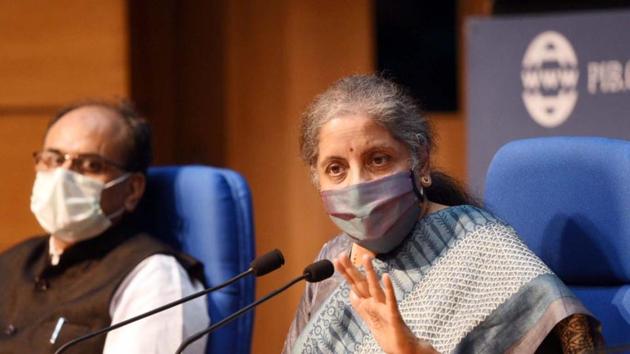
The Goods and Services Tax (GST) Council is expected to try and find common ground at a meeting on Monday on the vexed issue of compensating states for the Rs2.35 lakh crore shortfall in their share of revenue from the indirect tax this fiscal year, but the 10 dissenting states cannot indefinitely hold back 21 others that are ready to borrow a part of the amount from the market, two persons familiar with the situation said.
There is a consensus on two basic issues – all states will be compensated for their entire revenue shortfall irrespective of the Covid-19 pandemic, through the cess levied on luxury goods and sin products such as liquor, cigarettes, aerated water, automobiles and coal; and the levy will be extended beyond June 2022, when it was due to lapse, the two said, requesting anonymity.
“The Council, which is meeting on Monday evening, could also see some last-minute informal parleys [in the forenoon] among members as everybody wants a solution so that they could quickly get the money to meet their crucial expenditures,” one person with direct knowledge of the matter said.
The council on October 5 deferred a decision on the thorny issue of compensating states for the shortfall after 10 states ruled by non-National Democratic Alliance (NDA) parties insisted that the central government borrow the entire Rs2.35 lakh crore and compensate the states.
The states were also given the option of borrowing the entire Rs2.35 lakh crore (including the shortfall caused by the Covid-19 pandemic) at a significant cost.
As many as 21 state governments have opted to borrow Rs1.10 lakh crore to repay which funds would be managed by the cess levied on sin goods and luxury products. Jharkhand, Kerala, Maharashtra, Delhi, Punjab, Rajasthan, Tamil Nadu, Telangana and West Bengal are among the states that have demurred.
“A majority [21 states] have already accepted to borrow Rs1.10 lakh crore, hence it is certain that they would be permitted to initiate the borrowing process with the help of RBI [Reserve Bank of India] and DoE [Department of Expenditure]. But, the Council would like to take all members on board, and, therefore, the chairperson {Union finance minister Nirmala Sitharaman} called this meeting. Some common ground is expected,” the second person said.
Both persons said neither a division of vote nor the constitution of a group of ministers (GoM) on this matter could make any material difference after the 21 states signalled their willingness to borrow. The GST Council may, however, address concerns of the 10 members and also try to find a solution that would be acceptable to all, they said.
“Even in the last meeting [October 5], the council accepted suggestions of some members and raised the borrowing limit under the first option from Rs97,000 crore to ₹1.10 lakh crore. Similarly, some flexibility could be worked out to make the borrowing option more inclusive,” the second person said.
Government officials and independent experts said on condition of anonymity that in unprecedented circumstances such as the present, when the economy has been battered by the Covid-19 pandemic, the council should not be seen to be divided on the political lines.
“The situation emerged largely because of Covid-19 pandemic, which is unexpected and unprecedented in scale. In this hour of crisis, I hope and expect that both the Centre and the states will sit together and find a solution so that the economy as a whole gets a boost,” Pratik Jain, partner and leader of the indirect tax practice at PwC India, said.


