
 E-Paper



HC grants bail to Meghalaya BJP vice president accused of running brothel
Bernard N Marak was arrested from Hapur district in Uttar Pradesh on July 26 after he allegedly absconded


The high court of Meghalaya granted conditional bail to Bharatiya Janata Party (BJP) state vice president and Tura councillor Bernard N Marak, who was incarcerated for allegedly operating a brothel in his private farmhouse in West Garo Hills district.
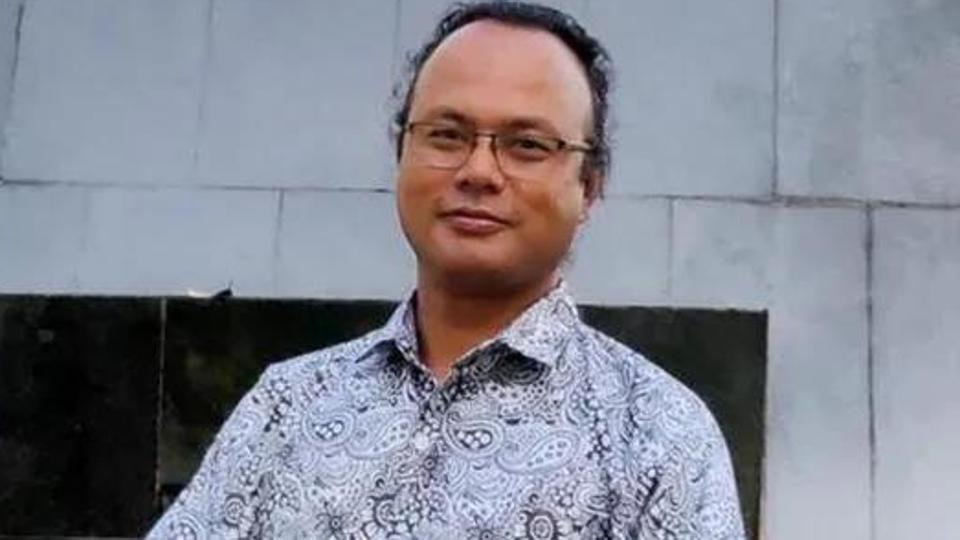
The order was passed by a single bench of justice Wanlura Diengdoh of the court after hearing the bail application filed by Bernard’s wife LK Gracy on Friday. The order, which was made available on Saturday, also directed Marak not to abscond or tamper with evidence, not to move out of the country and to cooperate with the investigation as and when required.
“…this application is allowed, the accused person, Bernard N Marak is hereby directed to be released on bail, if not wanted in some other cases, provided the following conditions are complied with: That he shall not abscond or tamper with the evidence; That he shall not leave the jurisdiction of India without the prior permission of the I/O or the court; That he shall cooperate with the investigation as and when required; and That he shall furnish a personal bond of ₹ 50,000 along with two solvent sureties of like amount to the satisfaction of the competent court,” said the order.
On July 23, West Garo Hills police claimed to have busted a sex racket allegedly operating from a building owned by Marak leading to the arrest of over 75 people and rescue of five children including a minor girl. On July 26, Marak was arrested from Hapur district in Uttar Pradesh after he allegedly absconded. The police also claimed to have seized liquors and unused contraceptives from the premises. A case under various sections of the Immoral Trafficking (Prevention) Act, 1956 was registered against him with the Tura women police station.
While disposing of the bail application, the bench observed that an allegation, though serious in nature, has been made against the accused person, among others. The fact that the accused person is the owner of the property in question which is the place of occurrence (PO) is not disputed, the court observed.
“However, from the statement of the witnesses and the materials on record, there is insufficient evidence to link the accused person to the alleged offence in as much as there is no initial evidence that the place of occurrence has been used as a brothel, nor is there any evidence to prove that prostitution was carried on in the PO. The only evidence that has emerged so far is that the PO is a place where a number of people used to come and make merry and the rooms were hired to accommodate such visitors who may or may not have taken part in sexual activities, even if it is so, it is presumably done so between consenting adults,” it said.
Justice Diengdoh further opined that the allegation that a minor girl was found to be sexually assaulted at the time of the raid is not well founded as no specific evidence linking the accused person to that case has been made out from the case dairy.
“This does not mean that the evidence and material collected in course of investigation as regard the involvement of the accused person cannot be relied upon by the I/O at the time of conclusion of the investigation, what this court has observed is only a prima facie view which is subjected to further evidence in the final analysis,” it added.
The bench further observed that as far as additional advocate general (AAG) N. D. Chullai’s submission of the order of the sessions judge is concerned, “it cannot be considered by this court” simply on the ground that the said order is not under challenged or under consideration in these proceedings and if aggrieved, the party has the liberty of approaching an appropriate forum for redressal.
The AAG had expressed strong reservation against the order passed by the sessions judge which was referred to by the counsel for the petitioner and has submitted that by such findings the sessions judge has already come to the conclusion that no case is made out against the accused person herein under certain provisions of the IT (Prevention) Act which will have an impact on the ongoing investigation and may even affect the trial of the case in due course.
It is submitted that this court in its supervisory jurisdiction can take judicial notice of the said observations. The AAG had also stated that the accused person is a member of a prominent political party and with his reach and influence, if enlarged on bail there is always the possibility that he may tamper with the witnesses and evidence which will greatly hamper the process and progress of investigation and as such at this juncture, the accused person may not be released on bail.
Earlier, senior defense counsel A.M. Bora maintained that the accused person is innocent and in no way involved with the alleged offence. Leading the court to the provisions of Section 3/4/5/6 and 7 of the Immoral Traffic (Prevention) Act, 1956 the senior counsel further submitted that none of the ingredients mentioned therein are attracted as far as the conduct of the accused person is concerned in as much as in his statement before the police, he has clearly denied the accusation that he is running a brothel in the PO and that he is living on the earnings of prostitution.
In fact, the accused person is a public figure, an elected representative of the people as a member of the District Council and has other landed properties and source of income which does not require his dependence from any alleged income from prostitution or from running a brothel at the PO,” said Bora.
The district police chief Vivekananda S Rathore had asserted that Marak, the self-styled chairman of the now disbanded Garo rebel outfit, Achik Nationalist Voluntary Council (B), is a known criminal with over 25 criminal cases registered against him since early 2000s. Rathore said that even after the disbandment of the outfit, he had been indulging in criminal activities like extortion from traders of Tura market, criminal intimidation in case of refusal to pay extortion money, arms smuggling, prostitution, illegal sale of liquor, illegal sale of lottery tickets, teer counters, encroachment on other’s property, illegal collection of money for recommending issue of TNT (explosive) license etc.


