
 E-Paper



How Kejriwal govt plans to tackle Covid-19: Delhi curbs explained in 10 points
Delhi is witnessing the fourth wave of infections which is far more severe than the last three waves.


Overwhelmed by the coronavirus disease outbreak, Delhi chief minister Arvind Kejriwal on Thursday imposed a weekend curfew in the national capital and shut public places to bring the number of infections down. Delhi is witnessing the fourth wave of infections which is far more severe than the last three waves.
The move comes shortly after a high-level meeting with Lieutenant Governor Anil Baijal. "To control the spread of Covid-19, it has been decided to impose weekend curfew in Delhi," the chief minister said.
With 17,282 fresh infections, Delhi on Wednesday recorded the highest-ever coronavirus diseases (Covid-19) cases, breaking its own previous daily spikes and pushing the cumulative tally to 767,438 cases, officials said. Pushing the national capital in the red zone, the positivity rate—the proportion of samples that test positive— spiked and was logged at 15.92 %, a sharp rise from 13.14 % a day earlier.
Here is how the Delhi government plans to tackle Covid-19:
- A weekend curfew will be imposed in Delhi starting Saturday, April 17, wherein only essential services will be allowed. An existing night curfew is already in place in Delhi from 10pm to 5am.
- During the weekend lockdown, shopping malls, gyms, dine-out service at restaurants will stay shut and only essential services would be operational. This is aimed at limiting the movement of people during the weekend when a large number of people step out.
- Weddings will not be affected during the weekend curfew and passes will be provided to those attending weddings, Kejriwal said.
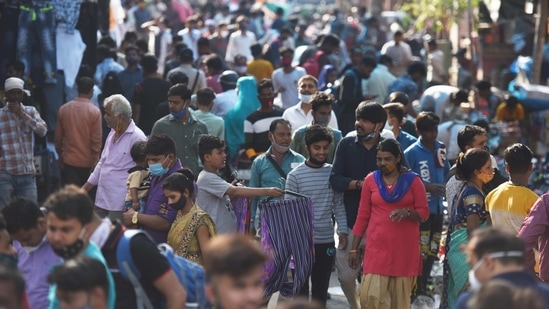
- Instead of cramped lanes, weekly markets will be held in open fields and playgrounds in schools to ensure maximum physical distancing. The zonal commissioners of the municipal corporation have been entrusted to ensure the adherence to this guideline. Only one weekly market in a zone will be allowed to open per day and steps will be taken for crowd management in those markets.
- Stepping up the fight on the medicine front, the government will ensure supply of drugs like Remdesivir, which is needed in treatment of Covid-19 patients.
- Public transport will operate with existing restrictions. As per the latest order, the capacity of Delhi Metro and DTC buses has been brought down to 50%.
- Prominent markets such as Khan Market, Connaught Place, Sarojini Nagar will not be shut on weekdays. Public spaces such as parks and tourist spots, including Qutub Minar or India Gate, will also stay open during weekdays.
- The government has decided to crack down on drug hoarders and black marketers who pose a hindrance towards smooth supply of medicines in hospitals and medical institutions. The country has witnessed hoarding and black-marketing of essential drugs used in Covid-19 treatment.
- The government will come up with more Covid care centres in the city-state to decrease dependence on hospitals. The chief minister said there was no shortage of hospital beds and over 5,000 bed were still available for Covid-19 patients. Efforts to increase beds on a large scale will also be made, he said.
- Pushing for strict adherence of Covid-19 safety protocols, Kejriwal said that the government will also ensure strict enforcement of virus appropriate behaviour such as wearing masks.
L-G Baijal is likely to review the enforcement with Delhi Police, division commissioners and MCD commissioners on Friday.
The Delhi government on Wednesday revised its decision to allow certain beds to be used for non-Covid patients as well. These included Indraprastha Apollo Hospital in Sarita Vihar, Sir Ganga Ram Hospital, Holy Family Hospital, Max SS Hospital and Fortis Hospital in Shalimar Bagh.


