E-Paper



How region-wise contradictions are pulling Cong apart
The episode highlights the challenge facing the Congress party, which is increasingly finding it difficult to reconcile its national positions with realpolitik at the state-level.

 Prefer HTon Google


Sushmita Dev’s exit from the Congress may be the latest entry in an exodus that began after the party lost the 2021 elections, but it is also different. Instead of joining the Bharatiya Janata Party (BJP), which is where most Congress leaders have gone, Dev, one of the party’s tallest leaders from Assam, has joined the All India Trinamool Congress (TMC), a party which has no base in the state, but secured a thumping victory in neighbouring West Bengal. In a way, this shows more desperation than opportunism on the part of Dev. The episode highlights the challenge facing the Congress party, which is increasingly finding it difficult to reconcile its national positions with realpolitik at the state-level.
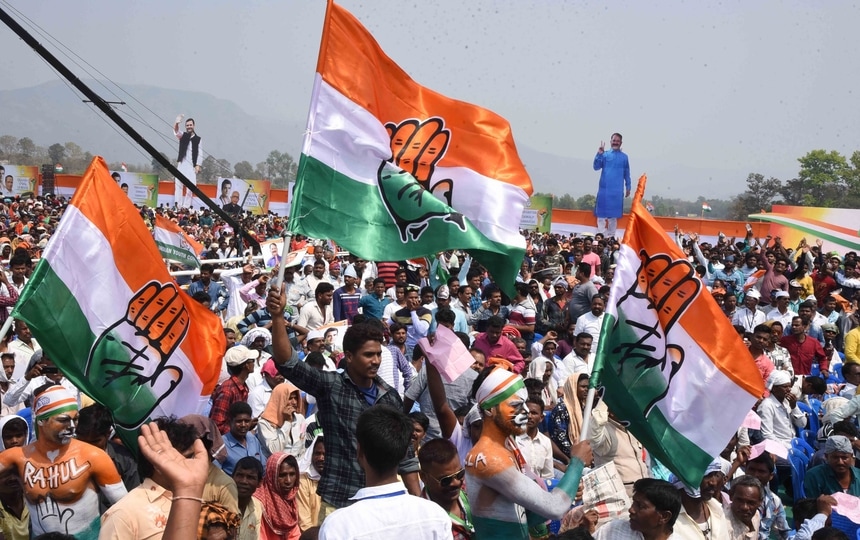
Sushmita Dev’s core support-group has been deserting the Congress gradually
Sushmita Dev carries the legacy of her father Santosh Mohan Dev, among the most important Bengali leaders of the Congress in Assam. It is no surprise that both father and daughter have been contestants from the Silchar Lok Sabha constituency from the Barak valley in Assam, which has a large share of Bengali-speaking population. According to the 2011 census, 81% of the region’s population is Bengali-speaking and the region has a roughly equal share of Hindus (50%) and Muslims (48%). Census data does not give break-up of mother tongue by religion.
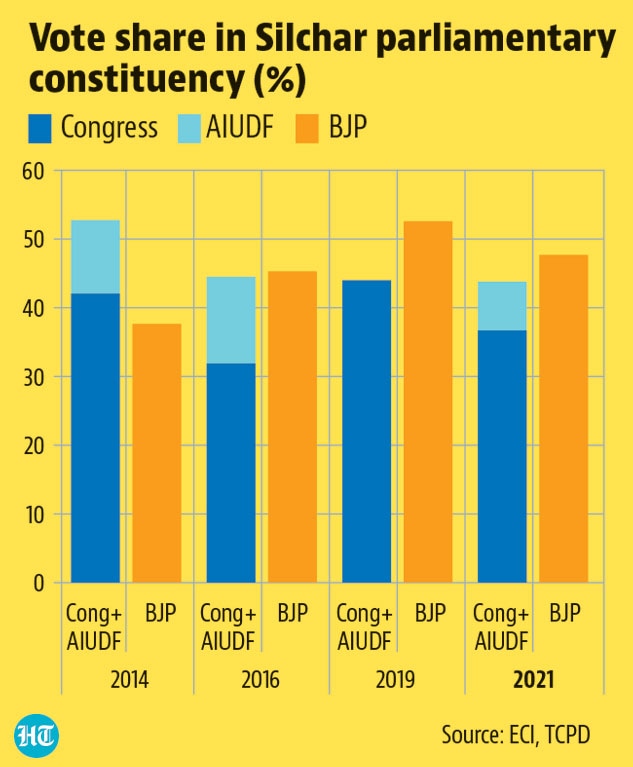
Dev’s political fortunes had been facing a squeeze, which is evident from the Congress’s vote share from 2014 onwards.This could not have happened without the Bengali Hindus – a constituency which was the bedrock of Santosh Mohan Dev’s political fortunes – deserting the Congress and moving towards the BJP. If the 2021 assembly election results are any indication, there was little probability of Dev being elected from Silchar to the Lok Sabha in the 2024 elections.
Congress’s anti-CAA stance may have been the reason for alienation among Bengali Hindus
Opposition to the Citizenship (Amendment) Act or CAA was among the most important planks of the Congress in the Assam elections. The reason CAA is relevant in Assam is that it provides for granting of retrospective citizenship to Hindus who are found ineligible in the final list of National Register of Citizens (NRC). Enactment of the CAA, which has still not been implemented, will create a difference between Hindu and Muslim Bengalis – traditionally the outsider charge was religion agnostic in Assam – who are found ineligible in the NRC.
The fact that CAA creates the legal ground for conferring citizenship on a large number of Bengali Hindus (the CAA excludes Muslims from this benefit) found ineligible in the NRC has drawn criticism from sections of the indigenous Assamese population. The Congress, when it allied with the All India United Democratic Front (AIUDF) – a party with its main support base among Bengali Muslims – and adopted a vocal anti-CAA stance, was looking to build an alliance of Muslims and Assamese Hindus. One constituency which it risked alienating by this decision were the Bengali Hindus. The CSDS-Lokniti post-poll survey shows that Bengali Hindus and Muslims had very different attitudes to CAA.
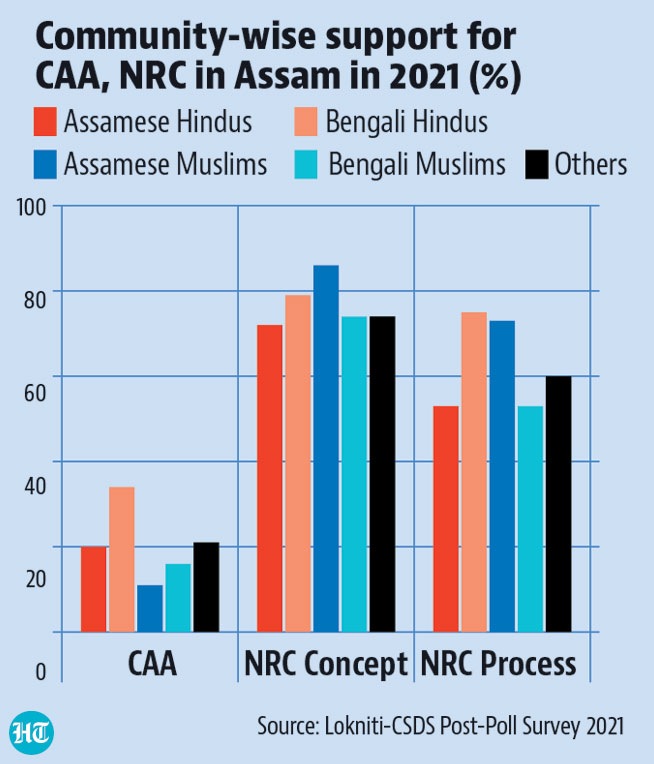
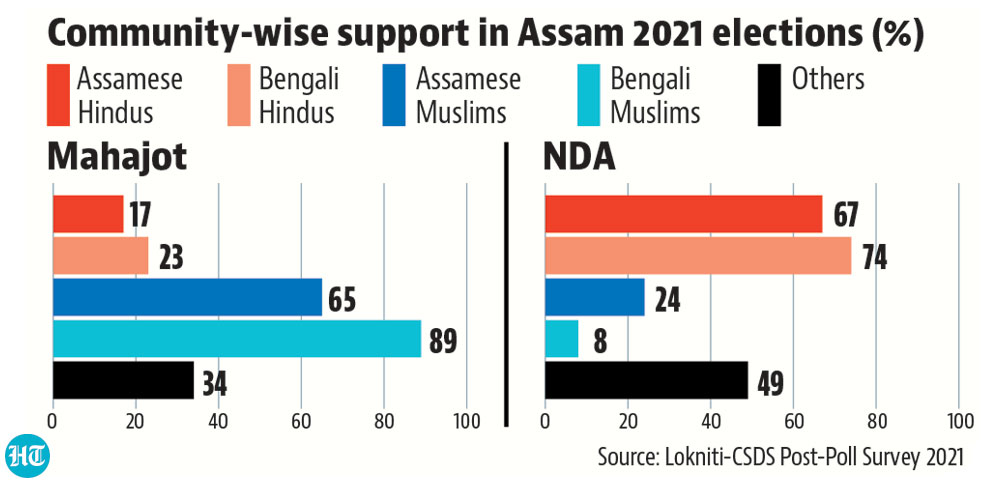
If the CSDS-Lokniti post-poll numbers are any indication, neither Assamese nor Bengali Hindus voted for the Congress-AIUDF alliance in greater numbers in the latest elections. Leaders who have been leaving the Congress after the elections are from these communities.
Congress erred on the other side in Kerala polls…
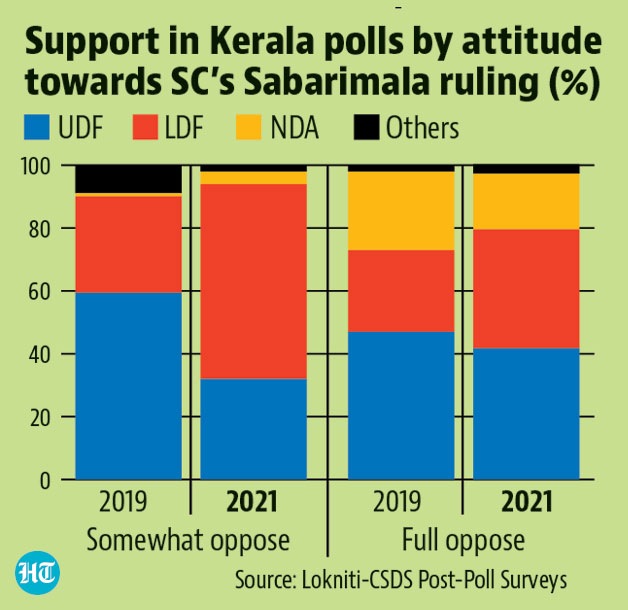
If Assam is an example of the Congress losing out because of mechanically championing a national-level issue (liberal opposition to CAA) at the state level, the recent Kerala elections offer a completely opposite example. The Congress-led United Democratic Front (UDF) seems to have overinvested in the Sabarimala issue which led to the rout of the Communist Party of India (Marxist) or CPI(M)-led Left Democratic Front in the 2019 Lok Sabha elections. With the Supreme Court effectively staying its decision to allow women of all ages to enter Sabarimala in November 2019 and the LDF government using this tactical route to bail itself out of the problem, the Sabarimala issue lost its political relevance. This can be clearly seen from the rise in share of LDF voters even among those who were opposed to the Sabarimala judgment.
...which may have cost it minority votes in Kerala
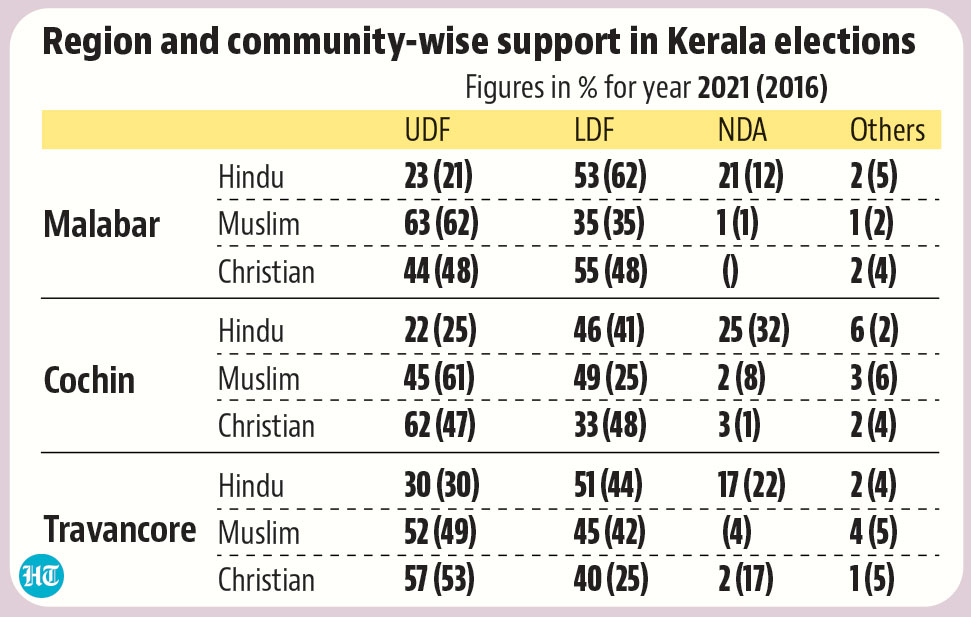
While the Congress was banking on the Sabarimala issue to get Hindu support, exactly what the BJP has been doing, it seemed to have erred on norms of secular propriety in attacking the CPI(M) in the state.
“They (Left) do same division that BJP does, they spread same hatred. It’s interesting to me, the PM spends every single day saying ‘Congressmukt Bharat’, I have never heard him say ‘CPM Left Front Mukt Bharat or Kerala,” Rahul Gandhi said on April 4, while campaigning in Thiruvananthapuram.
While both Christians and Muslims have voted in greater numbers for the Congress than the CPI(M) in Kerala, it does not mean that the state’s religious minorities would be comfortable with the idea of the BJP destroying the Left, something Gandhi suggested when he made this statement. It is no wonder that the LDF made significant gains among religious minorities at the cost of the UDF in the Kerala elections.
To be sure, balancing regional and national issues is not an easy task. It is even more difficult when a party is not in power, limiting its ability to placate various sections both within and outside its fold. What is also true, however, is the fact that the current Congress leadership has no option but to learn to manage these contradictions better, failing which the grand old party will continue to atrophy.