
 E-Paper



Impact of $100,000 H1-B visa fee on Indians: How Trump's move shatters dreams
US awards 85,000 H-1B visas a year on lottery system, with India accounting for around three-quarters of recipients; 70% of H-1B visa holders are Indians

 Prefer HTon Google


After US President Donald Trump's move to impose a $100,000 annual fee on H-1B visas (around 9 million or 90 lakh Indian rupees) — to be paid by employers who sponsor technically skilled overseas staff into the US — Indians are the most worried group. And data can mostly tell you why.
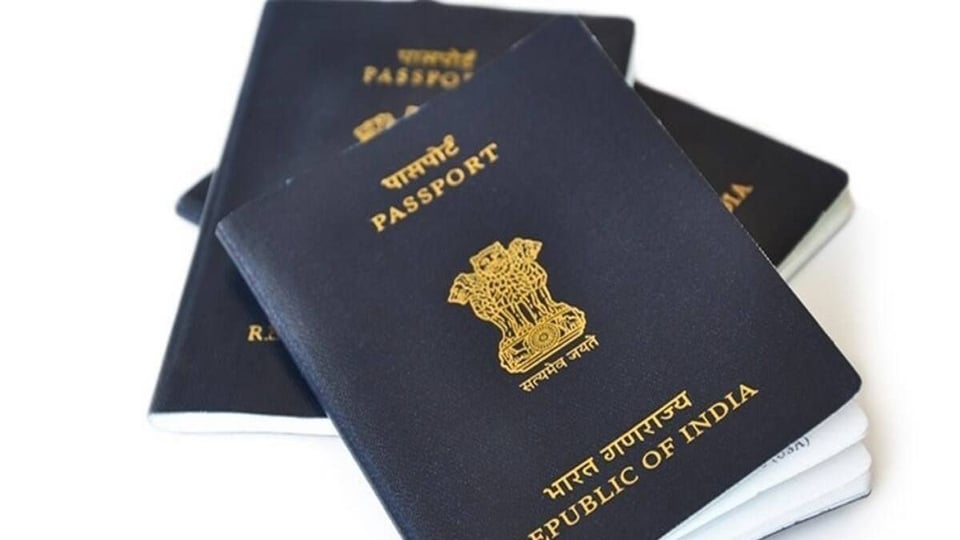
- There are around 300,000 (3 lakh) high-skilled Indian workers, mostly in the technology industry, on H-1B visas currently in the US.
- The US awards 85,000 H-1B visas per year by lottery, with Indians accounting for 70% of these visa holders. After Indians, come Chinese, at 11-12%, shows US administration data.
- Previously, the visa fee in most H-1B cases was $215, plus another $750. Depending on company size and job categories, it could cross $5,000. That means the new fee is 20 to 100 times more — at current exchange rate of USD to INR, shy of ₹9 million or 90 lakh.
- Analysis by HT shows the fee would effectively kill the H-1B programme. The visa fees of $100,000 is more than the median annual salary of a fresh H-1B visa holder, and is more than 80% of the average annual salary of all H-1B visa holders.
Then there is the social context — popularly termed “upward mobility” achieved by a move westwards from India.
Such is the importance of this visa for Indians who end up in America that H-1B holders, when counted along with their families, were about a fourth of the Indian-American population. The total Indian-American population was estimated at around 3 million, as per a BBC report.
The programme is a reason for the “rise of Indian-Americans into the highest educated and highest earning group — immigrant or native — in the US”, according to researchers who wrote ‘The Other One Percent’, a study on Indians in America.
Also, this visa was used by Indian companies to bring in new techies to give them exposure to where much of their clientele is, in the US. Indian IT services companies like Infosys, TCS and Wipro have historically used H-1B visas to send junior and mid-level engineers to the US. Top American companies such as Amazon and Microsoft also use this route to get mostly young Indian talent.
"No longer will you put trainees on an H-1B visa — it's just not economic(al) anymore. If you're going to train people, you're going to train Americans," US commerce secretary Howard Lutnick said.
Speaking after Trump signed the relevant executive order, Lutnick argued that the idea is to bring in “high earners”, contrasting this with previous policies that he alleged brought in "low earners" who “take jobs from Americans”.
While H-1B visa quotas remain unchanged at 65,000 regular plus 20,000 for advanced degree holders, Lutnick said, “There'll just be less of them issued.”
The visa maintains its current structure: three years with one possible renewal for a total of six years.
Immigration lawyers and employers have asked H-1B visa holders and their families currently outside the US to return in 24 hours or risk being stranded and denied entry after the order comes into effect from 12:01 am, September 21.
Tech entrepreneurs such as Trump's former ally Elon Musk have warned against targeting H-1B visas, saying the US does not have enough homegrown talent.
The number of H-1B visa applications has risen sharply in recent years, with a peak in approvals in 2022 under Democratic president Joe Biden. In contrast, the peak in rejections was recorded in 2018, during Trump's first term in the White House. The US approved approximately 400,000 H-1B visas in 2024, two-thirds of which were renewals.
In 2017, too, when Trump was President, he increased scrutiny, and rejection rates soared to 24% in 2018, compared to 5-8% under Barack Obama before him, and 2-4% under Joe Biden after his first term.
In India, at a political level, the $100,000 fee resulted in jibes at PM Narendra Modi, who is already facing heat at home for Trump's aggression on trade tariffs on India despite repeatedly heaping praises at him personally.
The Indian government reacted briefly to the US move on H-1B visas, saying that it's studying the full implications of the measure.
Leader of Opposition in the Lok Sabha Rahul Gandhi, however, jibed in a post on X, "I repeat, India has a weak PM."
"Bear hugs, hollow slogans, concerts and getting people to chant 'Modi, Modi' is not foreign policy!" said Mallikarjun Kharge, president of the main Opposition party Congress.
He also referred to Trump's recent call to the PM on the latter's birthday, and sarcastically termed the visa fee a “gift” for Modi.
Some technocrats and businesspeople say it could become an opportunity for India to retain, or see the return of, talent that would otherwise leave for better lives in the US.
Whether the talent sees it that way or not, would be known more clearly in the days to come as the tech industry globally — and the $283-billion Indian IT services sector in particular — is disrupted by AI and rattled by macroeconomic uncertainties, including tariffs.
PM Modi, meanwhile, has been speaking about the need for India to become self-reliant, a theme he repeated after Trump's H-1B fee move, though not directly referring to it.
“We have no major enemy in the world. Our only real enemy is our dependence on other countries. This is our biggest enemy, and together we must defeat this enemy of India,” Modi said at an event in his home state of Gujarat.


