
 E-Paper



IAF chief says air power was key in sending signal to Pak during Op Sindoor: ‘It did the trick’
The Indian Air Force Chief highlighted air power's effectiveness in conflict zones, saying it was the part of military power which had “come in handy.”

 Prefer HTon Google


Air Chief Marshal AP Singh on Wednesday stressed on the role played by air power in modern warfare, and particularly during Operation Sindoor, India's military response to Pakistan in May, 2025 in the wake of the Pahalgam terror attack.
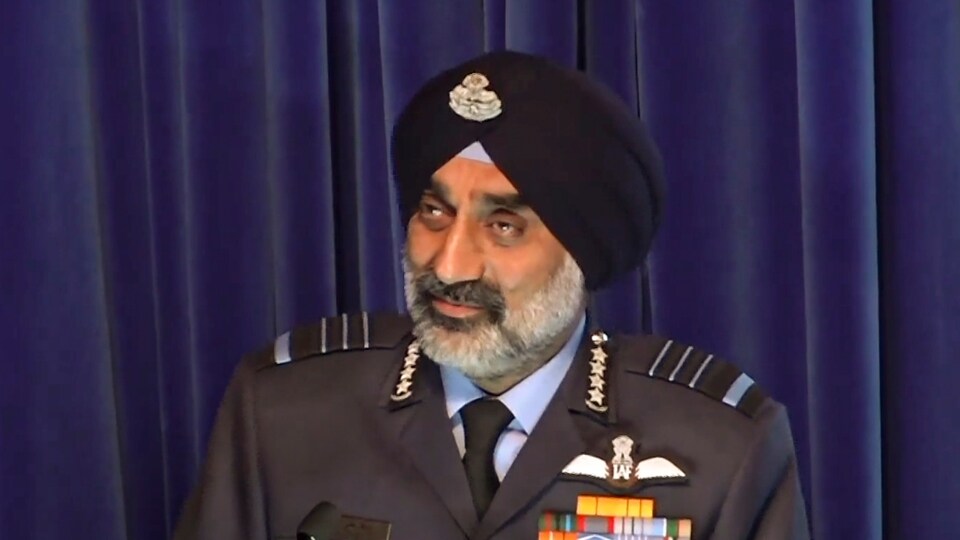
Addressing the 22nd Subroto Mukherjee Seminar organised by the Centre for Aerospace Power and Strategic Studies (CAPSS) in Delhi, the Indian Air Force Chief highlighted air power's effectiveness in conflict zones, ANI news agency reported.
“.. The part of military power that has come in handy, or which has delivered what was required to be delivered, is air power. It is very important that we focus on this part of the military if we want to be a force to reckon with,” Singh said, while also citing the Air Force's track record of delivering swift outcomes.
The Air Chief Marshal said that whether it was “getting people out of the conflict zone”, or to deliver a blow to terrorist infrastructure and their perpetrators, or to attack bases in Pakistan, it was the air power which “did the trick" and brought Pakistan “to their knees within few hours”.
Singh said that air power had succeeded in sending a signal to Pakistan “in a matter of a few hours” and had brought them “to their knees”, ANI reported. “It was the air power which did the trick, and that has to be remembered,” the IAF chief reiterated.
While addressing a press conference on the 93rd Air Force Day celebrations in Delhi, the Chief of Air Staff had spoken about the military precision the air force had shown during Operation Sindoor. He said that five Pakistani fighter jets had been shot down using the long-range surface-to-air missile (LRSAM) S-400 Triumf “Sudarshan Chakra” system, according to the ANI report.
“The long-range SAMs that we had procured recently and operationalised... We could look deep inside their territory. We could ensure they were unable to operate even within their territory for a certain distance,” Singh said.


