E-Paper



If trials deliver verdicts, mediation delivers futures: Justice Surya Kant
Justice Kant, who is set to take over as the Chief Justice of India (CJI) in November, was addressing the 2nd National Mediation Conference in Bhubaneshwar

 Prefer HTon Google


If trials deliver verdicts, mediation delivers futures, Supreme Court judge Justice Surya Kant has said, applauding Parliament’s enactment of the Mediation Act, 2023, while cautioning that the real measure of its success will not be found in the text of the statute but in the trust it inspires among citizens.
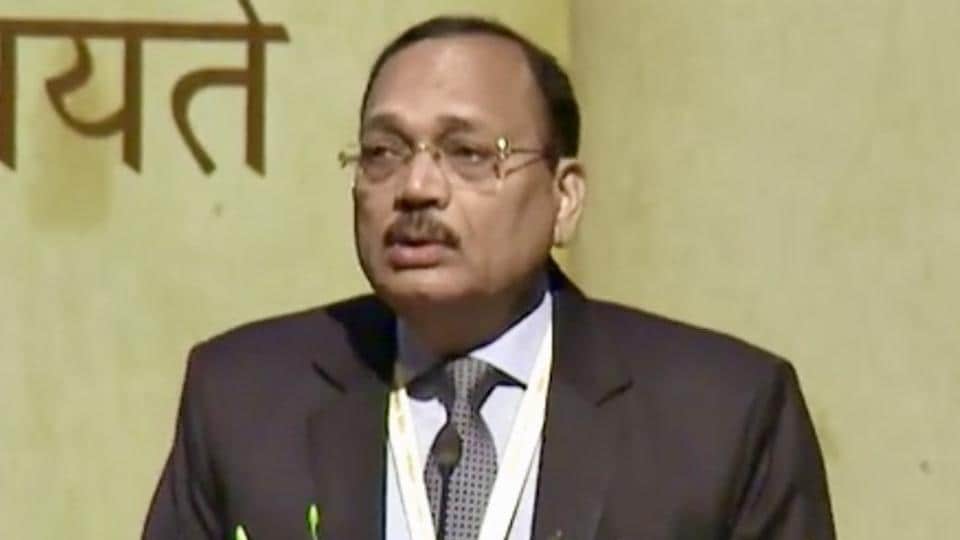
Justice Kant, who is set to take over as the Chief Justice of India (CJI) in November, was addressing the 2nd National Mediation Conference in Bhubaneshwar on September 27. The event was also attended by Odisha governor Hari Babu Kambhampati, CJI Bhushan R Gavai, Union minister Dharmendra Pradhan, and chief minister Mohan Charan Majhi.
“Contemporary disputes are rarely simple—they cut across family and business, technology and community. Courts may provide legal answers, but the deeper currents of human conflict often remain unresolved. What people seek is not merely a verdict, but a pathway to move forward. Mediation offers that possibility, for it does more than resolve a case—it fosters solutions that endure,” Justice Kant said.
Justice Kant described mediation as mathematics that “subtracts bitterness, divides burdens, and adds hope to the broken equations of human relationships.”
Unlike litigation, which produces a binary outcome of winners and losers, he said, mediation expands the frame of possibilities. “Some equations admit no solution, some yield only one, but the most remarkable are those with infinite solutions. Disputes are also the same. But when dialogue begins, conflicts open into many possibilities, and mediation empowers parties to find the solution they can both embrace.”
Justice Kant noted that the Mediation Act, 2023, has given India a strong statutory framework, but cautioned that legislation alone cannot change culture. “It cannot create trust, it cannot nurture dialogue. That responsibility rests with us,” he said.
Justice Kant recounted how, at a recent Supreme Court Bar Association lecture, an advocate acknowledged that clients increasingly prefer mediation over litigation, a trend Justice Kant described as “a quiet but unmistakable cultural shift.” Law firms, he said, are also repositioning themselves around dispute resolution rather than prolonged confrontation.
Justice Kant highlighted that the Supreme Court has already launched “Mediation for the Nation”, a structured 90-day campaign designed to resolve a wide spectrum of disputes. He likened this modern institutional push to India’s age-old tradition of community elders settling disputes under the banyan tree in search of harmony.
“The Mediation Act of 2023 carries that spirit into our time…The true measure of justice will lie not in cases decided, but in the peace it creates. Let this conference mark our resolve to make mediation not an aspiration but a practice so that future generations inherit a justice system defined not by verdicts, but by the trust it inspires,” Justice Kant said.