
 E-Paper



Imran Khan tweets a swipe at India, hits mute on Pak economy. Here is why
Prime Minister Imran Khan is facing challenges on multiple fronts including from the army, which has driven much of Pakistan’s response to Covid-19

 Prefer HTon Google


Just a little over two hours after Prime Minister Imran Khan tweeted an acerbic offer to India, his government put out a status check of Pakistan’s economy. PM Khan’s adviser on finance and revenue Dr Abdul Hafeez Shaikh released the economic survey that estimates Pakistan’s debt will rise to 88% of the GDP and the economy will shrink for the first time in 68 years by 0.4%. And that is an optimistic picture. The IMF and World Bank have projected that Pakistan, which closes its financial year this month-end, will contract by up to 2.6%
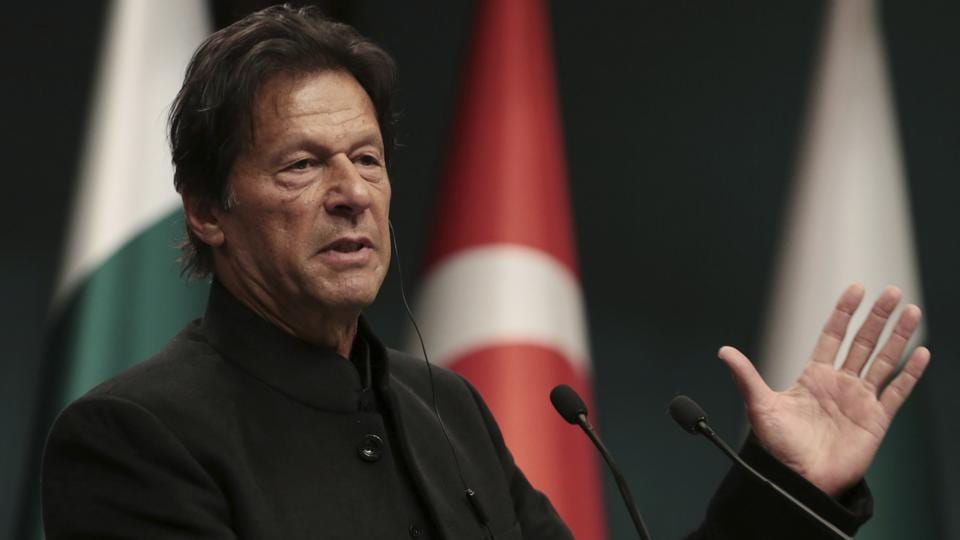
Dr Shaikh apportioned much of the blame for the state of the economy between Nawaz Sharif’s Pakistani Muslim League-N governments that had been in power from 2013 to 2018 before Imran Khan came to power with his promise of a ‘Naya Pakistan’, and the coronavirus pandemic.
Imran Khan, who has been active on social media hurling barbs at India, hasn’t tweeted on his government’s report card on the economy.
“PM Imran Khan is finding himself boxed in… by his political detractors, the army that is closing in, the economy and the Kashmir agenda,” a Pakistan watcher in New Delhi said.
Also Watch | ‘India’s package as big as Pak GDP’: Modi govt counters Imran Khan’s ‘offer’
In just two years, PM Khan’s influence within and without the government has dropped sharply. That includes the army too, Pakistan’s most powerful institution whose backing was credited to have helped PM Khan mobilise support from smaller coalition partners.
A Bloomberg report published this week underscored that the army has tightened its grip on PM Khan’s government, placing more than a dozen former and serving military officials in prominent roles.
Also Read: Army tightens grip on Pakistan as Imran Khan’s popularity wanes
Like former retired Lt General Asim Saleem Bajwa, who was already chairman of the China-Pakistan Economic Corridor Authority, was given a second job. From April this year, Lt Gen Bajwa who headed ISPR - the military’s propaganda department between 2012 and 2016 - was appointed PM Khan’s communication adviser.
There have been indications that the Pakistan army, which had embedded itself in the civilian structure, hasn’t been on the same page as PM Khan.
That Imran Khan had been sidelined was clearly visible in March when the army declared that the army would oversee a shutdown to halt the spread of infection, less than 24 hours after Prime Minister Khan told the country in a televised address that he didn’t support a lockdown since it would put millions out of work and hurt the poor. The army went ahead to deploy troops and enforce the lockdown.
Also Read: Pak’s troubled economy is hurting more than Imran Khan wants to believe | Opinion
Indian intelligence agencies believe that the army is increasingly looking at foreign minister Shah Mahmood Qureshi for a bigger role in the government.
There is some disappointment over Imran Khan’s not-so-successful attempts to put the focus on Kashmir, in Pakistan and globally, one Indian official said. “Kashmir has long been used by Pakistan to distract people from the domestic upheavals, political, economic or otherwise. But this hasn’t happened over the last year or so despite several attempts,” the official said.
Because of pressure from multilateral bodies such as the terror funding watchdog FATF where it faces the risk of being placed in the blacklist, the Imran Khan government has been unable to go all out to openly support Kashmir.
Besides, the 2016 Uri surgical strike and the 2019 Balakote air strikes have sent a message that New Delhi’s response to a terror strike would be unpredictable and could lead to a counter strike.
The bleak outlook for the economy makes PM Khan’s troubles so much bigger. Thursday’s economic survey, news agency Reuters reported, reveals that PM Khan’s government had missed almost all economic targets by a wide margin even before the global new coronavirus pandemic.
At least 10 million people are expected to slip below the poverty line due to the coronavirus pandemic, pushing the total number of people struggling to survive to 60 million.
Apart from the human cost, the troubled economy could seal any chances of the army getting a substantive hike to give soldiers and officers a 20 percent raise that they had asked for. For now, Dr Shaikh, according to Pakistan newspaper Dawn, said there would be a free on current expenditure and the defence budget. He credited PM Khan as well as Army Chief Gen Qamar Bajwa for this decision.


