
 E-Paper



In 2016, days after Uri attack, India crossed LoC to destroy terror launch pads in Pakistan: What happened that night
The Indian Army had targeted terrorist launch pads in an operation announced as a response to the September 18 Uri attack that killed 19 soldiers.

 Prefer HTon Google


It was the morning of September 29, 2016, and India was waking up to news of an Indian Army operation across the Line of Control (LoC).
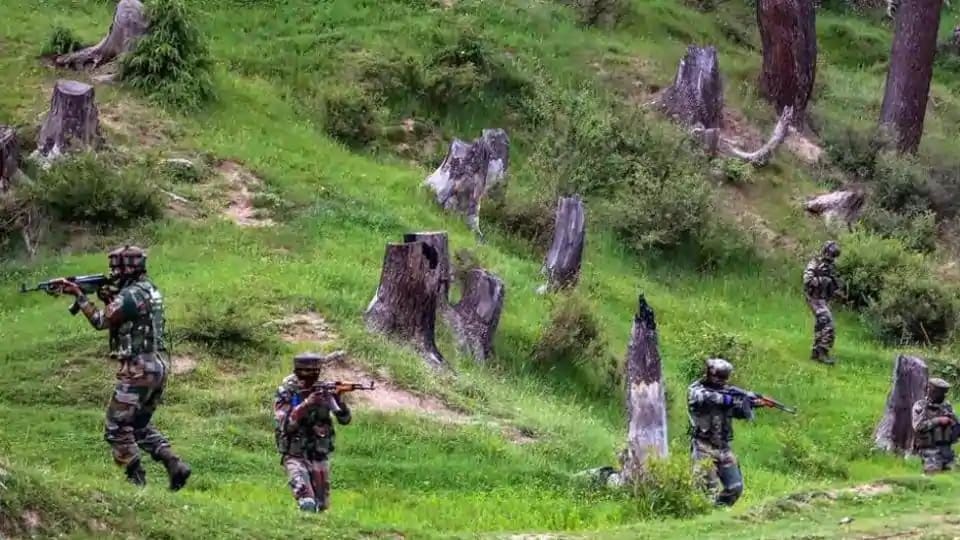
Overnight, the Indian Army had targeted terrorist launch pads in an operation announced as a response to the September 18 Uri attack that killed 19 soldiers.
The Indian Army announced the operation in a carefully worded briefing that morning, with then Director General of Military Operations (DGMO) Lt Gen Ranbir Singh saying the strikes had been carried out based on “specific and credible inputs” about terrorist teams positioned at launch pads along the LoC.
The operation, he said, was aimed at preventing the teams from infiltrating into Jammu and Kashmir and carrying out attacks in the country.
Also Read: From Balakot to Sindoor, Pakistan-backed terror got befitting response: PM Modi on Mann ki Baat
“Based on receiving specific and credible inputs that some terrorist teams had positioned themselves at launch pads along Line of Control to carryout infiltration and conduct terrorist strikes inside Jammu and Kashmir and in various metros in other states, the Indian Army conducted surgical strikes at several of these launch pads,” Singh said.
The DGMO said the operations had caused “significant casualties” to terrorists and those supporting them. He added that the operations had ended and there were no plans for further continuation, while stressing that the armed forces remained prepared for any contingency.
What happened in Uri?
The strikes came in the aftermath of the September 18, 2016, terror attack on an Army administrative base in Uri, Jammu and Kashmir.
Four heavily armed terrorists opened fire on the base at around 5.30 am. The attackers also used incendiary ammunition, setting fire to Army tents and temporary shelters. The Army said four terrorists were killed during the operation and that four AK-47 rifles and four under-barrel grenade launchers were recovered. Its initial statement put the number of Army fatalities at 17.
The final toll rose to 19. In March 2017, the Defence Ministry said compensation had been approved for the families of 19 soldiers martyred in the Uri attack.
The Army's initial assessment said the slain attackers were foreign terrorists and that some material recovered from them had Pakistani markings. It also said initial reports indicated that they belonged to Jaish-e-Mohammed.
How the operation was prepared
The Army’s preparations for the operation began around September 24, HT reported earlier. Special Forces teams involved in the mission were equipped with night-vision devices, Tavor 21 and AK-47 assault rifles, rocket-propelled grenades, shoulder-fired missiles, Heckler & Koch pistols, high-explosive grenades and plastic explosives.
The teams, reportedly comprising around 30 personnel each, were assigned specific targets.
Ahead of the operation, authorities also began evacuating civilians living close to the international border in Jammu and Kashmir and Punjab.
The evacuation process began around 10 pm on September 27.
The night of September 28-29
Eleven days after Uri, the Indian Army carried out the operation across the LoC.
According to reports, six terrorist launch pads were targeted in the operation. The launch pads were reportedly located around 2-3 km from the LoC and had been under surveillance for more than a week. Special forces used both ground and heliborne elements during the operation, which began around midnight and ended in the early hours of September 29, PTI reported.
The official Army account, however, did not give a numerical figure for terrorist casualties. The DGMO only said there had been “significant casualties” among terrorists and those supporting them.
India also moved quickly to brief other countries about the operation. Foreign Secretary S Jaishankar briefed envoys from 25 countries, including the US, China, Russia, the UK and France, about the “context” of the strikes.
What India said after the strikes
At the September 29 briefing, the DGMO said India had repeatedly raised concerns over cross-border infiltration and terrorist attacks. He said the Army had acted after receiving intelligence about terrorist teams preparing to infiltrate.
“We cannot allow the terrorists to operate across the Line of Control with impunity and attack citizens of our country at will,” Singh said. He also said India intended to maintain “peace and tranquillity in the region”.
Pakistan rejected India's account of the operation, saying there had been no surgical strikes and describing the incident as “cross-LoC firing”.
The operation nevertheless became a defining episode in India's public discussion around counter-terrorism and the use of military force across the LoC. In subsequent years, the 2016 strikes were repeatedly invoked alongside the 2019 Balakot airstrike and, more recently, Operation Sindoor.
Modi recalls the operation 10 years on
As the 10th anniversary approached, Prime Minister Narendra Modi revisited the operation on Sunday, in an episode of Mann Ki Baat.
Calling it a “major, historic achievement”, Modi said the Indian Army had carried out the strikes, against terrorist hideouts across the LoC. He said the manner in which Indian soldiers crossed the LoC to act against terrorism had “astonished” the world.
“The Surgical Strike boldly demonstrated to the entire world a new example of India’s counter-terrorism policy,” Modi said, describing it as India's “decisive response” to the pain caused by terrorist attacks.
(With inputs from agencies)


