
 E-Paper



In Adityanath’s Uttar Pradesh, CM’s secretariat gets a saffron hue
Saffron started making its presence felt after Adityanath became the CM; first the furniture in his official residence and office got a saffron towel cover, then, the hoardings displaying state government schemes in Yogi’s pet colour.

 Prefer HTon Google


In its seven months in power the Yogi Adityanath-led BJP government has virtually draped Uttar Pradesh in a saffron hue. From the chief minister’s chair to a new fleet of state buses, it’s saffron all the way.
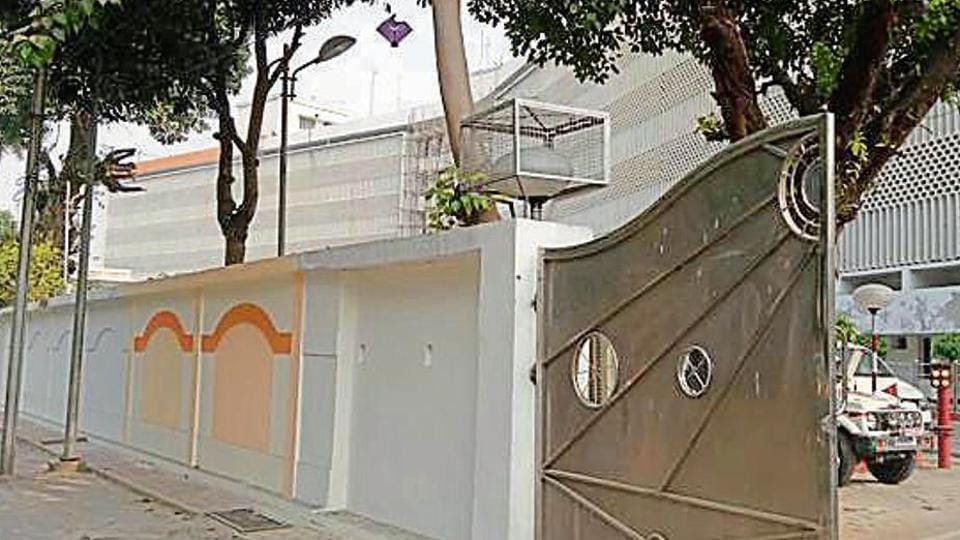
The latest being the chief minister’s secretariat (annexe). While the exteriors of the building are being painted saffron, the decorative designs on the white boundary wall will get a saffron finish too.
When Mayawati came to power in 2007, she got the main Vidhan Bhawan (not the annexe) painted white. Until then the historical building had sported its natural stone exteriors.
Saffron started making its presence felt soon after Adityanath took over the reins of the state on March 19 this year.
First the furniture in his official residence and office got a saffron towel cover. Then came the hoardings displaying state government schemes and achievements in Yogi’s pet colour.
On October 11, Adityanath, who is always dressed in saffron robes, flagged off a fleet of 50 saffron-painted buses called Sankalp Sewa Service. The transport department now plans to launch more such buses to cover about 40,000 villages in the next four years.
Incidentally, soon after Mamata Banerjee assumed power in West Bengal in May 2011, she launched a drive to paint government buildings, hospitals, police stations, bridges, park railings and pavements in blue and white. Despite criticism from political opponents and civil society, she went ahead with her plans. Defending her move in 2015, she said, “I got the idea of decorating Kolkata blue and white after I visited the pink city of Jaipur.”
Back in UP, members of the Indian and New Zealand cricket squads were welcomed with saffron scarves when they checked into a Kanpur hotel last Friday for the final ODI.
A senior state government officer, who did not wish to be named, said, “Saffron is the favourite colour of the 45-year-old priest-cum-politician. Hence that is the colour that you see everywhere he goes. Pandals installed for public programmes are saffron in colour; ministers and BJP MLAs too are mostly clad in saffron kurta and pyjama when they go to see him.”
Taking the cue, even the education department distributed saffron coloured school bags for students replacing the bags with pictures of former CM Akhilesh Yadav and his father, Samajwadi Party patriarch Mulayam Singh Yadav.
Says political observer AK Mishra: “Politics of colour is old in the state. It comes in a cycle with the change of power. After the BSP grabbed power in 1995, then chief minister Mayawati ordered all government events and projects should sport her party’s blue colour. Road dividers, buses, school bags, crossings and pandals were all painted blue. Even the booklets released by various state government departments and the sarees distributed among health workers were blue in colour.”
Similarly, green and red replaced blue after the Samajwadi Party captured power in 2012.
State BJP general secretary Vijay Bahadur Pathak said saffron represented sacrifice, patriotism and bravery and that his party was not against any colour as such.


