
Sign in

In Supreme Court, Centre’s push to review exclusion of SC, ST creamy layer

Attorney general KK Venugopal told the top court on Monday that a bench of 7 judges should be set up to revisit the 2018 ruling in the Jarnail Singh case that held the principle of creamy layer should be applied to SC/ST communities for reservation in promotions.

Updated on: Dec 2, 2019, 20:56:32 IST
Hindustan Times, New Delhi | By
Share
Share via
  • facebook
  • twitter
  • linkedin
Copy link
  • copy link

The Centre on Monday asked the Supreme Court to set up a larger bench to decide on the exclusion of creamy layer for reservation benefits to people from the scheduled caste and scheduled tribe communities.
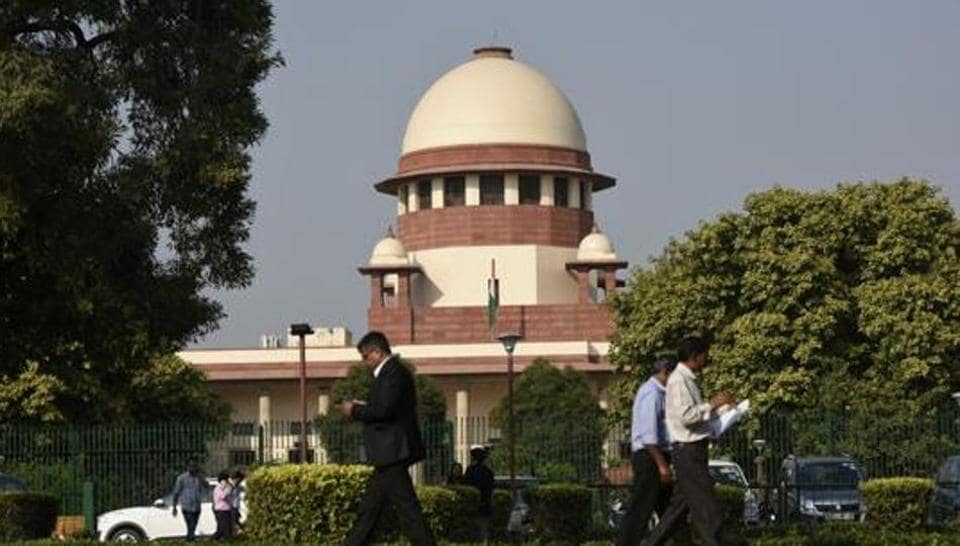
The Supreme Court last year turned down the request for a larger bench to revisit the 2006 verdict but ruled that there was no need to provide “quantifiable data” to show the communities needed the affirmative action. (Burhaan Kinu/HT PHOTO)

Attorney general KK Venugopal told the top court on Monday that a bench of 7 judges should be set up to revisit the 2018 ruling in the Jarnail Singh case that held the principle of creamy layer should be applied to SC/ST communities for reservation in promotions.

At the heart of the 2018 verdict lay a judgment delivered 12 years earlier. This 2006 judgment had effectively implied that SC and ST employees could get guaranteed promotions only if the government produces hard data to demonstrate “compelling reasons”.

The Supreme Court last year turned down the request for a larger bench to revisit the 2006 verdict but ruled that there was no need to provide “quantifiable data” to show the communities needed the affirmative action.

The government has strongly backed restoring quotas in promotions for SCs and STs, arguing that these communities had suffered social inequalities for years and it should be presumed that they remain underprivileged communities for extending them reservations in promotions in the public services.

‘Creamy layer’ is the term used to describe better-off individuals among other backward classes who are ineligible for reservations as per the Mandal Commission provisions. The Centre has been against extending this principle to the presidential order on quotas for SCs and STs

  • HT News Desk
    ABOUT THE AUTHOR
    HT News Desk

    Follow the latest breaking news, major developments and agenda-setting stories from India and around the world with the newsdesk at Hindustan Times. Operating round the clock, the desk brings together experienced editors, reporters and correspondents to deliver fast, accurate and contextual reporting across subjects that influence public policy, governance, business, society and international affairs. The HT News Desk covers politics, elections, government policies, the economy, business and markets, science and technology, the environment, law and order, infrastructure, education, climate issues and geopolitics, while closely tracking developments across states, institutions and global capitals. The team also leads coverage of major breaking news events, policy announcements, court proceedings, natural disasters, public emergencies and significant international developments. Reports published by the newsdesk are based on information gathered from reporters on the ground, official statements, government agencies, court records, regulatory filings, recognised institutions and other authoritative sources. Stories undergo editorial scrutiny and verification processes to ensure accuracy, fairness and relevance, and are updated as events evolve and additional information becomes available. Whether covering a key political decision in New Delhi, an economic policy shift affecting millions, a landmark court ruling or a major global event, the HT News Desk aims to provide readers with reliable, fact-based journalism that delivers not only the latest developments but also the context and analysis needed to understand their wider implications.Read More