
 E-Paper



India, Australia converges on Kabul, Indo-Pacific, set stage for QUAD summit
External Affairs Minister S Jaishankar will leave for the US on September 20 to attend the UNGA and prepare the groundwork for the first Biden-Modi summit on September 23.

 Prefer HTon Google


With India and Australia on the same page on Afghanistan and Indo-Pacific, the stage is set for the QUAD summit in Washington as External Affairs Minister S Jaishankar leaves for the US on September 20 to attend the UNGA and prepare the groundwork for the first bilateral summit between Prime Minister Narendra Modi and US President Joe Biden.
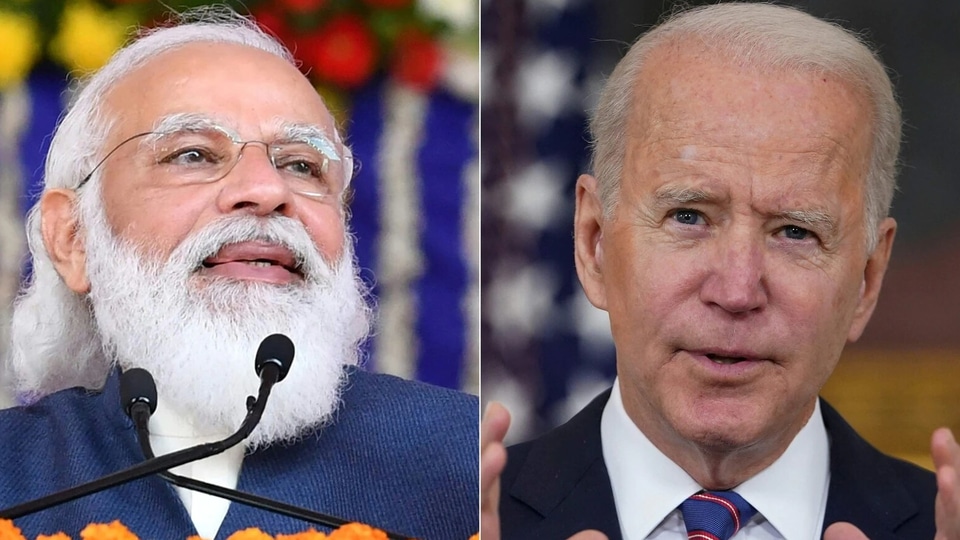
While EAM Jaishankar will fly to New York and be in Washington on September 22 evening when PM Modi lands, National Security Advisor Ajit Doval will be accompanying the PM on Air India One. PM Modi will address the UNGA on September 25 morning and then depart for India unless some bilateral meetings are fixed at the last minute on the sidelines of the UNGA. EAM Jaishankar will be holding bilateral meetings with other foreign ministers throughout the UNGA high segment week starting September 21 and will return later.
During the US visit, the focus will be on Taliban ruled Afghanistan as it is increasingly becoming evident that the Sunni Islamist forces will continue to remain ultra-conservative and will be brutal in approach to women and the other minorities. With Pakistani ISI overtly involved in political and military affairs of the Taliban government in Kabul, the global community will be holding Islamabad responsible in case any terrorist attack emanates from Afghanistan in future. The QUAD physical summit will discuss the Afghanistan situation, the spread of coronavirus, Indo-Pacific and climate change in detail with all the participants virtually on the same page on key issues.
In 2021 Taliban ruled Afghanistan a new power axis has emerged with Pakistan, Qatar and Turkey being the main players with Chinese support unlike Pakistan, Saudi Arabia, and the UAE support and legitimacy to the Sunni Pashtuns during 1996-2001. The role played by Qatari intelligence chief Mohammed bin Ahmed Al-Misnad in first facilitating the so-called Doha process and then giving a private plane to the entourage of UN-designated terrorist Mullah Abdul Ghani Baradar, now deputy PM, to land in Kandahar after the Taliban seized Kabul cannot be underestimated. Apart from Pakistani ISI, the closeness of Qatar with the Taliban is evident as the latter has made the Kabul airport operational.
The other important issue to resonate during PM Modi’s visit to the US will be the Indo-Pacific and right to free navigation in the South China Sea with Beijing getting increasing belligerent in enforcing its unfounded maritime claims in the region. The QUAD navies, on the other hand, are routinely exercising in Indo-Pacific with Malabar Exercise just concluded off the coast of Guam last month.
The first two plus two dialogue between India and Australia on Friday clearly showed that both countries have similar concerns over Indo-Pacific and Afghanistan as Canberra’s position is different from the pro-Pakistan stand of the UK in the Taliban takeover of Kabul. Just as India is being pressed by Beijing all along the Line of Actual Control (LAC), Australia has a running battle with China asking investigation of alleged human rights abuses by the Australian military during deployment in Afghanistan.


