
 E-Paper



India can help change global supply chains: Foreign minister Jaishankar
Foreign minister S Jaishankar said that India can strengthen and de-risk the global economy through more effective partnership, like the supply chain resilience initiative with Japan and Australia.

 Prefer HTon Google


Union minister of external affairs S Jaishankar on Thursday spoke on shaping the post-coronavirus era with a specific relevance to the role that Asia would play at the 26th ‘Future of Asia’ Conference organized by Nikkei.
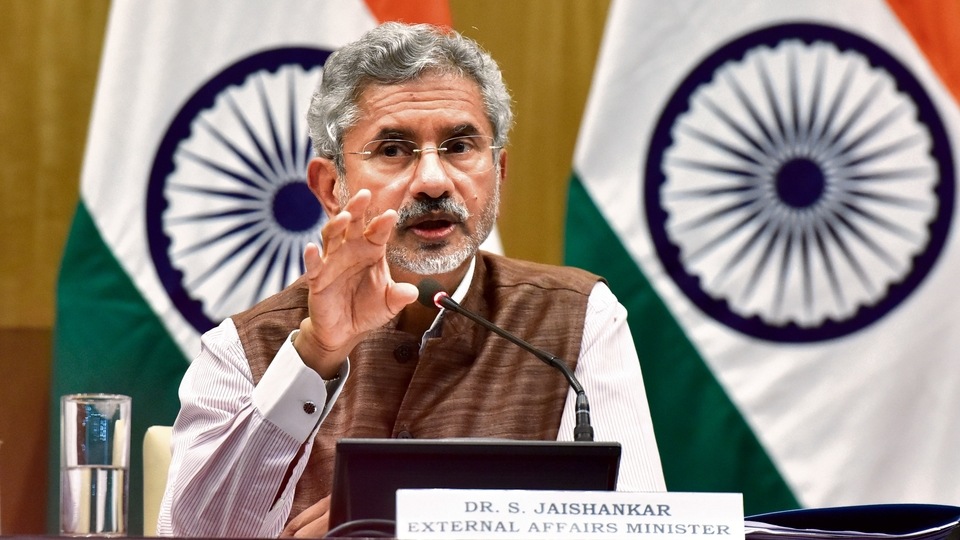
He said among other things coronavirus disease (Covid-19) has reshaped the world by changing the perceptions and calculations of nations about each other and the world by bringing out the value of trust and transparency and the importance of reliable supply chains.
"It has heightened the risk aversion in a world now more insecure and encouraged strategic autonomy to address over-dependence by focusing on the need to create greater global capacities so that pandemic-scale challenges are more effectively met," the minister said.
"What we will now have to conceptualize is re-engineering the way the world works to prepare for and mitigate such cataclysmic events. Covid-19 has certainly triggered debates on issues like supply chains, global governance, social responsibility and even ethics. But for many of us gathered here today, it equally encourages an objective assessment of the contemporary world so that we are better prepared for tomorrow," he further said.
The foreign minister said making that happen requires decisions, initiatives and consultations at many levels. "India, on its part, can help strengthen and de-risk the global economy through more effective partnerships. With Japan and Australia, we are working on a supply chain resilience initiative. Where the Quad arrangement that also involves the US is concerned, its agenda today covers vaccine collaboration, critical and emerging technologies, semi-conductors, supply chains, critical materials and connectivity, amongst others. Recent Indian summits with the European Union and the United Kingdom, that saw advancement on FTAs, are also noteworthy in that regard," he said.
The minister outlined that better international cooperation can also be facilitated by improved national capacities.
"If India is to make a real contribution to Asian and global economic recovery, it can start by helping itself more. Even while the Covid-19 was ongoing last year, bold reforms were undertaken in industry, agriculture, labour and education. Perhaps most relevant to this audience are the production-linked incentive (PLI) schemes to attract manufacturing in 13 sectors: mobiles and electronic components, KSM and APIs for pharmaceuticals, medical devices, electronic and technology products, drugs, telecom and networking products, food products, white goods, high efficiency solar PV models, auto and auto components, ACC battery, textile products and speciality steel."
The minister further said that India aims to make manufacturing in India globally competitive by removing sectoral disabilities, creating economies of scale and ensuring efficiencies. "By creating a level-playing field and encouraging a component eco-system, it will integrate India deeper into the global supply chain. Already, the global response to the PLI initiative has been strong. Coupled with an improvement in India’s position in the World Bank’s Ease of Doing Business rankings – 63 (2020) from 142 (2014) – it would enhance our economic relevance," he added.
The foreign minister also reiterated India's renewable energy target of 450GW by 2030. "As one of the few G20 economies adhering to its Paris commitments, India's 15% energy efficiency savings, shift to LED lighting with 367 million bulbs, moving 80 million households from biomass to LPG cooking and being among the top three nations to expand forest cover in the last decade are examples of seriousness," Jaishankar outlined at the gathering.
In ensuring economic recovery, Indo-Japan relations have a notable role, even beyond Asia, the minister said, adding that New Delhi's partnership is seen as among the most natural in the region.
"Japan is a valuable partner in the national campaigns and is consistently supportive of our infrastructure development. In fact, Japanese-supported projects are among the most successful infrastructure examples, most recent examples being the Delhi-Mumbai Industrial Corridor and the Dedicated Western Freight Corridor. Its long-standing FDI footprint in India is steadily expanding, covering 1455 companies as of 2021, more than half in manufacturing. New industrial collaborations are in the making even as we speak. Its contribution in skills enhancements is visible in 16 Japan-India Institutes for Manufacturing and 5 Japan Endowed Courses," the minister added.


