
 E-Paper



India flags concern over gangsters carrying out operations from Canada
India has multiple extradition requests pending with the Canadian authorities related to gangsters and terrorism.

 Prefer HTon Google


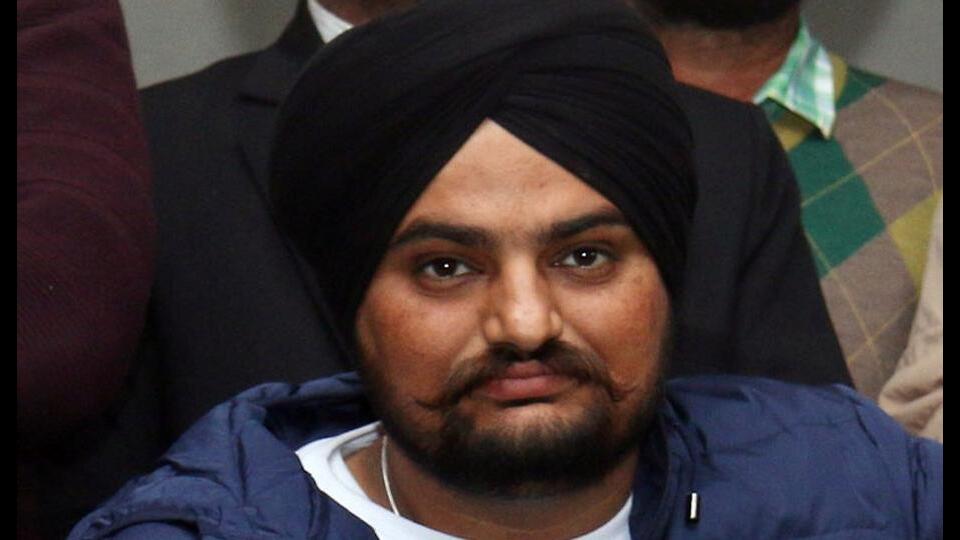
TORONTO: The Indian High Commission in Ottawa has flagged India’s concerns to Canadian authorities over the involvement of gangsters operating from the North American country in violent crime in Punjab as singer Sidhu Moosewala’s killing late last month renewed the focus on the matter.
Also Read | Bishnoi admitted to his gang’s role in Moosewala’s murder, say police
The Punjab Police have said Goldy Brar, a Canada-based member of the Lawrence Bishnoi gang with 16 cases registered against him in India, was involved in Moosewala’s murder. Moosewala was murdered days after Punjab’s state intelligence headquarters in Mohali was attacked. Lakhbir Singh Landa, who lives in Canada and has around 20 cases pending against him in India, has been named as the main conspirator in the attack.
An official, requesting anonymity, said Canada-based radicals and gangsters were involved in acts of crime in India and that Ottawa has been asked to take cognisance and urgent pre-emptive action.
The request comes even as multiple Indian extradition requests remain pending with the Canadian authorities. Officials did not specify the exact number or names but added about 10 of them related to gangsters and three or four to terrorism.
The matter was also raised when a National Investigation Agency team visited Ottawa in 2021 and met with Canadian officials. A statement issued then said that discussions were held about collating evidence on several ongoing investigations into cases of terrorism and other serious crimes to bring about successful prosecution of the accused in both India and Canada.
The two sides discussed issues related to evidentiary requirements in India and Canada and possible cooperation for capacity building in the police investigation.
Indo-Canadian gangs, comprising mainly people of Punjab origin, especially in and around Vancouver in British Columbia, date back to the early 1990s with the emergence of Bindy Johal, the first major mafioso from the community. Johal, who had a rivalry with the area’s Chinese triads, was, in copybook mafia- style, gunned down on the orders of one of his own lieutenants at a nightclub in downtown Vancouver.
Other groups, drawn largely from the Punjabi immigrant community, emerged after Johal’s killing. The Sanghera and Buttar factions were among the most notorious.
Gangsters such as Johal were either born or raised in Canada. The new gangs have emerged from among new immigrants, according to Shinder Purewal, a political science professor at Kwantlen Polytechnic University. The phenomenon has gone from being home-grown to being imported from India, particularly with regard to the narcotics trade.
Purewal said Vancouver and its suburbs were the original fulcra for such gang activity, which has gradually moved east to Ontario, especially the Greater Toronto Area. He added while the Indian links were always present in drug smuggling, they have become more pronounced.
Last April, York Regional Police, which lead an investigation involving multiple agencies, announced that it “dismantled a large-scale international drug trafficking network that extended to Western Canada, the United States, and India.” Of the 27 arrested, 23 were of Punjabi heritage and 19 residents of Brampton.
In the last two months, at least four men originally from Punjab have been arrested in Brampton alone and charged with offences including those connected to firearms.
India has asked Canada to deny visas to gangsters from Punjab. But part of the problem may be that gang members are often connected to the corrupt within the Punjab Police and get the necessary clearance the Canadian missions have for reference, said Purewal, who is also the author of Sikh Ethnonationalism and the Political Economy of Punjab.
Extraditions are also difficult and take years. It took 19 years for Malkit Kaur Sidhu and Surjit Singh Badesha to finally be extradited to India in 2019 in connection with the contract killing of Jaswinder Sidhu, 25. Jaswinder Sidhu travelled to India in 2000, and eloped with a man her family did not approve of.
Malkiat Singh was the last gangster to the sent back to India 15 years back. He was wanted in India for kidnapping and murder.


