
 E-Paper



India deploys T-90 tanks in Galwan Valley after China’s aggressive posturing at LAC
Infantry combat vehicles along with 155mm howitzers have been deployed all along 1597 km long LAC in East Ladakh.

 Prefer HTon Google


Signalling that it is all for peaceful restoration of status quo ante in East Ladakh but is also prepared for the worst case scenario, the Indian Army has deployed six T-90 missile firing tanks and top-of-the-line shoulder fired anti-tank missile systems in the Galwan Valley sector. The senior military commanders from India and China are meeting at Chushul on Tuesday to work out the de-escalation and disengagement process on mutual terms.
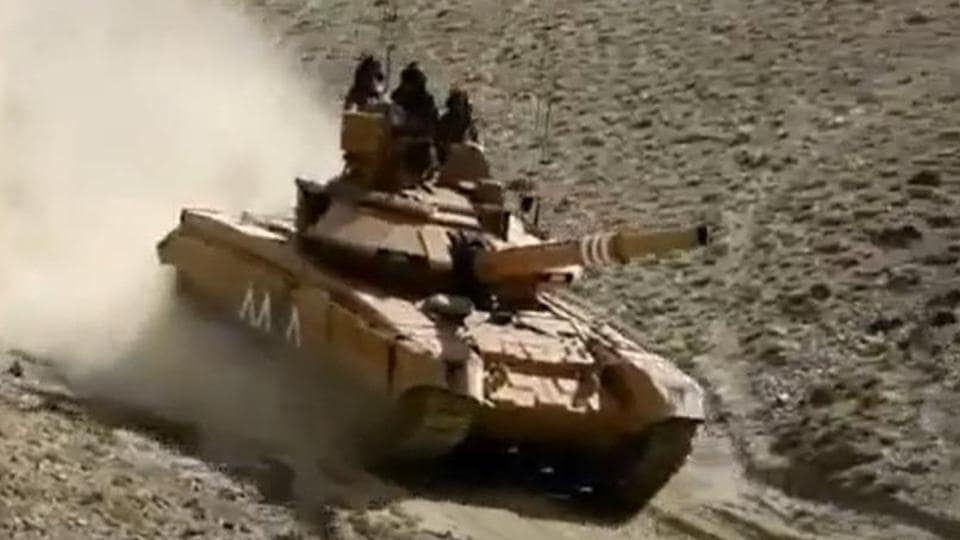
The army’s decision to deploy the T-90 Bishma tanks was taken after the Chinese People’s Liberation Army (PLA) had beefed up its positions on the river bed with armoured personnel carriers and troop tents. The Indian Army is occupying the dominant heights in the sector within its side of the Line of Actual Control (LAC).
Infantry combat vehicles along with 155mm howitzers have been deployed all along 1597 km long LAC in East Ladakh with two tank regiments deployed in Chushul sector to repel any aggressive plans of the adversary through the Spanggur Gap. While Chinese PLA wants to make a deal on the LAC in this sector as part of withdrawal, the Indian Army is no mood to give an inch as the military aggression came from the Western Theatre Command of China with the intention of redefining the LAC.
According to military commanders, India is prepared for a long haul in this limited spectrum with capability of a full spectrum retaliation in case the red flag goes up. With the water temperature in the river already touching 10 below zero and the river bed temperatures more frosty than the dominant heights due to temperature inversion, it is only a matter of time when “General Winter” takes over the area and makes Chinese positions in Galwan Valley untenable.
While the PLA propaganda talks about introduction of troops trained in martial arts in the East Ladakh sector, fact is that the Chinese foot soldier is conscripted into the army for two years unlike the Indian hardy trooper who stays a minimum of 17 years. Since 1984, the Indian trooper has been trained in high altitude war to repel Pakistan Army from taking over Siachen glacier and has been sitting heights of over 15,000 feet in both Kargil as well as East Ladakh sector.
The general morale of the Indian military commanders and troops is very high with both Indian Air Force and Indian Navy deployed in highest state of alertness. Majority of Chinese PLA Air Force fighters are taking off from Hotan air base in Taklamakan desert, some 240 km from the LAC with surface to air missiles deployed to counter the Indian fighters.


