E-Paper



India, Germany poised for stronger ties, say Vaishnaw and Scindia
India’s status as the fastest growing major economy and Germany’s reputation as a powerhouse of innovation and precision manufacturing are compelling factors for closer business and strategic ties between the two sides, Vaishnaw and Scindia said.

 Prefer HTon Google


India’s status as the fastest growing major economy and Germany’s reputation as a powerhouse of innovation and precision manufacturing are compelling factors for closer business and strategic ties between the two sides, Union ministers Ashwini Vaishnaw and Jyotiraditya Scindia said on Thursday.
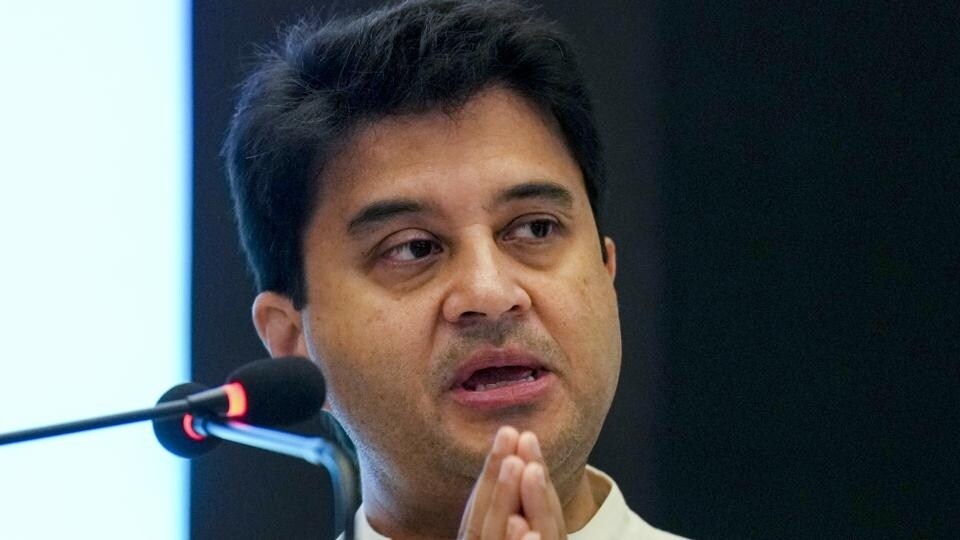
The ministers, who were addressing the opening session of the News9 Global Summit in the capital of the southwestern German state of Baden-Württemberg, also pointed to the opportunities for closer people-to-people ties, including the role that Indian professionals and students can play in fostering greater collaboration.
The News9 Global Summit, being held in Stuttgart during November 21-23, is one of the first international events of its kind to be organised by an Indian media outlet and aims to deepen relations between India and Germany and bolster sustainable growth.
Vaishnaw, the Union minister of railways and electronics and information technology, said the success of the Narendra Modi government “reflects the fact that good economics can also be good politics”, especially when policies and economic execution make a difference in people’s lives.
“To my friends in Germany, I would say that we have all witnessed a shift in the global supply chains. We have seen the impact of the pandemic...We in India offer you trust, talent and stability,” Vaishnaw said in his inaugural address on the theme “India and Germany: A roadmap for sustainable growth”.
Read more: PM set to deliver keynote address at Germany meet
“We are a country which believes in democracy. We are a country which respects IP rights. We are a country which is open minded, which always believes in multilateralism and believes in a rules-based international order. We welcome you all, see for yourself what kind of transformation is happening there,” he said.
“Come invest in India. We offer a vast pool of talent and world-renowned capabilities in IT and design. This is a once in a decade opportunity for you. This is an opportunity which will help you grow. This is a win-win for all of us.”
Scindia, in his ministerial address on the theme “India and Germany: Connected for durable growth”, listed four pillars on which the bilateral relationship can be strengthened, including two-way trade that is currently worth nearly $26.5 billion dollars.
“Germany is one of the largest FDI investors in India. Over 2,000 German companies today are present in India with an investment of greater than $15 billion,” he said, adding that Prime Minister Modi and German Chancellor Olaf Scholz have worked assiduously to grow trade and investments.
The second pillar, Scindia noted, is collaboration in the defence sector. “The Indo-Pacific is no longer the Asia Pacific. Security, peace and tranquillity is mandatory in that area,” he said. Collaboration between Indian defence startups and companies and German defense manufacturers can give a great fillip strategic ties.
The third pillar is cultural exchanges between the people, including students who can benefit from the innovation and technology partnership with Germany, especially in emerging technologies such as renewables, artificial intelligence, quantum computing and semiconductors.
India has also taken a leaf from Germany’s excellence in vocational training with the Prime Minister’s Internship Scheme.
The fourth pillar is India’s commitment to sustainability, which is now a keyword in the government’s systems. “The green hydrogen task force that has been put together in India will ensure the fulfilment of our common goals towards decarbonisation across all industrial and manufacturing processes and will ensure that the goals of the Paris Agreement become a reality. The Indo German Green and Sustainable Development Partnership will also ensure that commitment bears fruition. Close to €3.2 billion have been invested in that relationship,” said Scindia, the Union minister of communications and for development of the northeastern region.
“It is imperative for me to describe the Indo-German partnership as a living bridge that unites that world’s two most dynamic countries. A bridge that is not built of steel or stone, but built of shared beliefs, ideals and values. Our connection is also the people, the ideas and the values that empower each other and in turn the world,” Scindia said.