
 E-Paper



India junks report linking senior pilot’s role in Ahmedabad plane crash
Cockpit recordings suggest Air India Flight 171's captain turned off fuel, but India’s AAIB calls the report irresponsible, urging caution in speculations

 Prefer HTon Google


Cockpit recordings of Air India Flight 171’s final moments indicate the captain switched off fuel to the plane’s engines, a media report said on Thursday, citing anonymous sources, but the claim was rejected as irresponsible reporting by India’s Aircraft Accident Investigation Bureau.
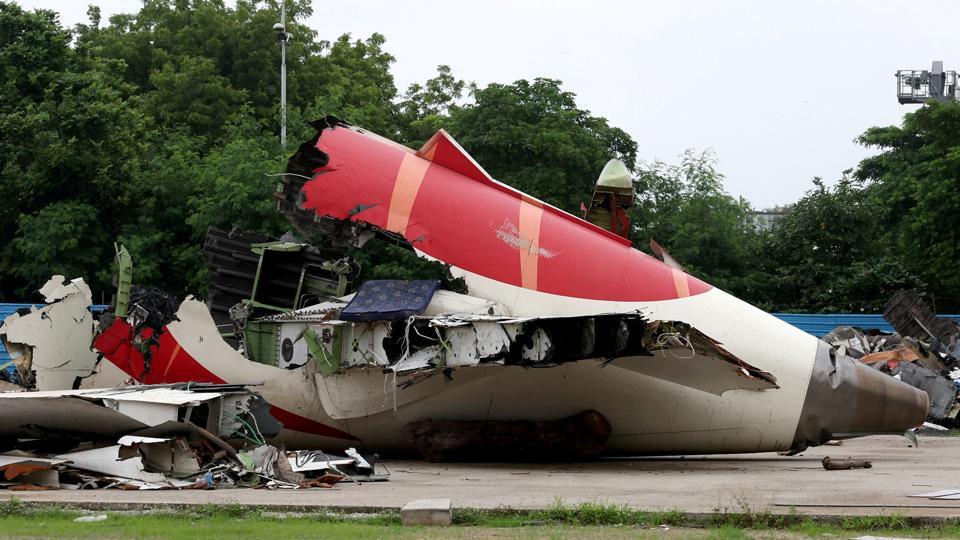
The Wall Street Journal, citing unnamed American officials aware of the probe’s details, first reported that black box recordings indicated captain Sumeet Sabharwal turned off the fuel control switches, prompting first officer Clive Kunder to ask why he had moved them to the “cutoff” position. Bloomberg independently reported it was Kunder who asked the question.
The captain appeared to deny responsibility while remaining calm as the first officer expressed surprise and panic, the WSJ report stated, citing people familiar with US officials’ early assessment.
The AAIB’s preliminary report released last week summarised the cockpit exchange but did not identify which pilot made which statements: it merely stated that one pilot asked the other why he had moved the switches while the colleague denied doing so.
ALSO READ | Indian pilots’ body slams US media report as new details emerge on Air India plane crash in Ahmedabad
The AAIB, without naming the publications, on Thursday criticised what it said were repeated attempts to “draw conclusions through selective and unverified reporting.” It is “essential to respect the sensitivity of the loss faced by family members of deceased passengers, crew of the aircraft and others on the ground,” it said.
The agency clarified that the purpose of the preliminary report is to provide information about ‘what’ happened, not to reach conclusions about why it occurred. “At this stage, it is too early to reach to any definite conclusions,” the statement said, adding that the root cause analysis will be part of the full report. No timelines have been shared for the latter’s release.
On being asked why a transcript of the cockpit conversation was not released, AAIB director general GVG Yugandhar told HT: “Transcript is not released by any nation as per ICAO (International Civil Aviation Organization) protocols. Only relevant lines will come in final report.”
ALSO READ | Air India crash: Five new revelations from WSJ report on black box, pilots' actions
An ICAO official, who asked not to be named, cited rule 5.12 of annex 13, that lays down guidelines on member states to protect accident investigation records. This portion stated that “investigation agencies shall not make available” records such as cockpit voice recordings for any purpose other than the probe itself, although countries retain the discretion to do so if in the larger interest of public or aviation safety.
Aviation experts stressed that reports such as those by Bloomberg and WSJ have created a situation where more information must be released to restore confidence in the investigation process.
“The unedited cockpit tapes need to be made public. It is vital that crucial evidence currently in the hands of the investigators must be made public in order to arrest for good these malicious and unwarranted insinuations,” said Mark Martin, CEO of aviation consultancy firm Martin Consulting.
CS Randhawa, president of Federation of Indian Pilots (FIP) said: “Such speculation could have been avoided if the AAIB, in its preliminary report, stated some crucial part of the CVR transcript” before adding that the AAIB’ s appeal on Thursday for people to avoid conjecture on the pilots’ roles “was much needed”.
ALSO READ | The focus on the Air India pilot
Neither report stated if there was evidence that Sabharwal did indeed move the switches, beyond the verbal exchange cited. It was not clear if the publications had heard the recordings or viewed transcripts.
However, Bloomberg quoted an expert saying the cockpit recording could be more revelatory than known at present. “There are multiple microphones around the cockpit including their headsets,” said Michael Daniel, a retired Federal Aviation Administration inspector and accident investigator.
The microphone positions mean it is possible the recording captured not just the sound of fuel switches being turned off, but the direction from which it came in the cockpit—offering investigators definitive information about who cut off fuel supply to the engines, he said.
The preliminary report found that at 08:08:42 UTC, both switches moved in succession one second apart, with both returned to the “run” position approximately 10 seconds later. The aircraft crashed near Ahmedabad airport 32 seconds after takeoff, killing 241 of the 242 people aboard and 19 others on the ground.
How and why the switches came to be turned off—cutting fuel flow to the engines—are now the key lines of inquiry for investigators.
The two switches sit at the lower end of the aircraft’s centre console between pilot seats near the thrust levers, designed to prevent unintended movement. There are metal guards on either side of the mushroom-shaped knobs, and the switches have spring-loaded locking mechanisms requiring pilots to pull them up before changing position.
The report did not determine whether switch movement was accidental or deliberate, nor did it rule out possible design flaws, malfunctions or maintenance issues. The board has now included flight recorder specialists, aviation medicine and psychology experts in the probe to examine all potential factors.
The new details have reinforced beliefs among some US officials that criminal authorities should review the matter, as would likely occur if such a crash happened on American soil, people familiar with the matter told the Journal.
Aviation disasters potentially involving deliberate actions may never be fully resolved due to incomplete evidence and disagreements over analyses. Plane crash investigations often last a year or longer, with new information sometimes contradicting initial assessments.
Air India did not respond to requests for a comment.
The Airline Pilots’ Association of India has pushed back on human action as the cause. “Pilots are trained professionals who carry the responsibility of hundreds of lives with dedication and dignity.
“The crew of AI 171 made every possible effort -- till their very last breath -- to protect the passengers on board and minimize harm on the ground. They deserve respect, not unfounded character judgments,” ALPA India said in a statement.
The 56-year-old Sabharwal was described by colleagues as a soft-spoken veteran devoted to caring for his ailing father. He began his flying career in the early 1990s after attending the prestigious Indira Gandhi Rashtriya Uran Akademi.
Kunder, 32, had dreamed of flying since childhood, inspired by his mother’s three-decade career as an Air India flight attendant. He obtained his commercial pilot licence in Florida before joining Air India in 2017, initially flying Airbus A320s before transitioning to the Boeing 787 in 2022.
Boeing, engine manufacturer GE Aerospace and the Federal Aviation Administration have not issued safety bulletins or directives to 787 operators since the crash. The findings represent the first fatal accident involving the Boeing 787 Dreamliner since it entered service in 2011.


