
 E-Paper



India notifies Pakistan about Indus Waters Treaty suspension: 'Breached conditions'
The decision was detailed in a letter from Debashree Mukherjee, India’s Secretary of Water Resources, to her Pakistani counterpart.

 Prefer HTon Google


India on Thursday officially informed Pakistan about its decision to keep the Indus Waters Treaty in abeyance with immediate effect, saying that Islamabad has breached the conditions of the treaty.
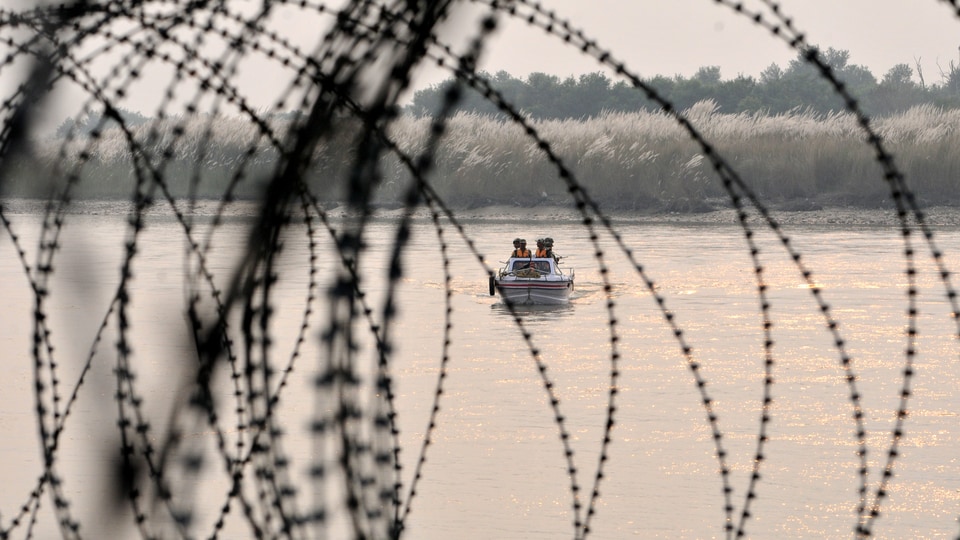
The decision was detailed in a letter from Debashree Mukherjee, India’s Secretary of Water Resources, to her Pakistani counterpart, Syed Ali Murtaza, reported PTI.
The letter said that sustained cross-border terrorism by Pakistan targeting Jammu and Kashmir impedes India's rights under the Indus Waters Treaty.
“What we have seen instead is sustained cross-border terrorism by Pakistan,” the letter stated, noting that these actions have created “security uncertainties” that impede India’s ability to fully utilise its treaty rights, according to PTI.
Also Read | How will Pakistan airspace closure impact Indian passengers, carriers?
India on Wednesday had announced the suspension of the Indus Waters Treaty with Pakistan, a day after 26 people, including tourists, were gunned down in a terrorist attack in Jammu and Kashmir's Pahalgam.
The move is among the five big punitive actions taken by New Delhi against Islamabad in the wake of the terror attack.
What is the Indus Waters Treaty?
Brokered by the World Bank, which is also a signatory, the Indus Waters Treaty sets out a mechanism for water sharing and information exchange between the two nuclear-armed neighbours for the use of the Indus River water and its five tributaries Sutlej, Beas, Ravi, Jhelum, and Chenab. The treaty was signed after negotiations for over nine years which followed the first war over Kashmir.
Former US President Dwight Eisenhower described it as “one bright spot ... in a very depressing world picture that we see so often.”
It allocates waters from the Western rivers (Chenab, Jhelum and Indus) to Pakistan and the Eastern rivers (Ravi, Beas and Sutlej) to India for unrestricted use. India is allowed to extract water from the western rivers for certain non-consumptive, agricultural, domestic use and hydroelectric power generation.


