E-Paper



India rejects China’s stance on border infra and Ladakh
External affairs minister S Jaishankar, participating in the Bloomberg India Economic Forum online, made it clear that New Delhi wasn’t to blame for the standoff in the Ladakh sector that has entered its sixth month.


India on Thursday called on China to work for complete disengagement at friction points on the Line of Actual Control (LAC), while rejecting Beijing’s contention that infrastructure development and troop deployments by New Delhi were the root causes of tensions at the border.
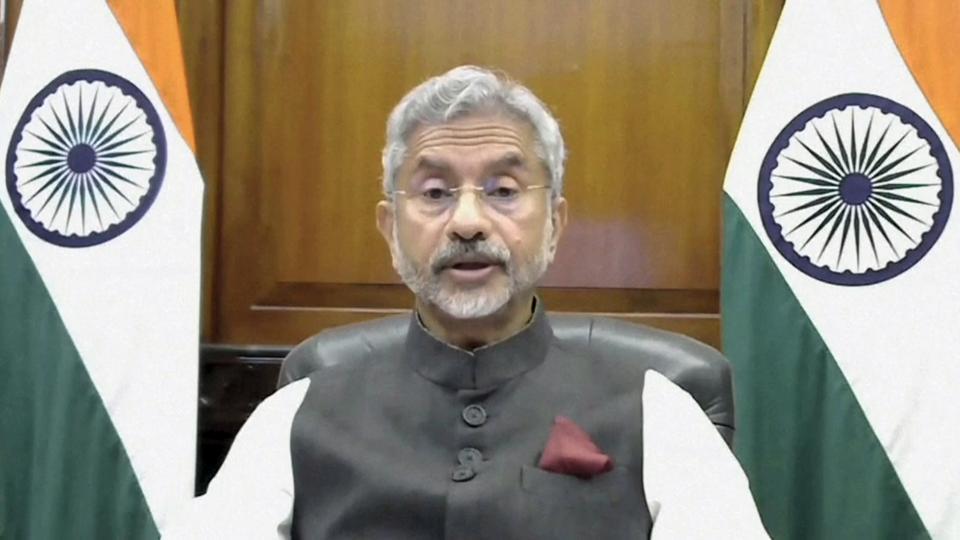
External affairs minister S Jaishankar, participating in the Bloomberg India Economic Forum online, made it clear that New Delhi wasn’t to blame for the standoff in the Ladakh sector that has entered its sixth month. Acknowledging the gravity of the situation, he pointed out India and China had built their relationship and expanded cooperation over the past 30 years “predicated on peace and tranquillity along the border”.
“If that underlying peace and tranquillity is disturbed, if the agreements which the two sides signed are not honoured, then clearly that is the primary cause of the disruption,” Jaishankar said. He added: “If you disturb the foundation of this relationship, you cannot be impervious to the fact that it will have consequences...that problem...was not created on our side.”
China’s foreign ministry had on Monday cited India’s infrastructure development and troop deployments as the root causes of tensions. It also said India should refrain from actions that could escalate the situation.
The external affairs ministry also dismissed China’s stance on not recognising Arunachal Pradesh state and the Union Territory of Ladakh, saying both regions are an integral part of India and Beijing has no locus standi to comment on such internal matters.
Also Read: In rebuttal to China claim over Ladakh, Arunachal, India drops a clear warning
The remarks by external affairs ministry spokesperson Anurag Srivastava reflected the stalemate in efforts to end the Ladakh standoff, and the lack of progress in disengagement of troops at friction points after several rounds of diplomatic and military talks.
Srivastava said India was creating infrastructure that improved the lives of its people. “The government gives careful and specific attention to improvement of infrastructure for the development of border areas in order to facilitate economic development of these areas, as also to meet India’s strategic and security requirements,” he said.
Peace and tranquillity can be restored by “scrupulously observing all relevant agreements” on border management, he added.
Responding to China’s contention that it doesn’t recognise Arunachal Pradesh and the Union Territory of Ladakh, Srivastava said both regions are an integral and inalienable part of India. “China has no locus standi to comment on India’s internal matters. We hope that countries will not comment on India’s internal matters, as much as they expect the same of others,” he said.
Also Read: A long, fragile winter in Ladakh | HT Editorial
Srivastava described troop disengagement as a complex process requiring redeployments by each side towards their regular posts along the LAC, and indicated there would be more talks to take this process forward.
“To achieve this, the two sides will maintain the current momentum of communications based on the guidance of our leadership to not turn differences into disputes and work towards a mutually acceptable solution for complete disengagement in all the friction areas along the LAC and restoration of peace and tranquillity in the India-China border areas,” he said.
Jaishankar also told the Bloomberg India Economic Forum that the talks between military commanders and diplomats were a “work in progress”. He said: “What is going on is something confidential between us and the Chinese and we will wait to see how this plays out.”
A key issue was whether a rising China and a rising India could find equilibrium, and the situation on border is an expression of “the inability to meet that challenge”, he said.
Former ambassador Vishnu Prakash described the situation on the LAC as a battle of wits, with both sides waiting to see who would blink first. “The Chinese are playing chicken, since they staged a misadventure with the expectation of quickly fulfilling the objective of grabbing some land but were surprised by the Indian response,” he said.
“They have hit the pause button after they realised it wasn’t going to be an easy ride. It is a battle of nerves as the Chinese have upped the psychological warfare. They are also watching other developments, such as the outcome of the US election,” he added.