E-Paper



India’s first pollinator park opens in Uttarakhand’s Haldwani
The park aims to conserve various pollinator species, create awareness among general public about their importance and to promote further research on various aspects of pollination.

 Prefer HTon Google


The Uttarakhand forest department on Tuesday dedicated the newly built Pollinator Park to the public, claiming it to be the country’s first such park, spread over 4 acres in Haldwani in Nainital district.
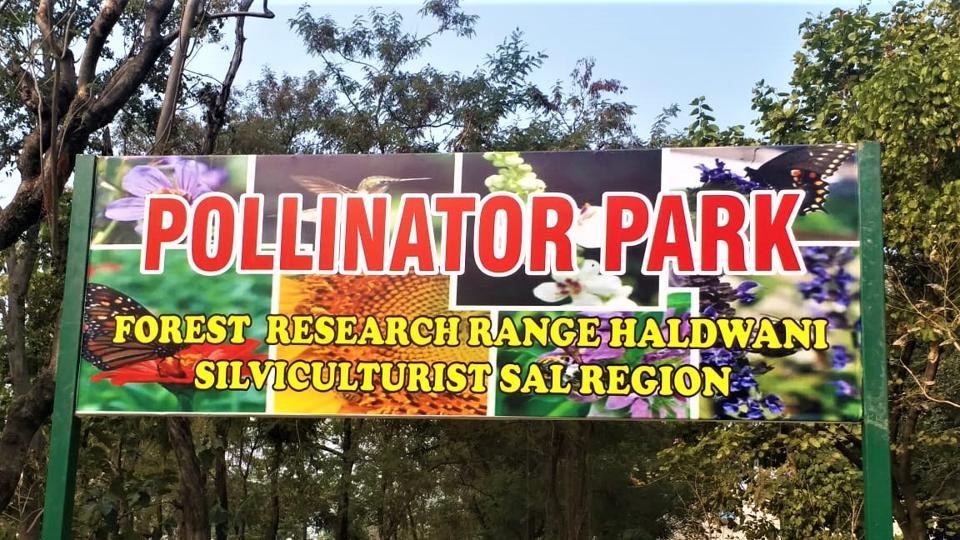
The park has more than 40 pollinator species with displays on the mechanism of pollination of plant species by various species of butterflies, honeybees, birds, insects, moths, beetles, wasps, and small mammals. The park also has small water bodies for mud puddling of butterflies through which they take certain nutrients like salt and arrangement of ultraviolet light to attract night pollinators like moths.
The pollinators park, which took nearly a year to build, was inaugurated by noted lepidopterist Peter Smetacek, from Butterfly Research Centre Bhimtal. Smetacek helped the forest department in setting up the park.
Speaking on the occasion he said “Many pollinator species are in decline due to a loss in feeding and nesting habitats, pollution, overuse of pesticides and insecticides, disease, and changes in climatic patterns, are contributing to shrinking and shifting of pollinator populations, thereby endangering our food security”.
Sanjiv Chaturvedi, chief conservator of forests (CCF) and in-charge of the state forest research wing said it is the country’s first Pollinator Park spread over 4 acres. “The objective of setting up the park is to conserve various pollinator species, to create awareness among general public about their importance and to promote further research on various aspects of pollination, including a threat to their habitat and impact of pollution, use of pesticides and relation between various pollinators and plant species”, he said.
Giving details of the park, Chaturvedi said various mini habitats have been created for various pollinators. “The park has marigold, rose, hibiscus, jasmine for honeybees and butterflies, birds and moth species. There are also host plants to provide shelter to eggs, larvae and pupa, like curry leaf plant, citrus species, cassia species. Apart from this, to attract various bird and butterfly species, bird feeders and nests have been placed throughout the park, with food grains. Also, some cut fruits have been put in the park as certain butterfly species are attracted to such cut fruits”, he said
He said endemic species of honeybee Apiscerana indica, have also been reared in the park. “Their numbers have declined considerably in recent years because of various threats like pollution, use of pesticides/insecticides and dominance of European species in honey production”, he said.
The CCF said in India attention has not been given to the concept of pollinator parks so far. “In USA and western countries, the importance of pollinators was recognised long back and to conserve pollinators, pollinator parks, gardens, strips and pathways have been created there”, he said.
Talking about the importance of pollinators and why people should know about them, Chaturvedi said somewhere between 75% and 95% of all flowering plants on the earth need pollinators to reproduce. “Pollinators provide pollination services to over 180,000 different plant species. Without them, existing populations of plants would decline, even if soil, air, nutrients, and other life-sustaining elements were available. Pollinators affect nearly 35% of global agricultural land, supporting the production of 87 of the leading food crops worldwide, and thus forming the basis of our life”, he said.