E-Paper



India takes over operations of Iran’s strategic Chabahar Port, can bypass Pak on way to Afghanistan
Iran formally handed over the port to India during a first meeting of the follow-up committee for the implementation of the Chabahar Agreement between Iran, Afghanistan, and India in the port city Tehran.

 Prefer HTon Google


India on Monday formally took over operations at Chabahar port in Iran, giving a major boost to the country’s efforts to support war-torn Afghanistan, people familiar with developments said.
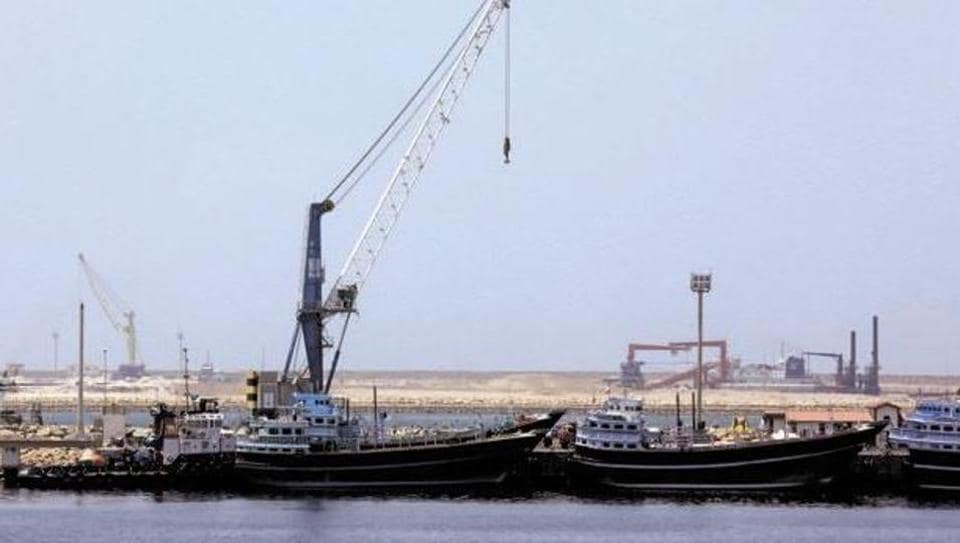
New Delhi’s efforts to develop the port, which allows India to ship supplies to Afghanistan while bypassing Pakistan, received a fillip recently when Washington exempted Chabahar from Iran-related sanctions in November.
Iran formally handed over the port to India during a first meeting of the follow-up committee for the implementation of the Chabahar Agreement between Iran, Afghanistan, and India in the port city Tehran. The Indian side at the meeting was led by joint secretary (Pakistan-Afghanistan-Iran) Deepak Mittal of the external affairs ministry, while the Iranian team was led by Mohammad Ali Hassanzadeh, the deputy head of the Ports and Maritime Organisation, the people said.
“This is a major step forward in India’s efforts to support Afghanistan and also for regional cooperation,” an official in New Delhi said.
Also Read | Why the Chabahar Port agreement kills two birds with one stone
Behrouz Aqaei, director general of Sistan-Baluchestan Ports and Maritime Organisation, was quoted by Irna news agency as saying that India Ports Global Limited (IPGL) has “officially started to run Shahid Beheshti port in Chabahar” and the company’s major tasks include loading and unloading operations, procurement and marketing.
The meeting discussed matters such customs tariffs, promoting customs transactions and rail transit, and the transportation process, Aqaei said.
The meeting also discussed finalising the protocol to harmonise transit, roads, customs and consular matters for making the port attractive and to decrease logistic costs.
Also Read | ‘Chabahar Port project will be an engine of growth for India, Iran and Afghanistan’
The Chabahar Agreement was signed in June 2015 and approved by Iran’s Guardian Council in November 2016.
Chabahar is being seen as a gateway for trade by India, Iran and Afghanistan with Central Asian countries.
According to a memorandum of understanding (MoU) signed in May 2015, EXIM Bank is to extend a line of credit of $150 million for developing the port and another $85 million was allotted for supplying equipment to develop two berths at Chabahar.
Also Read: Opinion | India must lead the way but also step aside in South Asia
In a separate development, a senior official of Iran’s Trade Promotion Organization (TPO) said on Monday that Iran and India are on the verge of finalising a “preferential trade” agreement that will come into force in the near future.
Mojtaba Mousavian, head of the Asia and Oceania Trade Office in the TPO, said talks between the two sides regarding the agreement have been fruitful and the pact is set to be implemented within the next month, Mehr news agency reported.
Mousavi an said each side will reduce tariffs on 80 to 100 products purchased from the other country.
According to Mousavian, urea, methanol, propane, tar, iron, butane, pistachio and dates are among the products shipped from Iran that will enjoy tariff reduction.
In exchange, Indian goods included in the initial list are rice, tea, carbon electrodes, paper, aluminum oxide, medical supplements and sesame.