
 E-Paper



India to oppose 'agenda-driven' global rankings on press freedom, governance: Report
Sanjeev Sanyal, a member of Modi's Economic Advisory Council, said India has begun to raise this issue at global forums.

 Prefer HTon Google


India plans to push back against "agenda-driven", "neo-colonial" country rankings produced by global agencies on topics like governance and press freedom, a key advisor to Indian Prime Minister Narendra Modi told Reuters in an interview on Friday.
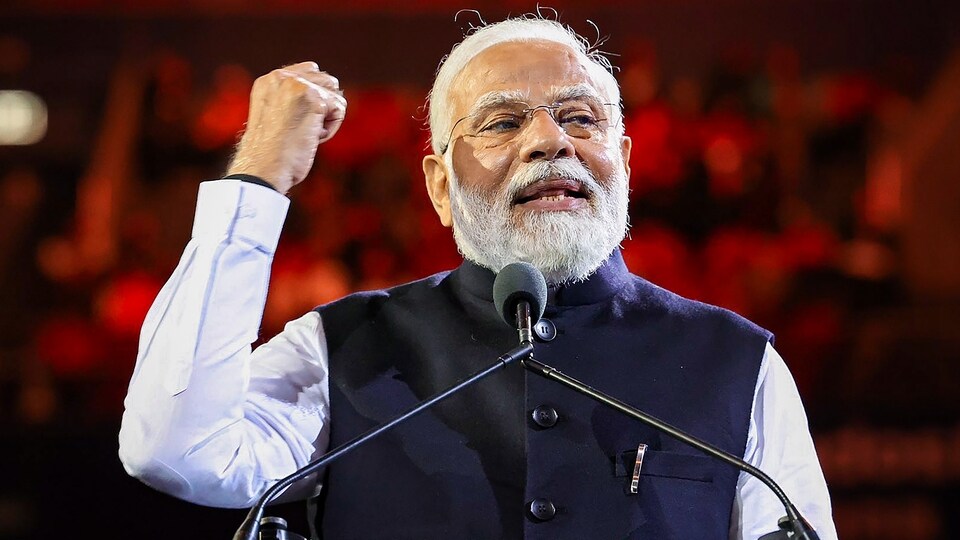
Sanjeev Sanyal, a member of Modi's Economic Advisory Council, said India has begun to raise this issue at global forums. He said the indices were being compiled by a "tiny group of think-tanks in the North Atlantic," sponsored by three or four funding agencies that are "driving a real-world agenda."
"It is not just narrative building in some diffused way. This has clear direct impact on trade, investment and other activities," Sanyal said.
Read: Jaishankar slams India's press ranking; ‘Imagine Afghanistan freer than us’
India ranked lower than Afghanistan and Pakistan in the new World Press Freedom Index released by Reporters Without Borders. It was below Pakistan and Bhutan in an academic freedom index by V-Dem Institute.
Over the past year, India has in various meetings pointed out the flaws in methods used to compile global indices used by institutions like the World Bank, World Economic Forum (WEF) and the United Nations Development Programme (UNDP), Sanyal said.
The "World Bank is involved in this discussion because it takes these opinions from these think-tanks and effectively sanctifies it by putting it into something called the world governance index," Sanyal said.
The World Bank, WEF, Reporters Without Borders and V-DEM Institute did not immediately respond to requests for comment. UNDP said it would respond shortly.
Sanyal said the ratings also get hard-wired into decision-making through environmental, social and governance (ESG) norms and sovereign ratings. Multilateral development banks offer subsidised loans to ESG-compliant projects.
"The idea of having some ESG norms is not the problem in itself. The problem relates to how these norms are defined and who certifies or measures compliance to these norms," he said. "As things are currently evolving, developing countries have been completely left out of the conversation."
Read: World's ‘most miserable’ countries list 2022: Where do India, Pakistan stand?
The matter is being taken up by the Cabinet Secretariat, which has held more than a dozen meetings on the issue this year, a government official said. The Cabinet Secretariat and finance ministry did not immediately respond to requests for comment.
India has said it plans to be an advocate for developing countries under its G20 presidency. Sanyal did not say if India has flagged the issue of country rankings with the G20.
"There are other developing countries who are also concerned about this because effectively this is a form of neo-colonialism," he said, adding that concerned ministries have been asked to establish benchmarks and engage continuously with ratings agencies.
Some of the upcoming indices being watched out by India are financial development index by International Monetary Fund, gender inequality and human development indices by UNDP, logistics performance and worldwide governance indicators by the World Bank, sources said.


