
 E-Paper



Supreme Court raps Kerala govt for not detailing steps to protect state's tallest captive elephant
The court questioned Kerala’s claim that it had taken the elephant's custody after the June 9 order, asking why the fact had not been disclosed in its affidavit

 Prefer HTon Google


The Supreme Court on Friday pulled up the Kerala government for failing to place on record the steps taken to safeguard Uttoly Raman -- the state’s tallest captive elephant, since it ordered the animal’s custody to be transferred to the state in June, directing authorities to produce his latest medical examination report on October 12.
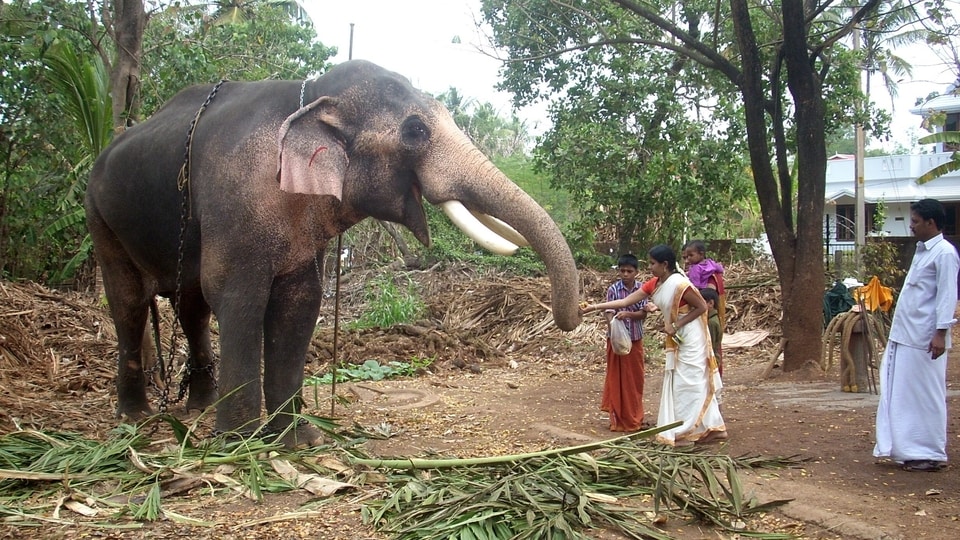
A bench of justices Dipankar Datta and Sheel Nagu questioned the state’s claim that it had taken custody of the elephant soon after the June 9 order, asking why the fact had not been disclosed in its affidavit and why the court had been kept in the dark about the steps taken to ensure the animal’s welfare.
“What were you doing since June 9? What happened since June? Where is that recorded in your affidavit?” the bench asked the state’s counsel, who cited the assembly elections in Kerala as one of the reasons for the delay.
“It is a wonderful argument to make. So, the Supreme Court order is not to be complied with all these months because there were elections?” retorted the court, expressing displeasure over what it described as an attempt to avoid compliance with its directions.
“This is just a ploy. The state does not want to comply,” the bench said, questioning why Raman had been allowed to remain in the custody of his caretaker, Krishnankutty, despite the court’s direction to transfer him to the state.
When the state’s counsel said the elephant was already in government custody, the bench asked when the transfer had taken place and why the fact had not been mentioned in the affidavit. The court also directed the state to ensure that Krishnankutty was not allowed to touch the elephant.
“The only love and affection you have for the elephant is for the love of money. You have commercially exploited the elephant,” the bench told the caretaker, who was found guilty of contempt in June for violating an undertaking that Raman would not be used for commercial or temple activities.
The state informed the court that it had a medical report from June. Questioning whether the elephant had undergone any medical examination since then, the bench directed the government to produce the latest report at the next hearing.
“The state shall duly comply with the court’s June 9 order in letter and spirit and will take proper care of the elephant,” directed the court, asking the authorities to place the latest medical inspection report on record by October 12.
The proceedings arise from a protracted dispute over Raman’s ownership between the Mata Amritanandamayi Mutt, which claims that the elephant was entrusted to Krishnankutty only for care and maintenance, and the latter, who claims ownership on the basis of two gift deeds executed in February 2017.
On June 9, the Supreme Court, while dealing with the dispute, ordered the Kerala government to take over the elephant’s custody and ensure his welfare, holding that the caretaker had violated a solemn undertaking given to the court on August 6, 2025, that the animal would not be used for religious or commercial activities.
The breach came to light through a state inspection report submitted to the court, which recorded that Raman had been taken to a temple festival near Chavakkad. Krishnankutty subsequently apologised, citing religious considerations and the illness of another elephant that was scheduled to participate in the ceremony.
Rejecting the explanation, the bench had held at the time that the court could not turn a blind eye to the exploitation of an animal that could not speak for itself. It found Krishnankutty guilty of contempt and imposed a fine of ₹2,000, while directing the state to take over Raman’s custody and place him in an appropriate rescue or rehabilitation facility.
The custody arrangement is an interim measure pending a final decision in the underlying criminal appeals. The Mutt has alleged that the gift deeds relied upon by Krishnankutty were fabricated and that the purported transfer was contrary to the Wildlife (Protection) Act, 1972, which places Asian elephants under the highest level of statutory protection and regulates their transfer and possession.



