
 E-Paper



India will add 2 more aircraft to strengthen AWACS capabilities
Armed with deep penetration and long-range radars, AWACS control the battle theatre in times of hostilities by providing advance information about movement of air assets of the adversary.

 Prefer HTon Google


A day before the February 26 air strike by India on a Jaish-e-Mohammed training facility in Balakot in Pakistan, the country’s defence ministry moved the Cabinet Committee on Security (CCS) for acquisition of two more PHALCON airborne warning and control systems (AWACS) aircraft from Israel to match Pakistan’s growing capabilities, according to people familiar with the matter.
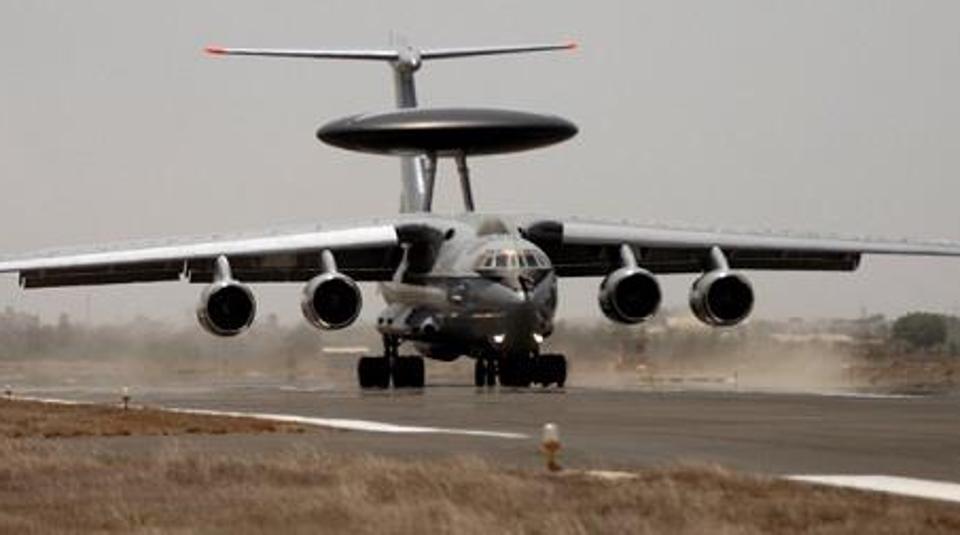
The deal is worth around $ 2 billion, with the radar mounted on Russian platform.
With the air strike, and the dogfight between Indian and Pakistani jets the day after, highlighting the importance of aerial supremacy, the Indian Air Force plans to approach the Defence Acquisition Council (DAC) after the new government takes over in late May, for the purchase of 21 upgraded MiG-29 air defence fighters from Russia to arrest the growing shortfall in fighter squadrons. This deal is expected to be worth around ₹4,500 crore. Russia has completely switched to Su-30 platforms and MiG 29 fighters have been lying mothballed with MiG-MAPO corporation.
Four people directly involved in the process said that the need for PHALCON AWACS was felt as Pakistan has seven of them in service as compared to five in service with IAF. After the Balakot strike, the requirement was felt more acutely with Islamabad deploying two AWACS round-the-clock in the north and the south, while India had AWACS up for only 12 hours a day along its northern and western borders. Both sides put AWACS to good use during the February 27 air skirmish in the Nowshera sector of Jammu.
Armed with deep penetration and long-range radars, AWACS control the battle theatre in times of hostilities by providing advance information about movement of air assets of the adversary as well as directing air defence to prevent any breach of home air space.
According to the people cited above, Pakistan has three SAAB-2000 and four Shaanxi Y-8 turbo-prop airborne early warning systems; it reportedly lost two SAAB aircraft in a terrorist attack on PNS Mehran in Karachi on May 22-23, 2011. The SAAB radars provide a 270-degree coverage of the enemy positions but the platform has height restrictions due to turbo-prop engines.
In comparison, IAF has three Israeli built PHALCON AWACS and two more DRDO built early warning systems mounted on an Embraer jet platform. The Israeli aircraft is fitted with the top-of-the-line Green Pine radar system that can look into enemy territory up to a range of 300 to 500km . It is this aircraft that successfully directed the air operations against a package of 24 Pakistan Air Force fighters on February 27 in Nowshera, the people added.


