E-Paper



Is there a method to the tomato price madness?
A look at what rising tomato prices tell us about the volatility of the vegetable market in India
Published on: Jul 18, 2023, 24:25:26 IST

Share via


Copy link

Tomato prices are at an all-time high in the country. They have reached this peak in a matter of less than a week. To be sure, there is nothing new in volatility of vegetable prices in India and the ongoing spike in tomato prices does not provide adequate evidence to reach conclusions about seasonality in the price of the vegetable (yes, we are aware that the tomato is, technically, a fruit). What it does tell us is that India’s perishable supply chains are extremely fragile because of (a cost consideration driven) low use of processed ingredients and growing seasonal shocks. Here are five charts which explain this argument in detail.
The charts that matter
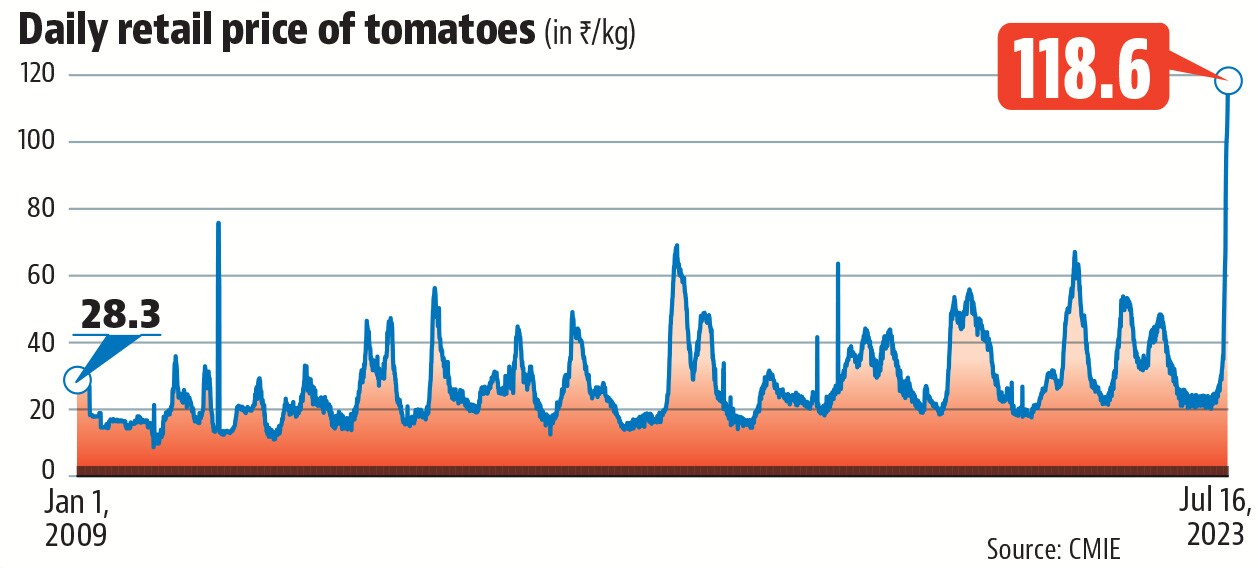
 CMIE data shows that tomatoes are selling at their highest ever prices ...It is not uncommon for vegetable prices to fluctuate wildly in India. Tomatoes are no exception to this trend. A simple examination of inflation data for vegetables and tomatoes shows this clearly. However, another set of statistics from the Centre for Monitoring Indian Economy (CMIE) database shows that tomatoes prices in this month have indeed reached their highest ever levels in the country. Not only are the current prices the highest ever – CMIE has daily retail price data from 2009 onwards – they are the highest by a long distance.
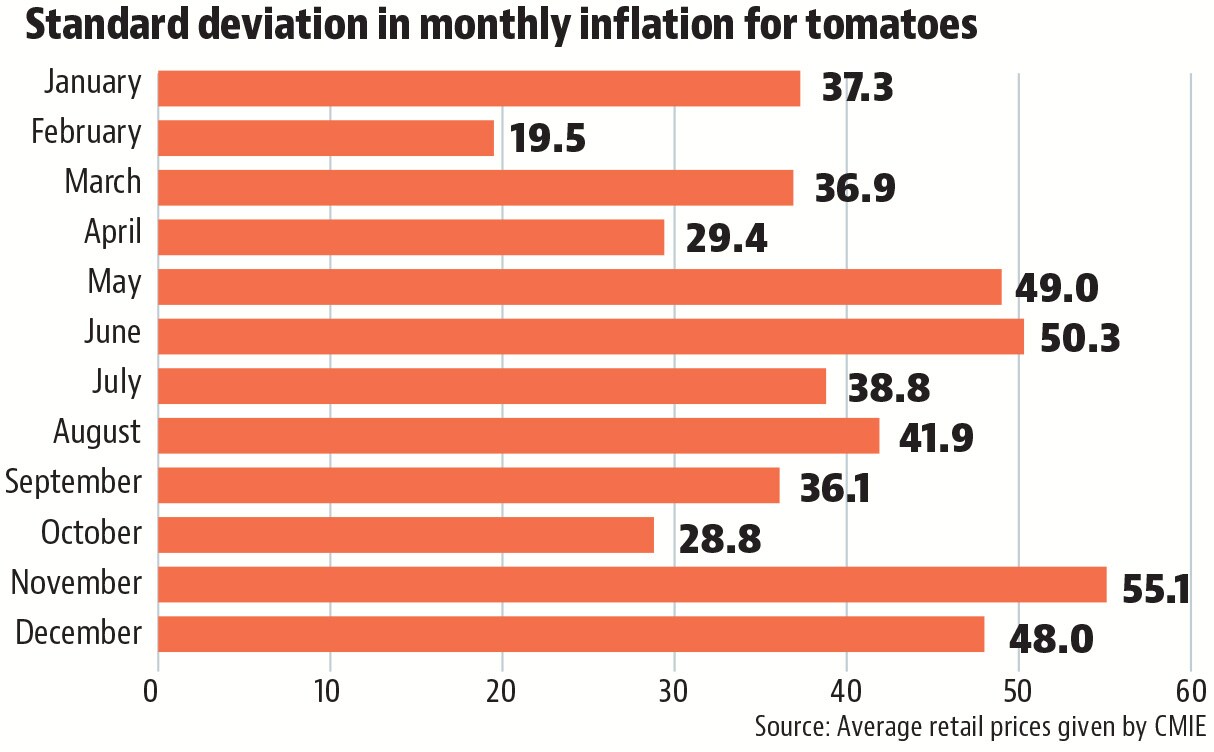
- ... but this spike does not tell us anything about seasonalityAnecdotally, the current spike in tomato prices is driven by excess rains in large parts of the country. Does this mean that tomato prices are particularly volatile in the monsoon season? One way to answer this question is to look at the standard deviation – it is a statistical measure of deviation from the average value – of monthly inflation in tomato prices. Using CMIE data from January 2009 onwards – this gives a longer series than the current Consumer Price Index (CPI) series which only has item-wise data from January 2014 – shows that July was a month of relatively low volatility in tomato inflation until 2022. Even the months of high inflation volatility (November and June show the highest standard deviation for monthly inflation) are spread across seasons.
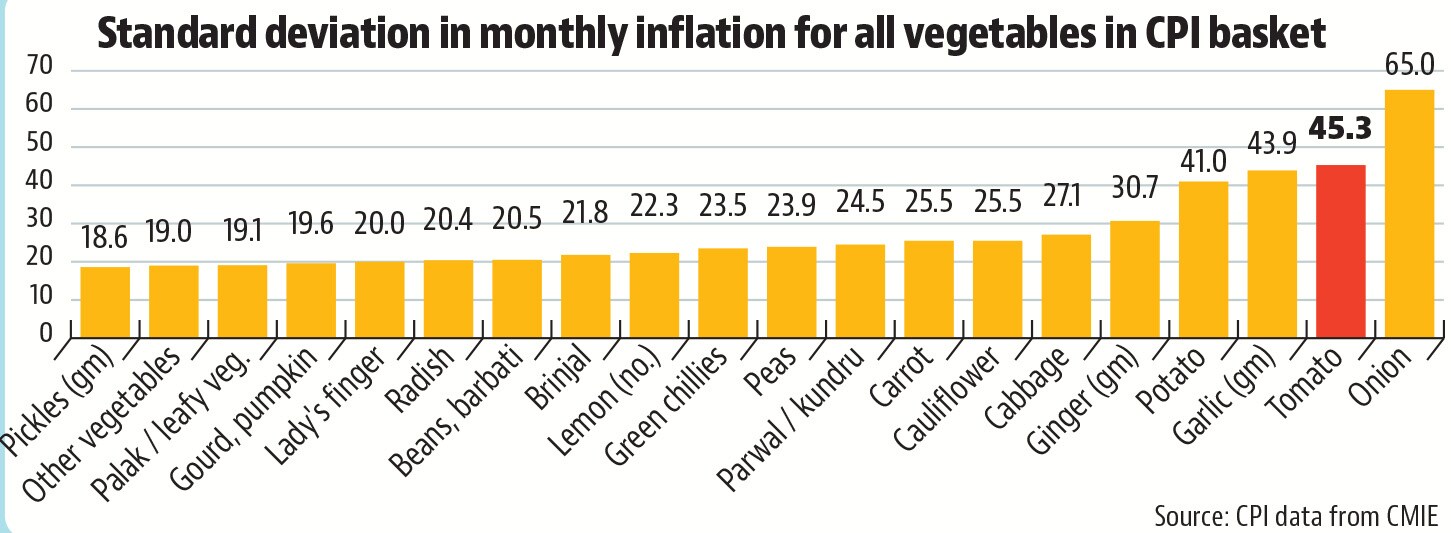
- However, tomatoes are the second most volatile vegetable in terms of prices...The best way to show this is to look at the standard deviation of monthly inflation for all vegetables included in the CPI basket. Data shows that the standard deviation for monthly inflation in tomatoes (January 2015 to June 2023) is the second highest after onions. Potatoes are not very far behind in terms of price volatility.
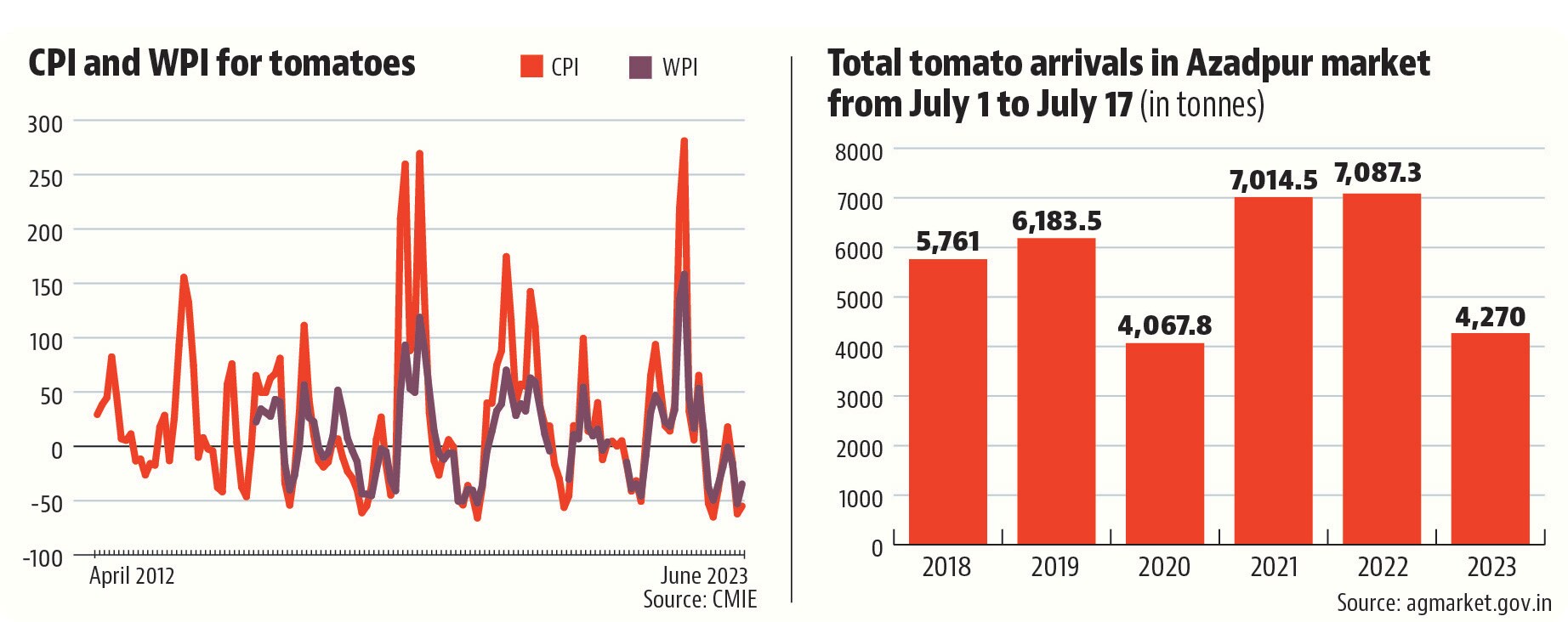
- ... and supply shocks, not hoarding are the main driver of pricesEvery time there is a sharp increase in the price of essentials, there is a tendency, both within and outside the government, to blame hoarding. While there is no denying that traders with an asymmetric advantage in terms of pricing and working capital are able to exploit the markets to their advantage at all times, the theory of hoarding leading to price spikes does not stand on firm statistical ground. Two pieces of statistical evidence should be enough to underline this point. Barring a few exceptions, long-term retail and wholesale inflation for tomatoes has almost always moved in sync. This suggests that the prices paid by consumers and received by farmers almost always move in the same direction (irrespective of the margins enjoyed by the trader). Data from agmarket.gov.in, a government portal for prices and arrivals in food markets across the country shows that tomato supplies in Azadpur market in Delhi (one can reasonably assume that it is not very different from the all-India trend) have suffered a huge disruption in July. This supports the theory that the surge in tomato prices is a result of disruption to supplies because of excess rains in the northern parts of the country. While prices have increased by a larger magnitude compared to a comparable disruption in 2020, the point about a supply shock remains.
- Is there a way out of this problem?If adverse weather events are going to be the norm in the future, there is reason to believe that such supply shocks will only worsen price volatility. One way out could be to shift to processed food items from raw ingredients (tomato puree from tomatoes in this case). However, there is good reason to believe that a preference for fresh ingredients or lack of value addition facilities are not the only things in the way of such a transformation. Low purchasing power for an overwhelming share of the population and the availability of cheap supplies in normal times might be too strong a vicious cycle. This may be what has kept Indians hooked to inexpensive unprocessed ingredients despite the occasional problem of seasonal spikes.