
 E-Paper



ISRO to launch Europe's Proba-3 Mission from Sriharikota today for solar research | 10 facts
The Proba-3 mission, launching from ISRO's spaceport on December 4, aims to enhance solar research and space weather understanding.

 Prefer HTon Google


The Indian Space Research Organisation's trusted workhorse Polar Satellite Launch Vehicle (PSLV) will blast off from Sriharikota spaceport in Andhra Pradesh on Wednesday, December 4, carrying ESA’s Proba-3 mission.
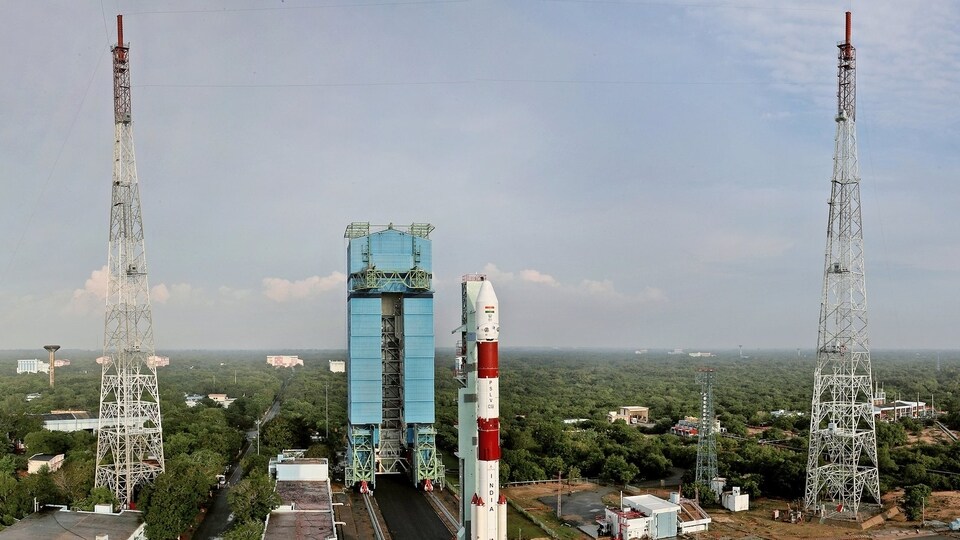
The European Space Agency’s (ESA) Proba-3 Mission is happening in collaboration with ISRO’s commercial arm NewSpace India Limited (NSIL).
The Proba-3 mission will launch from the ISRO spaceport's first launch pad. The launch is set for 4:08pm IST, and the satellites are anticipated to enter high Earth orbit and begin their mission. The mission will also give critical data to ESA scientists as they continue their investigation into solar phenomena and space weather.
Also read: Indian astronauts complete initial training for ISRO-NASA ISS mission
The Proba-3 mission represents an incredible accomplishment in space research, with the potential to provide new information about the Sun and space weather. The partnership between the ISRO and ESA highlights how crucial international cooperation is becoming to the advancement of space research and technology.
Here are 10 facts about Proba 3:
- ISRO's PSLV, which is slated to launch on December 4, will be used for the mission.
- At 4:08 pm, the PSLV, which is now on its 61st mission and the 26th of the PSLV-XL type, is expected to blast off from the spaceport's first launch pad.
- With a total weight of 550 kg, the PSLV-XL version will launch the Proba-3 satellites into high Earth orbit. After around 18 minutes of flight, the 44.5-meter-tall rocket is expected to launch the 550-kg Proba-3 satellites into the proper orbit.
- Coronagraph and Occulter, the two spacecraft that are a part of the Proba-3 mission, will fly in a tight configuration with only 150 metres between them. By blocking the Sun's disc, the Occulter spacecraft will be able to investigate the Sun's corona, or outer atmosphere, using the Coronagraph. The Occulter spacecraft weighs 240 kg and the Coronagraph spacecraft weighs around 310 kg.
- The satellites are anticipated to have a 19.7-hour orbital period with an apogee of 60,530 km from Earth and a perigee of 600 km from Earth
- The programme intends to induce “solar eclipses on demand”, giving scientists constant access to study the Sun's corona. This precise flying technology has never been accomplished on such a big scale.
- Future space exploration missions depend on Proba-3's ability to show precision formation flying technology, which is its main goal. By operating as a “large rigid structure”, the Proba-3 spacecraft will enable precise observations of the Sun's weak corona.
- The satellites will provide previously unheard-of information on the Sun's outer atmosphere by obstructing the disc. This degree of solar monitoring has only been possible for brief periods of time during solar eclipses.
- Space weather events can affect satellite communications, GPS systems, and Earth's power grids. They are largely caused by the Sun's corona, which is far hotter than the Sun's surface. The mission will improve our knowledge of space weather and offer crucial scientific insights into these solar processes.
- The Proba-3 mission follows the launch of Isro's Proba-1 and Proba-2 earth observation satellites in 2001 and 2009, respectively.


