
 E-Paper



ISRO to usher in 2024 with launch of dedicated satellite to study black holes
The 25-hour countdown commenced on Sunday for the lift-off scheduled at 9.10 am from the first launch pad at this spaceport.

 Prefer HTon Google


India is set to launch its first dedicated polarimetry mission, the X-Ray Polarimeter Satellite (XPoSat), on Monday. The satellite will be launched on a Polar Satellite Launch Vehicle rocket at 9.10am from Satish Dhawan Space Centre in Sriharikota.
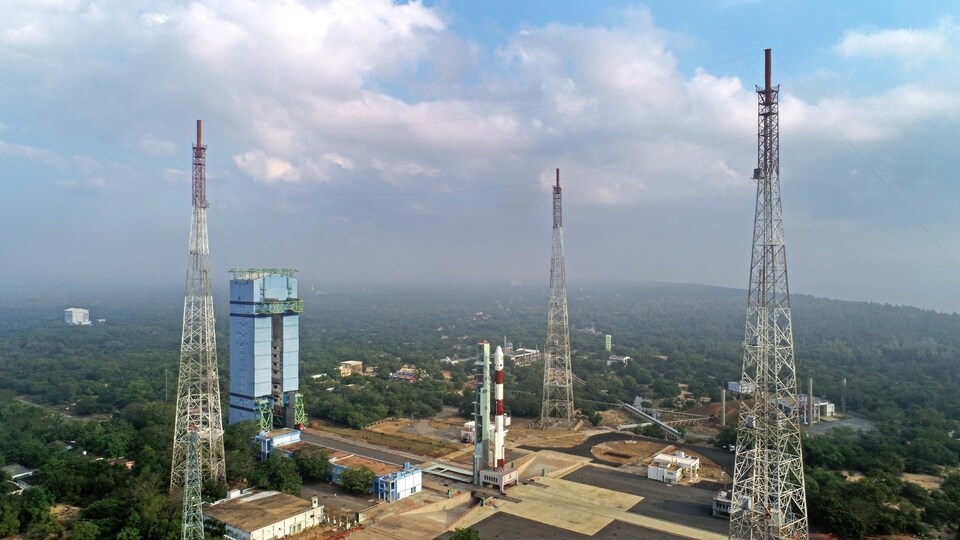
XPoSat aims to unravel the complexities of bright astronomical X-ray sources, probing into their intricate dynamics in extreme conditions. The spacecraft carries two cutting-edge scientific payloads designed for low-earth orbit exploration.
The primary instrument, POLIX (Polarimeter Instrument in X-rays), is tasked with measuring polarimetry parameters such as the degree and angle of polarization. Operating in the medium X-ray energy range of 8-30 keV photons of astronomical origin, POLIX is poised to contribute significantly to our understanding of X-ray emissions from celestial bodies.
The XPoSat also houses the XSPECT (X-ray Spectroscopy and Timing) payload, which is engineered to provide spectroscopic information in the energy range of 0.8-15 keV, offering invaluable insights into the emission mechanisms of various astronomical sources, including black holes, neutron stars, active galactic nuclei, pulsar wind nebulae, and more.
While existing space-based observatories have furnished spectroscopic and timing data, the addition of polarimetry measurements introduces two crucial dimensions – the degree and angle of polarization. This extra layer of data serves as an exceptional diagnostic tool, potentially unravelling the mysteries surrounding astronomical emissions.
The XPoSat mission is poised to break through the limitations of current theoretical models, with polarimetric observations and spectroscopic measurements working in tandem, the space agency said. By doing so, researchers hope to overcome the challenges posed by the complex physical processes governing the emission mechanisms of celestial bodies.
XPoSat Payloads: POLIX and XSPECT
Developed by the Ramam Research Institute (RRI) in Bangalore in collaboration with the U R Rao Satellite Centre (URSC), POLIX is an X-ray Polarimeter designed for astronomical observations in the energy band of 8-30 keV. The instrument comprises a collimator, a scatterer, and four X-ray proportional counter detectors that surround the scatterer. The collimator narrows the field of view to 3 degrees by 3 degrees, ensuring focused observations on a single bright source. POLIX is anticipated to observe approximately 40 bright astronomical sources of different categories during the planned 5-year mission lifespan, marking a significant stride in medium X-ray energy band polarimetry.
XSPECT, the X-ray Spectroscopy and Timing payload onboard XPoSat, complements POLIX with its ability to provide fast timing and high spectroscopic resolution in soft X-rays. Equipped with Swept Charge Devices (SCDs), XSPECT boasts an effective area exceeding 30 cm² at 6 keV, with a remarkable energy resolution of under 200 eV at the same energy level. Passive collimators narrow XSPECT's field of view, enabling long-term monitoring of spectral state changes in continuum emission, line flux variations, and simultaneous monitoring of soft X-ray emission in the 0.8-15 keV range. XSPECT's mission includes the observation of various celestial sources such as X-ray pulsars, black hole binaries, low-magnetic field neutron stars in LMXBs, active galactic nuclei (AGNs), and Magnetars.


