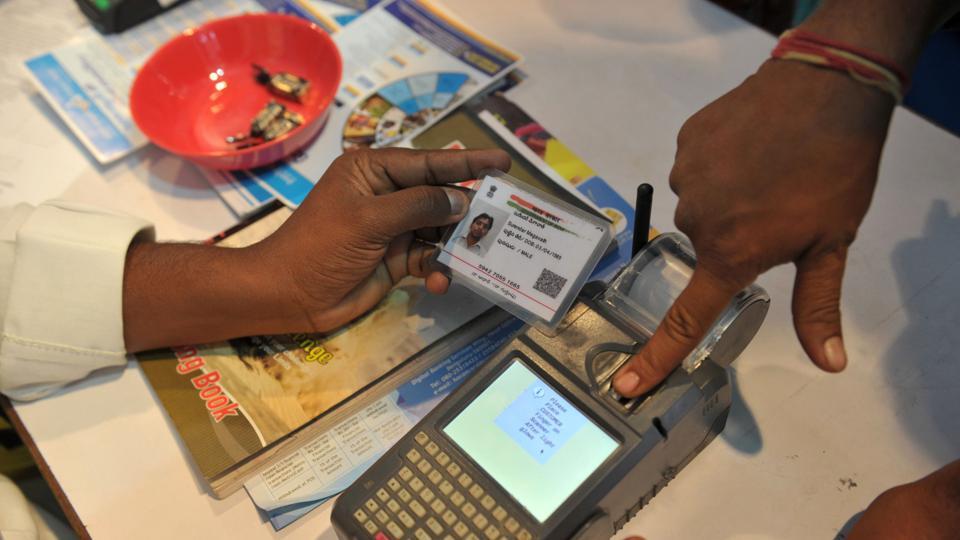
It is victory of a common citizen, says civil society on SC’s privacy ruling
They hailed the court order as “historic” and expect it to deliver a favourable verdict on the efficacy of the Aadhaar law, which a three-member bench will hear.
Activists fighting against the government collecting people’s biometric details for the 12-digit Aadhaar identification number on Thursday welcomed the Supreme Court judgment that called privacy a fundamental right.

Shanta Singh, Aruna Roy and Major General SG Vombatkere are among the four people on whose petitions the top court pronounced its privacy verdict. Retired Karnataka high court judge KS Puttaswamy was the fourth petitioner.
They argued that Aadhaar violated a person’s right to privacy guaranteed by Article 21 of the Constitution.
They hailed the court order as “historic” and expect it to deliver a favourable verdict on the efficacy of the Aadhaar law, which a three-member bench will hear.
“I hope that the order will free the poor and deprived from the clutches of Aadhaar and ensure that they get their entitlements under different government schemes,” Singh said, calling the judgment pro-poor.
According to the activists, a large number of poor people in India were excluded from welfare schemes because of deficiencies in the Aadhaar law and cited specific instances in the top court.
“We have many case studies in Rajasthan where the poor had been denied their monthly quota of ration as Aadhaar authentication failed … machines failed to read weak finger impressions,” said Roy, a Magsaysay awardee and former member of the National Advisory Council.
“The government used Aadhaar to wrongly exclude many from the beneficiary list. And we have evidence for that.”
Usha Ramanathan, an Aadhaar critic, was happy that the unique identification hearing was back on track and will conclude within the next few months.
The court set up a three-member bench to validate the Aadhaar law. The first petition against Aadhaar was filed in 2012.
Another anti-Aadhaar campaigner, Reetika Khera, said the order was a victory for an ordinary Indian who wants his or her rights to be protected from an intrusive government.
“It is a historic and watershed moment in the fight for the deprived sections,” said the development economist at IIT, Delhi. And she added that the next fight is to ensure the court strikes down the Aadhaar law.
The civil society members hailed the court’s views on gay rights and intrusion in the name of beef ban.
ABOUT THE AUTHORChetan ChauhanChetan Chauhan is the National Affairs Editor looking into all aspects of news and features from across India. A Chevening scholar with over three decades of experience in reporting and news management, Chetan has extensively covered all important aspects of the social sector, political economy, environment and climate change nationally and internationally. He did a journalism course at the Reuters Institute of Journalism in Oxford and Digital Media training at Nanyang Technological University in Singapore. He started as a reporter with The Statesman in 1996 and joined the Hindustan Times in 2000 in the metro bureau covering environment, crime and Delhi politics. He covered hot local news, from the Jessica Lal murder case to the rebellion of Delhi Congress MLAs against then Chief Minister Sheila Dikshit, to the replacement of toxic vehicle fuel with cleaner compressed natural gas (CNG) in the national capital. Some of his stories on air pollution became part of the Supreme Court’s landmark MC Mehta versus Government of India case in the National Capital Region (NCR), forcing the government to take corrective measures. As part of the national political bureau since 2004, he covered important central sectors such as environment, education, social justice, labour, rural development, water resources, renewable energy, agriculture, broadcasting and the Planning Commission for more than a decade producing several exclusive and investigative breaking stories. His specialisation is the environment, having covered at least a dozen United Nations global conferences on climate change, biodiversity and wildlife including climate summits in Paris, Copenhagen and Bali. He also covered India’s two five-year plans ---11th and 12th and reported on drafting and execution of right based laws such as Right to Education, Right to Information and rural job guarantee law, MG-NREGA, now being introduced in new format as VG-RAM-G Act. He has in-depth knowledge of social sector issues. He was one of the first to report on tigers vanishing from Sariska and Panna wildlife reserves in 2004 and 2008, respectively, leading to the setting up of the National Tiger Conservation Authority (NTCA) and the introduction of stringent penal provisions for poaching. He has written extensively on the rising human-animal conflict in India and the degradation of India’s biodiversity hotspots because of mining and other activities. Since 2004, Chetan has covered Parliament comprehensively and participated in training on the nuanced coverage of Parliament proceedings. He has travelled extensively across India to cover national and provincial elections since 1998, especially in the Hindi heartland states, considered India’s road to power. He writes a regular column for Hindustan Times, Ecostani, on important national politics, economy, Himalayan ecology and environmental issues. His other responsibilities include providing inputs for edits and edit page articles for the publication, apart from managing news flow from across India.Read More

E-Paper