
 E-Paper



Jagdeep Dhankhar resigns: What happens when the Vice President steps down mid-term?
In his letter to President Droupadi Murmu, Jagdeep Dhankhar stated he will be stepping down from his post to "prioritise health care."


Vice President Jagdeep Dhankhar has triggered a mid-term vacancy for he second-highest constitutional office in India. The vice president and Rajya Sabha Chairman resigned on Monday evening, citing health reasons.
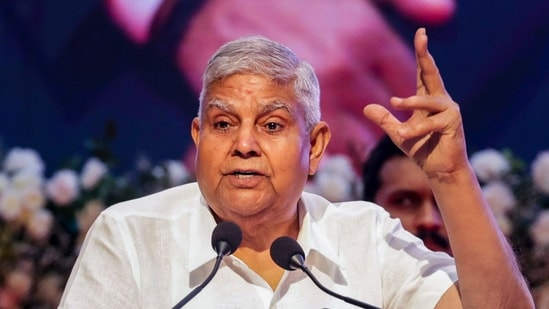
In his letter to President Droupadi Murmu, the vice president stated he will be stepping down from his post to "prioritise health care."
With Dhankhar's posts—Vice President and Rajya Sabha Chairman—now vacant, here's a look at what will happen next.
Jagdeep Dhankhar resigns - What happens next?
Who will take over as the next Vice President?
The Vice President's post will now remain empty until the electoral college of the Lok Sabha and Rajya Sabha chooses a new name.
The Indian Constitution does not lay out specific deadline in case of a vacancy for Vice President. Until a new poll is conducted, the chair stays empty.
Deputy Rajya Sabha Chairman to step in?
With his resignation letter, Dhankhar also resigned from his post as Rajya Sabha Chairman. As per the constitution, the deputy chairman can fill in and serve as the interim chair until a new Vice President is elected.
Harivansh Narayan Singh from Janata Dal (United), is expected to preside over the House in Dhankhar's absence.
When will the elections for VP be held?
The election for a Vice President usually take place "no later than 60 days" from the expiry of the term of outgoing leader. However, in cases of a resignation, no such deadline exists.
With no fixed deadline in the constitution, the election for the Vice President is required to be held "as soon as possible."
The elections will be conducted under the Presidential and Vice-Presidential Elections Act, 1952 and the schedule will be announced by the Election Commission of India.
Also Read | Vice President Dhankar’s resignation caught staff off guard; MPs question abrupt move
Once the schedule is announced, the voting will be held in Parliament House in New Delhi, through a secret ballot. Each MP in both houses casts a vote by ranking candidates in order of preference. The candidate with the highest first-preference votes is elected the VP.
Once a new Vice President is elected, the elected candidate will serve for a full five-year term and will stay in office till 2030, and not just the remainder of Dhankhar's tenure.
Who is eligible to become VP?
As per the Constitution, the candidate must be a citizen of India and at least 35 years of age. The candidate must also be eligible for a seat in the Rajya Sabha and must not hold any office of profit.
Jagdeep Dhankhar was elected as the Vice President of India in 2022. As per reports, the Vice President secured 74.37% of the votes and recorded the highest poll-victory margin since the 1992 election.
Ahead of his tenure as VP, Dhankhar served as the governor of West Bengal from 2019 to 2022. His term as VP was set to end in 2027.


