
 E-Paper



Keeping up with UP | No regret, says kar sevak involved in demolition of shrine
32 years after kar sevaks brought down the Babri Masjid, a new temple is set to come up. Read a first person account of the days before December 6, 1992

 Prefer HTon Google


“In November 1992, a BJP cabinet minister [name not mentioned as the leader has now died] with whom we were close, contacted us and asked if we need hathiyar for the mission. He took us to Delhi where we met very senior leaders, whom I won’t name. A meticulous plan was chalked out which included damaging the cameras of the foreign agencies as we did not want a bad name for our country.”
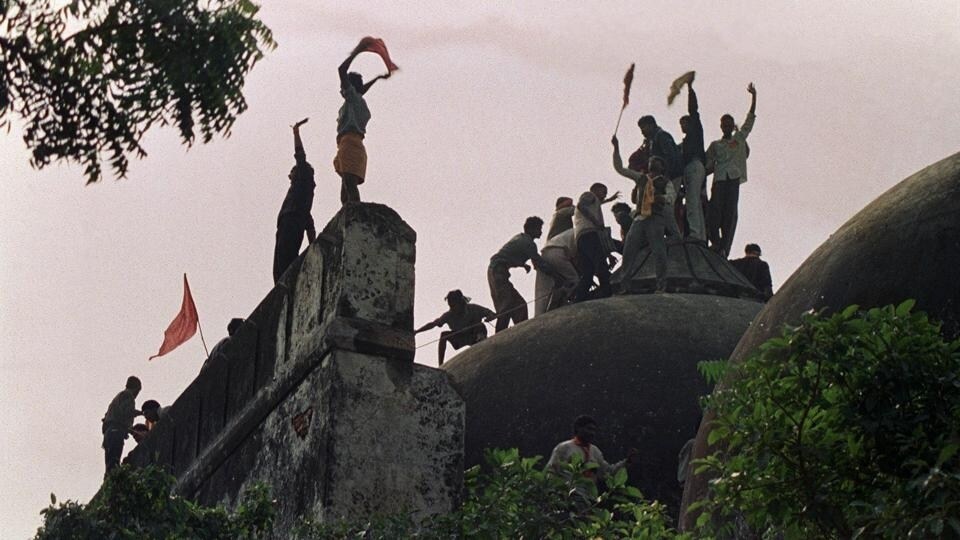
On December 5, 1992, approximately 5,000 kar sevaks gathered in Choti Chawni in Ayodhya, determined to “pave the way for the construction of the Ram temple by demolishing the disputed shrine,” Santosh Dubey, then in his teens, offers a first person account of the following day.
The group of men spent the night in embrace, uncertain of what the next day would bring. Many were resolute in fulfilling the pledge they had taken on the banks of the Saryu River on January 30, 1984.
Forty years later, on January 30, over 1,000 of these men will take a dip in the river before they seek the blessings of Lord Ram in the newly constructed temple, content that their mission was accomplished.
Dubey, a resident of Jamuniabagh in Ayodhya, is one of them. “Our resolve was to have the darshan of Ram Lalla in his house, and this will be accomplished on January 30 next.”
Dubey said that most of the 5,000 kar sevaks, who were involved in demolishing the Babri Masjid, remained in touch with each other. Many have passed away, and the rest have grown old. “I was 16, a high school student, and now I am in my late 40s.”
He recounts how December 6, 1992 went.
But before that, one must go back a few years to 1984, when Mahant Ramchandra Paramhans of Digamber Akhara held a Sankalp Sabha (pledge meeting) on the banks of Saryu river. The men gathered there concluded with a slogan, "Saugandh Ram ki khate hai, mandir bhavya banayenge.” [We promise on Ram, we will build the temple.]
Accordingly, Umesh Pandey, a lawyer, filed a writ petition in the Faizabad court in 1986 to have the locks of the Babri Masjid opened — sealed decades ago after the Ram idols were found inside the Masjid. Once the court directed the locks to be reopened, a Umesh Pandey, whom Dubey claimed was his cousin, went to his home that evening with laddoos. In 1990, Dubey was part of a group of kar sevaks who climbed the disputed shrine's dome , breaking the rule imposed by the then state government. In a bid to maintain peace, the police opened fire on the mob — Dubey faced bullets, while officially 17 kar sevaks were killed that day. Two years later, when the dome of the mosque was demolished after a mob climbed on to it, he fell from the middle dome, suffered fractures and went into a coma for 20 days.
A well-known figure in Ayodhya, Dubey remained associated with the Vishwa Hindu Parishad, the Hindu right wing group that led the temple movement as well the Bharatiya Janata Party (BJP) whose political leaders were at the forefront of the Ram temple movement — though, in 1992, he was a Shiv Sena leader.
“One day, while I was sitting on the banks of the Saryu River, lost in my own thoughts, one tall and handsome sadhu in a saffron robe patted me on my back and asked, ‘Do you want to construct Ram Mandir? He told me to reach the Ram Janmabhoomi the next day at 9 am. My resolve to pave the way further got strengthened after a Muslim leader said they would offer namaz in the complex,” Dubey said.
“It was only in 1988-89 when the movement of Ram Shilas started in the state that I became active. I joined Shiv Sena as I needed a platform to mobilise support by forming a group to demolish the disputed shrine. Balasaheb [Thackeray, founder of Maharashtra-based Hindu right wing group Shiv Sena] appointed me East UP in-charge. I had no interest in strengthening Shiv Sena. I was also in touch with various local VHP-BJP leaders and Ram Chandra Paramhans.”
“And then came the announcement of [LK] Advani’s yatra from Somnath to Ayodhya and the call to kar sevaks to assemble in Ayodhya before October 30.”
The then chief minister Mulayam Singh Yadav, tried to maintain law and order. Talking of the barricades around the religious site, Mulayam had said, “parinda bhi par nahin maar sakega” (even a pigeon would not fly past). As the mob of kar sevaks descended on the city, and the police were put on high alert.
“We started mobilising support from East UP by sending letters to Ram bhakts to reach Ayodhya on October 29, 1990. We took them to a village near the Saryu River. We had to hide from the police, so we took shelter in cane fields and guava orchards with the consent of the villagers. We had swords to scare away the people and police.”
“On October 30, as we moved towards the RJB [Ram Janmabhoomi] complex, the police tried to stop us, but we managed to break the barrier and reach near the disputed shrine. At that moment, former Director General of Police and VHP leader SC Dixit came, and the police opened the gate of the complex for him. We stormed inside, broke the barriers — only about 50 of us climbed the dome from the rear wall and a neem tree nearby. As we did not have a flag, we hoisted the saffron gamcha.”
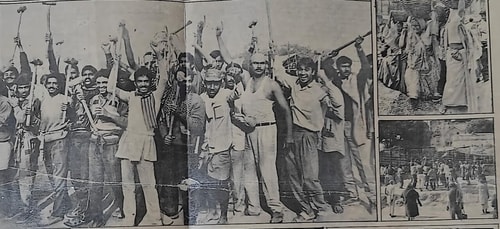
“The police started firing tear gas shells, and we came down, but did not return home. My father had said kuch karke aana [achieve something]. On November 2, we were addressed by VHP leaders Vinay Katiyar, Ashok Singhal, Sadhvi Rithambara, Praveen Togadia near Choti Chawni. Then one of the Maharaj of Janki Ghat said, ‘Let’s do darshan of Ram Lalla.’ We crawled our way to Digamber Akhara, and as we moved ahead, the police opened fire — I sustained four bullet injuries.”
“This further angered us, and in early December, we started making a group of at least 5,000 kar sevaks, who were ready to sacrifice their lives. We travelled East UP with a form for signatures. It read, ‘if you want Ram temple, if you want to demolish Babri Mosque, if you are willing to sacrifice your life, then sign with your blood. Maya Srivastava, the 70-year-old owner of the press where the forms were printed, was the first to sign. She cut her thumb to sign. Soon we had a group of 5000 ready – including 1,000 women.”
One of the Mahants of Ayodhya, Ramdeo Dasji Vedanti, told us to get the people to Ayodhya. We sent postcards telling them to reach at 5pm on December 5. Then, the plot to demolish the shrine was revealed to them. Hammers, iron rods were distributed. About 500 metre long rope with hooks was also arranged. We formed 17 teams, allotted duties every 50 metres.”
“While some leaders from the dais described us as anti-social elements, only Sadhvi Rithambara encouraged us saying, ‘Don’t come down from the dome without completing the task.”
“We were once told, ‘If you die during your struggle to liberate the Ram Janmabhoomi, you will go straight to heaven — you will be one of the Ram Shila that will go into the construction of the temple.’”


