E-Paper



Number Theory | Kharif sowing affected in Gangetic plains due to scant rains in July
Rajasthan has indeed received uncharacteristically abundant rainfall this monsoon, as has most of India.

 Prefer HTon Google


Rajasthan chief minister Ashok Gehlot congratulated farmers on July 25 on the abundant rainfall thus far this monsoon. Rajasthan has indeed received uncharacteristically abundant rainfall this monsoon, as has most of India. This has boosted kharif (the monsoon crop) sowing in most parts of the country.
Not the Gangetic plains, though, where the rains have been deficient. Here are four charts that explain this.
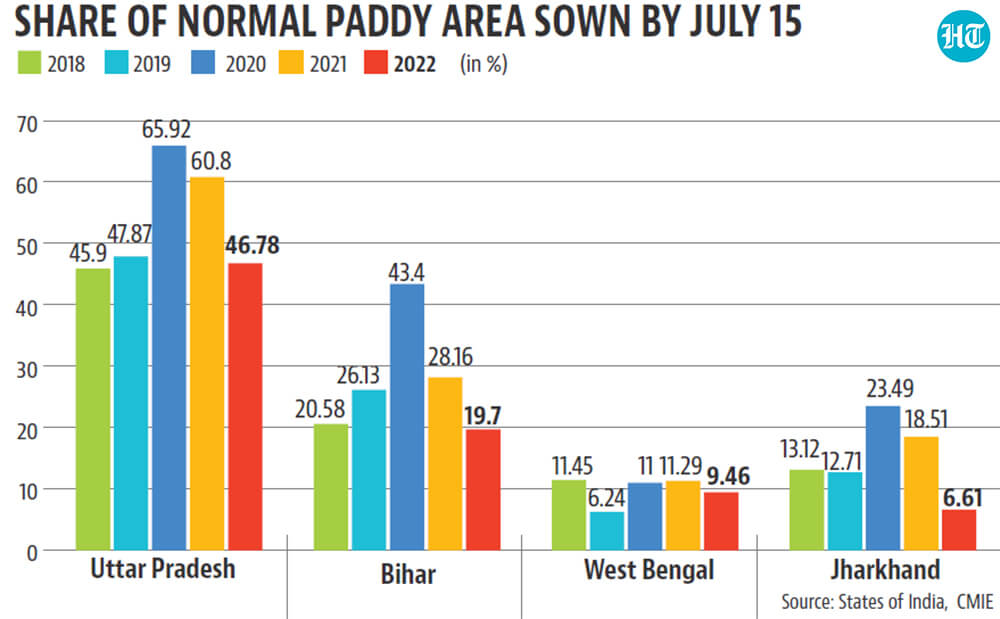
The pace of kharif sowing is much slower than usual in the Gangetic plains
The data on paddy sowing this monsoon is available only up to July 15 and does not show if things have changed in the past week. However, up to the middle of the month, paddy sowing, which accounts for almost a third of the kharif acreage, was doing worse than in most recent years. The situation was not much better for pulses either, although by July 22 (partial data on pulses is available up to this date) total pulse sowing was 0.55 million hectare more than last year. The delay in paddy sowing in particular could be because of the trend in four states in the Gangetic plains: Uttar Pradesh, Bihar, Jharkhand, and West Bengal. These states account for at least a third of kharif paddy acreage in India, and the crop’s sowing progress in these states is far behind the trend in recent years at this time of the monsoon.
Deficient July rainfall is the reason for slow paddy sowing
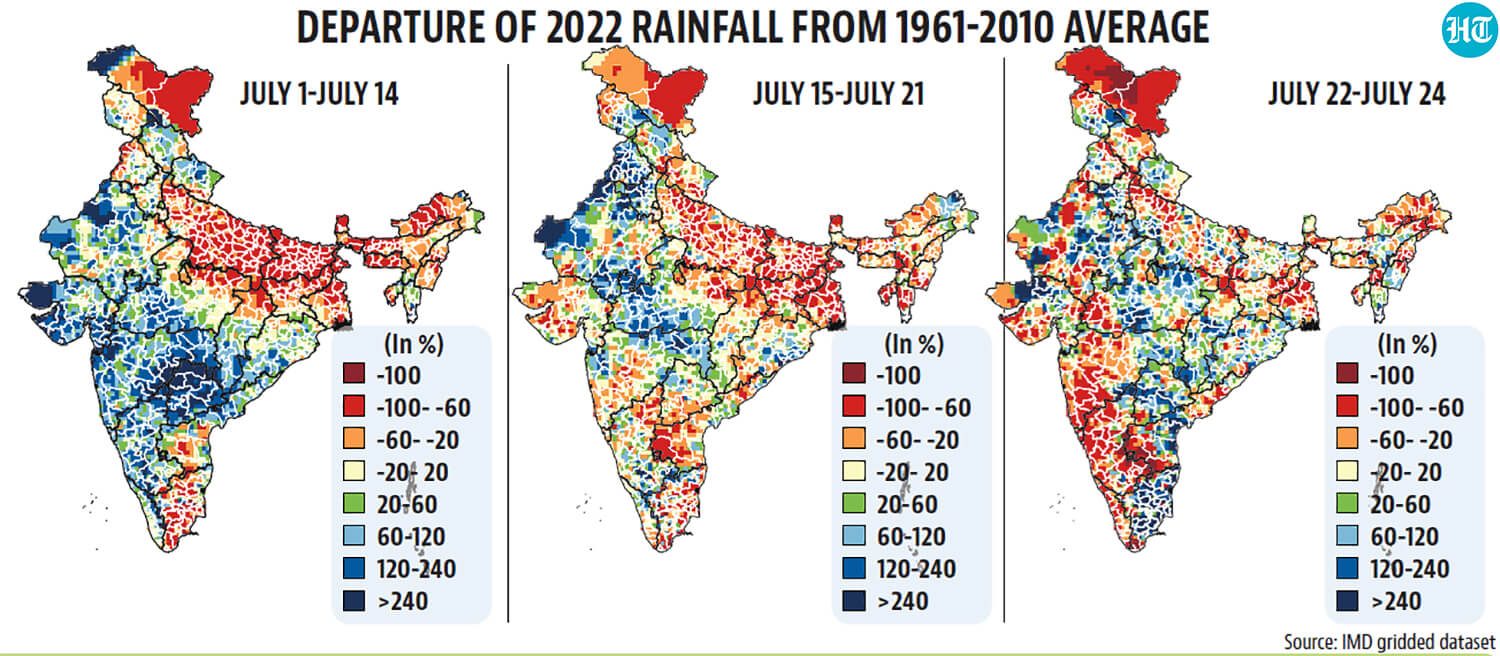
Slow paddy sowing in the Gangetic plains is a result of scanty July rainfall, the month when monsoon usually takes hold over the region. This year, most of the region ran deficits in excess of 60% in the first two weeks of July despite the monsoon arriving on schedule. This is why paddy sowing appears to be lagging up to the middle of the month.
Could the situation have improved in the second half of July? It is possible that the second half of the month is faring better than the first, but the signs are not very encouraging. Although covering a smaller area than the first two weeks, large parts of the region had a deficit of 60% or more in the week ending July 21 too. There has been more correction in the last three days – July 22 to July 24 – with more places in the Gangetic plains getting normal or surplus rainfall. However, this trend is unlikely to continue throughout the rest of the month. As an HT analysis pointed out earlier, the deficit in rainfall over this region earlier this month was because the monsoon trough – a low pressure system that causes rainfall during monsoon – had shifted southward. The IMD has forecast similar conditions from July 25 to July 27, with at least Uttar Pradesh not likely to receive much rainfall during this period.
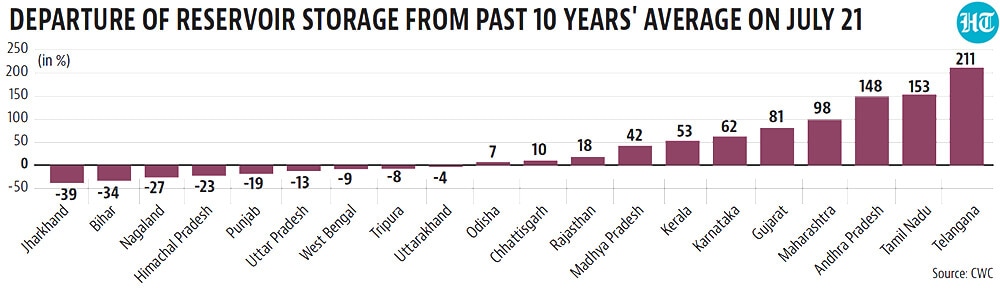
The problem is compounded by low reservoir levels in Bihar, Jharkhand
Reservoirs can make up for temporary deficits in rainfall, and can possibly help farmers who irrigate their fields. However, because the Gangetic plains have been running dry for most of this monsoon, even the storage in reservoirs is not good in some states of this region. In reservoirs monitored by the Central Water Commission (CWC), Bihar and Jharkhand are deficient or have a deficit of at least 20% compared to the last 10 years’ average. Uttar Pradesh and West Bengal have close to normal storage according to CWC classification, with deficits less than 20%. Experts think that this can aid the region’s farmers. “Still, while rainfall remains strong in the southern and western parts of the country, the key farming regions of the Indo-Gangetic plains continues to experience below-normal rainfall, which is slightly concerning. However, given the rivers flowing through this region and the extensive irrigation canal networks, we believe the effects of weaker rainfall will likely be limited. In addition, reservoir storage levels have improved significantly, which should help the crop sowing in the coming weeks,” Rahul Bajoria, chief India economist at Barclays, said in a research note dated July 22.
Even frequency of rainfall is like monsoon has been absent
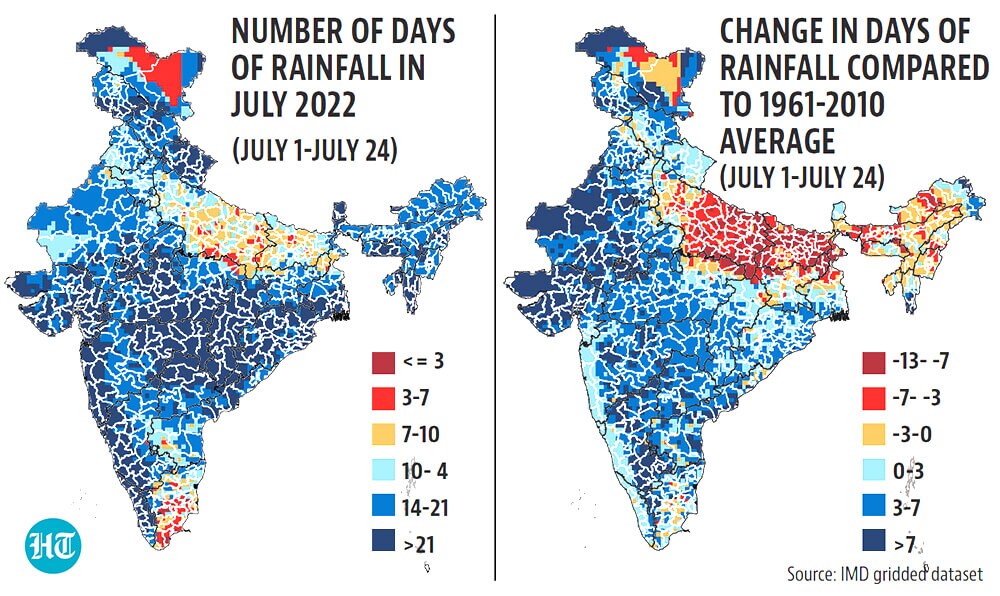
While the deficit numbers above show that the amount of rainfall has been lower than usual, even small amounts of rainfall taking place regularly can be helpful. If they do not help crops, they can at least keep temperatures down. However, data on days of rainfall shows that it is almost the monsoon never arrived in the Gangetic plains. Large parts of Bihar and Uttar Pradesh look like Tamil Nadu, a state whose main monsoon season is the north-east monsoon from October to December. These places have received only up to 10 days of rainfall this July. Compared to historical averages, Bihar and Uttar Pradesh are actually doing worse than even Tamil Nadu, which has actually received more days of rainfall than normal this July.