
 E-Paper





Follow the latest breaking news, major developments and agenda-setting stories from India and around the world with the newsdesk at Hindustan Times. Operating round the clock, the desk brings together experienced editors, reporters and correspondents to deliver fast, accurate and contextual reporting across subjects that influence public policy, governance, business, society and international affairs. The HT News Desk covers politics, elections, government policies, the economy, business and markets, science and technology, the environment, law and order, infrastructure, education, climate issues and geopolitics, while closely tracking developments across states, institutions and global capitals. The team also leads coverage of major breaking news events, policy announcements, court proceedings, natural disasters, public emergencies and significant international developments. Reports published by the newsdesk are based on information gathered from reporters on the ground, official statements, government agencies, court records, regulatory filings, recognised institutions and other authoritative sources. Stories undergo editorial scrutiny and verification processes to ensure accuracy, fairness and relevance, and are updated as events evolve and additional information becomes available. Whether covering a key political decision in New Delhi, an economic policy shift affecting millions, a landmark court ruling or a major global event, the HT News Desk aims to provide readers with reliable, fact-based journalism that delivers not only the latest developments but also the context and analysis needed to understand their wider implications.
Kulbhushan Jadhav under ‘extreme pressure’ to toe Pak line
The foreign ministry’s first official reaction on Jadhav’s consular access came hours after Indian High Commission’s Charge d’ Affaires Gaurav Ahluwalia met the Indian national sentenced to death by a military court.


Kulbhushan Jadhav, the Indian national on death row in Pakistan, is under “extreme pressure to parrot a false narrative”, the government said on Monday after Islamabad granted consular access to the former Indian Navy officer for the first time since his arrest in 2016.
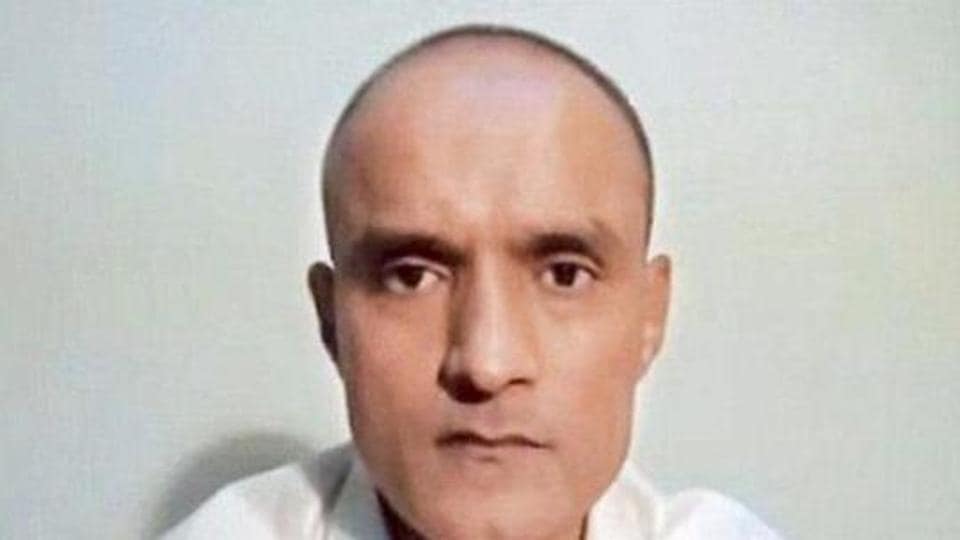
The charge d’affaires of the Indian high commission in Islamabad, Gaurav Ahluwalia, met Jadhav at a “sub-jail” in Rawalpindi, people familiar with developments said. Before the meeting, Ahluwalia went to the Foreign Office, they said.
Watch: Kulbhushan Jadhav verdict: ICJ rules in favour of India, Jadhav to get consular access
This was the first time Pakistan granted consular access to Jadhav, 49, more than 40 months after he was arrested in March 2016. In July, the International Court of Justice (ICJ) ruled that Pakistan violated Jadhav’s rights under the Vienna Convention on Consular Relations and sought a review of his death sentence.
“While we await a comprehensive report, it was clear that Shri Jadhav appeared to be under extreme pressure to parrot a false narrative to bolster Pakistan’s untenable claims. We will decide a further course of action after receiving a detailed report from [Ahluwalia] and determining the extent of conformity to the ICJ directives,” external affairs ministry spokesperson Raveesh Kumar said.
A statement issued by Pakistan’s Foreign Office made it clear the consular access had come with strings attached.
“Consular access was provided at 1200 hours [Pakistan time] and lasted for two hours, in the presence of officials of the Government of Pakistan,” the statement said, adding the “access was recorded” to “ensure transparency” and in line with standard operating procedures. The decision to record the meeting was conveyed to the Indian side “in advance”, the statement said.
Also read | Kulbhushan Jadhav’s case: A timeline
There was “no restriction on the language of communication” in response to an Indian request, it added.
In August, the Indian side rejected a Pakistani offer of consular access which had similar conditions.
Kumar said the consular access was part of the “binding obligations of Pakistan, as ordered by the ICJ, to ensure effective review and reconsideration of the conviction and sentence” given to Jadhav through a “farcical process”.
External affairs minister S Jaishankar spoke to Jadhav’s mother and briefed her of the developments. India remains committed to ensuring that Jadhav “receives justice at the earliest and returns safely to India”, Kumar added.
The Pakistani statement continued to refer to Jadhav as an “Indian spy” and “serving Indian naval officer” – charges that have been repeatedly dismissed by India. It also contended that “unimpeded, uninterrupted” access was provided to Jadhav, but this was dismissed by people familiar with developments in New Delhi.
The people cited above said that matters related to Jadhav’s case hadn’t reached an end and India will continue with its efforts to get consular access to him and to work for his return to the country.
India had also said earlier that access should be provided to Jadhav “in an environment free from the fear of intimidation and reprisal”.This alone will ensure Jadhav can speak to Indian officials freely and not be afraid of possible reprisals.
After Jadhav was charged with involvement in spying and subversive activities, Pakistan announced in April 2017 that he had been sentenced to death by a military court.
India rejected the allegations against Jadhav and said he was kidnapped by Pakistani operatives from the Iranian port of Chabahar, where he was running a business. In May 2017, New Delhi petitioned the ICJ, which stayed Jadhav’s execution. In its ruling on July 17, the ICJ said its stay of the death sentence should continue.
In December 2017, Pakistan allowed Jadhav to meet his wife and mother from behind a glass barrier. However, the meeting triggered a controversy after complaints that Jadhav’s kin were not treated properly by Pakistani authorities.


