
 E-Paper





Follow the latest breaking news, major developments and agenda-setting stories from India and around the world with the newsdesk at Hindustan Times. Operating round the clock, the desk brings together experienced editors, reporters and correspondents to deliver fast, accurate and contextual reporting across subjects that influence public policy, governance, business, society and international affairs. The HT News Desk covers politics, elections, government policies, the economy, business and markets, science and technology, the environment, law and order, infrastructure, education, climate issues and geopolitics, while closely tracking developments across states, institutions and global capitals. The team also leads coverage of major breaking news events, policy announcements, court proceedings, natural disasters, public emergencies and significant international developments. Reports published by the newsdesk are based on information gathered from reporters on the ground, official statements, government agencies, court records, regulatory filings, recognised institutions and other authoritative sources. Stories undergo editorial scrutiny and verification processes to ensure accuracy, fairness and relevance, and are updated as events evolve and additional information becomes available. Whether covering a key political decision in New Delhi, an economic policy shift affecting millions, a landmark court ruling or a major global event, the HT News Desk aims to provide readers with reliable, fact-based journalism that delivers not only the latest developments but also the context and analysis needed to understand their wider implications.
Less than 45% of households in five states use clean fuel for cooking: NFHS
The NFHS-5 (2019-20) was conducted in 6.1 lakh sample households to collect information on population, health, family planning and nutrition-related indicators from the 22 states and union territories.


Less than 45% of households use clean fuel for cooking in five states, including Bihar and West Bengal, the latest National Family Health Survey (NFHS) has revealed.
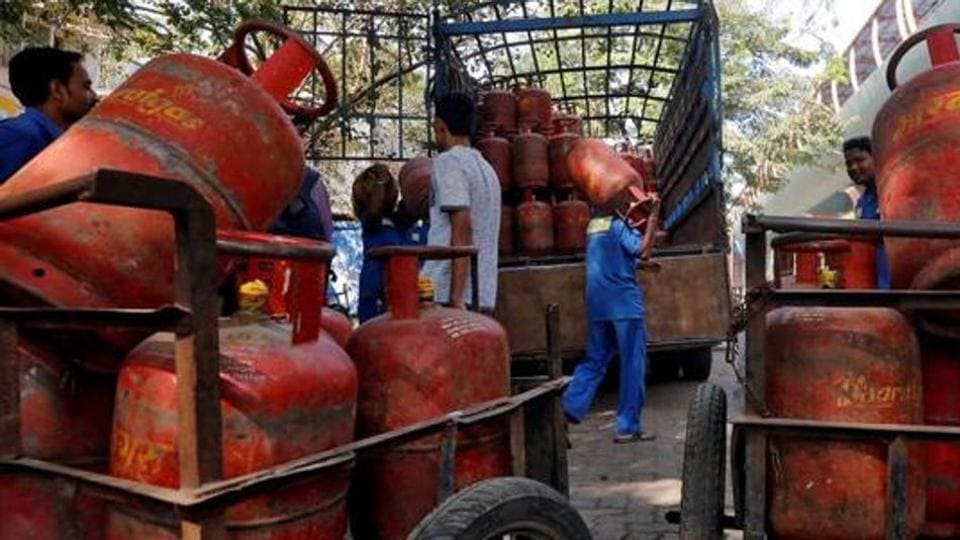
The survey covered 17 states and five union territories. The five states where less than 45% households use clean fuel for cooking are Assam (42.1%), Bihar (37.8%), Meghalaya (33.7%), Nagaland (43%) and West Bengal (40.2%), according to the data.
The NFHS-5 (2019-20) was conducted in 6.1 lakh sample households to collect information on population, health, family planning and nutrition-related indicators from the 22 states and union territories.
According to the data, over 80% of households use clean fuels in Andhra Pradesh (83.6%), Goa (96.5%), Mizoram (83.8%) and Telangana (91.8 %). Electricity, LPG or natural gas and biogas are considered as clean fuel in the survey.
The survey also showed that the use of clean fuel increased in all the 22 surveyed states and UTs in comparison to NFHS-4 (2015-16).
It found that over 70% of the population in 16 states are living in households that use an improved sanitation facility.
Lakshadweep (99.8%) and Kerala (98.7%) have the highest percentage of population living in households with an improved sanitation facility, while Bihar (49.4%) and Ladakh (42.3%) have the lowest, the survey said.
It found that almost all the surveyed households are using iodised salt.
Over 90% of the population was living in households with electricity, and more than 70% with improved drinking water sources in the surveyed states and UTs, according to the data.
The NFHS results of 17 states and five UTs (Assam, Bihar, Manipur, Meghalaya, Sikkim, Tripura, Andhra Pradesh, Andaman and Nicobar Islands, Gujarat, Himachal Pradesh, Jammu & Kashmir, Ladakh, Karnataka, Goa, Maharashtra, Telangana, West Bengal, Mizoram, Kerala, Lakshadweep, Dadra Nagar Haveli and Daman & Diu) have been released now as Phase-I. Phase-II, which will cover other states, will be released next year, the health ministry has said.


