
 E-Paper





Neeraj Chauhan is a senior journalist with Hindustan Times and an investigative reporter specialising in national security, terrorism, organised crime, narcotics, corruption, financial crime and complex investigations. With over 21 years of experience across Hindustan Times, The Times of India, The Indian Express and The Pioneer, he has built deep expertise in India’s internal security and law-enforcement landscape. Neeraj has extensively covered India’s principal investigative, intelligence and security agencies, including the NIA, CBI, ED, IB, R&AW, MHA and other central security forces. His work has included deeply reported investigations into terrorism, terror financing, cross-border crime, narcotics trafficking, cybercrime, financial fraud and political and corporate corruption. He has reported on some of the most significant terror attacks and security developments in India over the past two decades, including the Delhi serial blasts, the 26/11 Mumbai attacks, the 2019 Pulwama terror attack and the recent Pahalgam attack. His reporting has also chronicled the rise and decline of the Indian Mujahideen, the activities and subsequent crackdown on the Popular Front of India (PFI), Islamist extremist networks, the conflict in Jammu and Kashmir, insurgencies in the Northeast and Maoist violence. Some of Neeraj’s major breaking stories are in Aryan Khan drug case, Sushant Singh Rajput suicide, interception of a 3,000-kg Afghan heroin consignment worth about ₹21,000 crore at Mundra port, Sri Lanka easter bombings, Aarushi-Hemraj murders in Noida, 2G scam, coal block allocation scam, AgustWestland VVIP chopper deal and major bank frauds and extradition cases involving Mehul Choksi, Nirav Modi and Vijay Mallya. His reporting is marked by an ability to cultivate sources, analyse confidential and complex documents, and follow investigations over several years—from the initial breakthrough to chargesheets, trials and international legal proceedings. He specialises in making complicated security and investigative developments accessible while examining their wider implications for governance and public policy. A Chevening South Asia Journalism Programme Fellow at the University of Westminster, Neeraj also spent time at the Financial Times as part of the fellowship. He was also a Robert Bosch Media Ambassadors India-Germany Fellow, studying at the University of Tübingen and working with Der Tagesspiegel in Berlin. He has previously taught investigative journalism and crime reporting as a guest faculty member at the Times School of Journalism. Over more than two decades, Neeraj has established himself as an authoritative voice on India’s national security and investigative landscape, with his reporting closely followed by officials, investigators, lawyers, policymakers and readers seeking insight into some of the country’s most complex and consequential developments.
VanDyke never raised concerns in India: NIA chief rejects US national’s Tihar abuse claims
US national Matthew VanDyke alleged he was beaten and denied medical care during his nearly six-month stay in Tihar jail after his arrest in March.


The National Investigation Agency (NIA) on Friday rejected allegations of mistreatment levelled by US national Matthew VanDyke, who alleged he was beaten and denied medical care during his nearly six-month stay in Tihar jail, with the agency’s director general Rakesh Aggarwal saying VanDyke had never “raised the allegations while in India”.
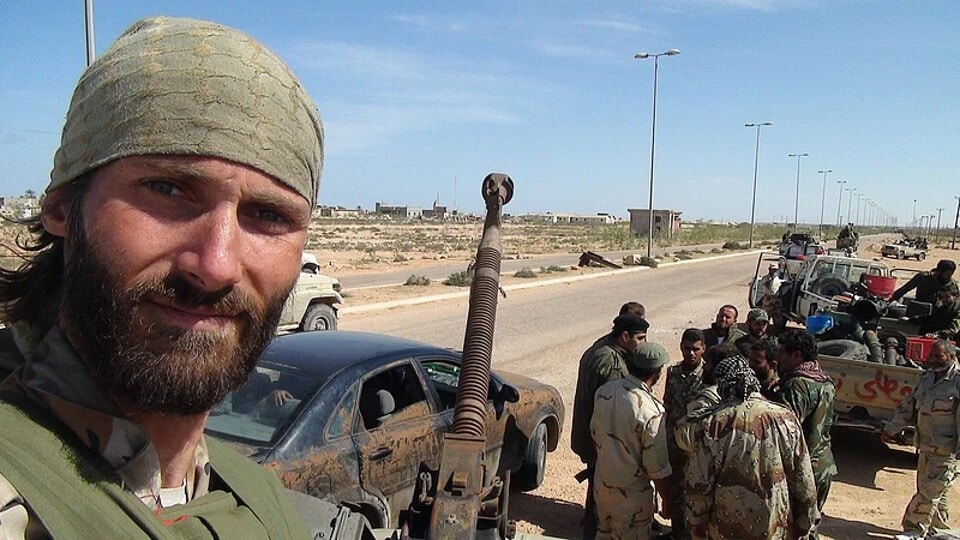
VanDyke, through a series of posts on X, had recently alleged that he was arrested in India in March this year as part of Russia’s war against Ukraine. He also claimed that while lodged in Tihar jail for nearly six months, he faced mistreatment in the form of beatings and was not provided with medical care. He has indicated that he would disclose more details about his incarceration at a later stage.
“He has made these allegations (referring to mistreatment) regarding his time in judicial custody, not against the NIA. During the course of investigation, he appeared before the court six-seven times. He never made these allegations then,” NIA director general Aggarwal told HT while addressing the media in Delhi at the end of the two-day counter-terrorism conference on Friday.
ALSO READ | US national Matthew VanDyke allowed to stay out of India until February 24
Aggarwal added that, in fact, after getting bail in September, VanDyke had returned from the US once to attend the court proceedings.
The NIA arrested VanDyke and the six Ukrainians on March 13. It alleged that they entered Myanmar through Mizoram without valid travel documents and trained members of ethnic armed groups, including the Chin National Front and the Kachin Independence Army, for nearly three months in drone operations, assembly and jamming technology.
The agency initially invoked provisions of the Unlawful Activities (Prevention) Act (UAPA), but did not include them in its charge sheet. The seven were charged under Sections 21 and 23 of the Immigration and Foreigners Act, which provide for compoundable offences.
ALSO READ | US national Mathew Vandyke appears before Delhi court in Myanmar arms training case
When asked about the UAPA charges, Aggarwal said, “They came to India on a valid visa but entered Myanmar illegally, where they trained certain insurgents some of whom are suspected to be IIGs (Indian insurgent groups). So far, it has been proven that they came on valid visas to India and entered Myanmar illegally. This part of the investigation is complete and a charge sheet has been filed. The second part of the investigation is being carried out to know exactly who are IIGs trained by them. Unless we are unable to identify the persons who were trained by them, it will not be possible to charge them under the UAPA. So, further probe is going on. There is a lot of data (being analysed) and we have to establish the identity of insurgents.”
A Delhi court last month allowed US national Matthew VanDyke to return to his home country until February 24 next year.
Asked if he (VanDyke) would now return to India after making the Tihar jail allegation, Aggarwal said that if he did not, “the law will take its course.”


