
 E-Paper





Neeraj Chauhan is a senior journalist with Hindustan Times and an investigative reporter specialising in national security, terrorism, organised crime, narcotics, corruption, financial crime and complex investigations. With over 21 years of experience across Hindustan Times, The Times of India, The Indian Express and The Pioneer, he has built deep expertise in India’s internal security and law-enforcement landscape. Neeraj has extensively covered India’s principal investigative, intelligence and security agencies, including the NIA, CBI, ED, IB, R&AW, MHA and other central security forces. His work has included deeply reported investigations into terrorism, terror financing, cross-border crime, narcotics trafficking, cybercrime, financial fraud and political and corporate corruption. He has reported on some of the most significant terror attacks and security developments in India over the past two decades, including the Delhi serial blasts, the 26/11 Mumbai attacks, the 2019 Pulwama terror attack and the recent Pahalgam attack. His reporting has also chronicled the rise and decline of the Indian Mujahideen, the activities and subsequent crackdown on the Popular Front of India (PFI), Islamist extremist networks, the conflict in Jammu and Kashmir, insurgencies in the Northeast and Maoist violence. Some of Neeraj’s major breaking stories are in Aryan Khan drug case, Sushant Singh Rajput suicide, interception of a 3,000-kg Afghan heroin consignment worth about ₹21,000 crore at Mundra port, Sri Lanka easter bombings, Aarushi-Hemraj murders in Noida, 2G scam, coal block allocation scam, AgustWestland VVIP chopper deal and major bank frauds and extradition cases involving Mehul Choksi, Nirav Modi and Vijay Mallya. His reporting is marked by an ability to cultivate sources, analyse confidential and complex documents, and follow investigations over several years—from the initial breakthrough to chargesheets, trials and international legal proceedings. He specialises in making complicated security and investigative developments accessible while examining their wider implications for governance and public policy. A Chevening South Asia Journalism Programme Fellow at the University of Westminster, Neeraj also spent time at the Financial Times as part of the fellowship. He was also a Robert Bosch Media Ambassadors India-Germany Fellow, studying at the University of Tübingen and working with Der Tagesspiegel in Berlin. He has previously taught investigative journalism and crime reporting as a guest faculty member at the Times School of Journalism. Over more than two decades, Neeraj has established himself as an authoritative voice on India’s national security and investigative landscape, with his reporting closely followed by officials, investigators, lawyers, policymakers and readers seeking insight into some of the country’s most complex and consequential developments.
NIA seeks UAE documents, permission to question individuals in Flydubai hijacking attempt probe
NIA chief Rakesh Aggarwal said the agency had sought documents and permission to question individuals in the UAE over the September 30 incident.


The National Investigation Agency (NIA) has sent a mutual legal assistance (MLA) request to the UAE seeking documents and permission to interrogate “certain” individuals there in connection with the September 30 hijacking attempt involving Flydubai flight FZ-1073, in which Indian pilot Smit Machchhar was attacked by his co-pilot, NIA director general Rakesh Aggarwal said on Friday.
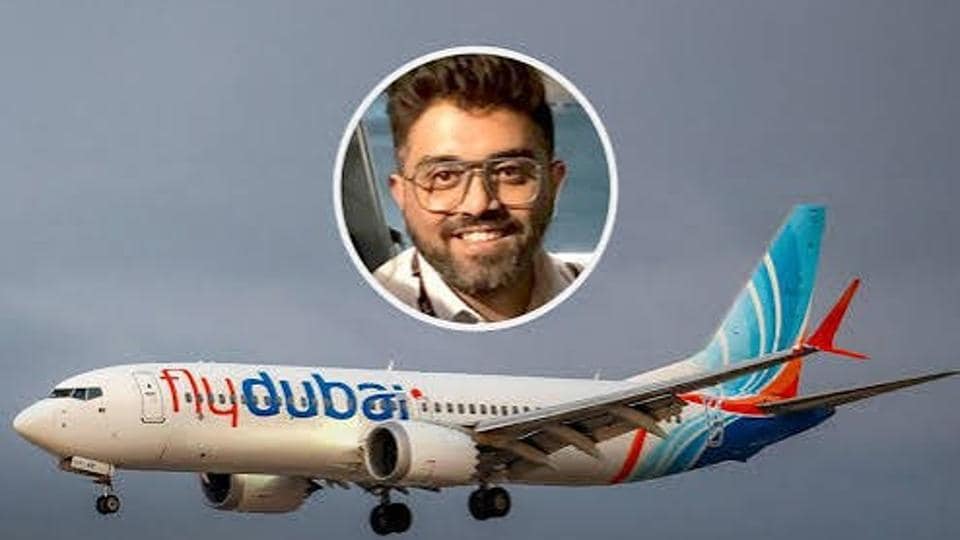
“We have already sent a MLA request to the UAE asking for copies of certain documents and also permission to examine some persons. We are waiting for a response,” Aggarwal told reporters at a media briefing in Delhi at the end of the two-day counter-terrorism conference of the NIA.
“As far as the objective of the investigation is concerned, there are issues related to pilots (including the attacker, identified as Omani national Hamam al-Hammami), like footprints of his friend circle, etc., which we are looking at,” Aggarwal said.
He further added that the agency would move ahead with the probe as soon as it received the documents from the UAE.
On September 30, Smit Machchhar was attacked with the cockpit’s crash axe by his co-pilot, Omani national Hamam al-Hammami, who, according to UAE investigators, attempted to seize control of the Tel Aviv-bound plane. Despite suffering deep cuts to his head and hands, Machchhar unlocked the cockpit door of flight FZ-1073, which had taken off from Dubai, allowing passengers and crew to overpower the attacker. A reserve crew member on board then flew the Boeing 737 MAX 8, with 174 people on board, to an emergency landing in Saudi Arabia.
Hamad Saif al-Shamsi, attorney general of the UAE, said in a statement in October that al-Hammami was radicalised while studying in Australia. The attacker, al-Shamsi said, drew inspiration from the 9/11 terrorist attacks of 2001. After hijacking the plane, his target was the terminal at Ben Gurion Airport in Tel Aviv.
Leaders from across the world, including Prime Minister Narendra Modi and Israeli Prime Minister Benjamin Netanyahu, have praised Machchhar for averting a “9/11-like tragedy”. Israel had announced that it would honour Machchhar with the Presidential Award for Civilian Heroism for his “sheer bravery and sound professionalism” in averting a catastrophe.


