E-Paper



In new policy, MP plans cow sanctuaries in forests
Madhya Pradesh plans to develop 10 cow sanctuaries on forest land, accommodating over 50,000 cows, as part of a new initiative for cow welfare in the state. The move is likely aimed at the upcoming elections. The government also plans to increase the budget for cow fodder and develop products such as cow-dung paint, cow urine phenyl and compressed natural gas. The state has 850,000 stray cattle, of which nearly 350,000 are in cow shelters. The government aims to lodge all stray cows in the shelters and has issued a toll-free number for the treatment of animals in emergency situations.

 Prefer HTon Google


The Madhya Pradesh government is set to develop 10 cow sanctuaries, all called Gauvansh Vihar, on forest land, chief minister Shivraj Singh Chouhan said on Friday.
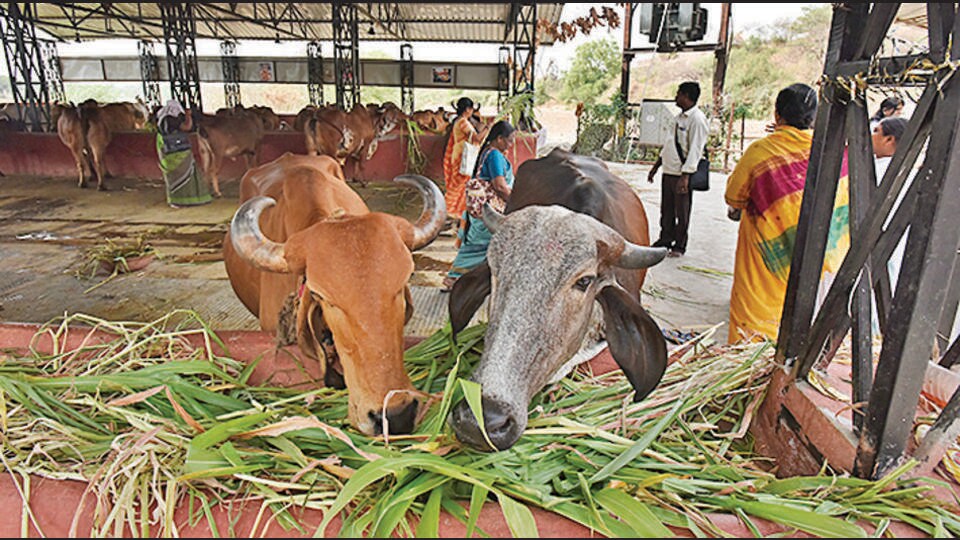
Speaking at the Gau Raksha Sankalp Sammelan organised by the state’s BJP government in Bhopal, the CM announced several initiatives for cow welfare in the state in a move likely aimed at the elections. Madhya Pradesh goes to polls later this year.
“10 Gauvansh Vihar will be developed on 6,700 sq km forest area to accommodate more than 50,000 cows. Some big cow shelters will be developed to accommodate stray cows of at least 3-4 panchayats,” the CM said.
An official familiar with the details of the plan said the state has no dearth of forest land for cows. “The state has over 94,000 sq km of forest area of which 63,000 sq km is reserved forest. We don’t have any shortage of forest land for cows,” the officer, who was instrumental in framing the new policy, said requesting anonymity.
A state administrative officer will be appointed in every district for cow protection and making cow shelters self-reliant, the officer said.
Speaking at the gathering, the chief minister said the cow sanctuaries and shelters will be run with financial support from locals.
According to a 2018 survey, the state has 850,000 stray cattle, of which nearly 350,000 are in cow shelters. Through the latest initiative, the government plans to rid the streets of all stray cows by lodging them in the shelters.
The CM, who heads the state cow protection board, said that the budget for cow fodder will also be increased.
In its budget for 2023-24, the state earmarked ₹192 crore for the upkeep of 300,000 stray cows living in cow shelters.
The new policy will have the provision for making products such as cow-dung paint, cow urine phenyl and compressed natural gas, and these products will be used by government departments, the CM said.
Chouhan also flagged off 406 ambulances for treatment of cows and other animals. These ambulances will be equipped with veterinarians and assistants.
The government has also issued a toll-free number for the treatment of animals in emergency situations.
The CM also said that more than 23,000 Gau Sevaks (cow volunteers) will be appointed and they will get ₹900 per month.
Congress spokesperson KK Mishra said, “After 2020, BJP government came up with several announcements for cow just for electoral gains. They hardly did anything in the past three years to improve condition of cows in MP. These are old tactics of BJP to campaign on cows and religion before election. This time it will not work.”