
 E-Paper



Manipur: Naga student bodies oppose directive on singing Vande Mataram in institutions
The new protocol aims to ensure uniformity and proper decorum in the observance of the National Song at official events across the country

 Prefer HTon Google


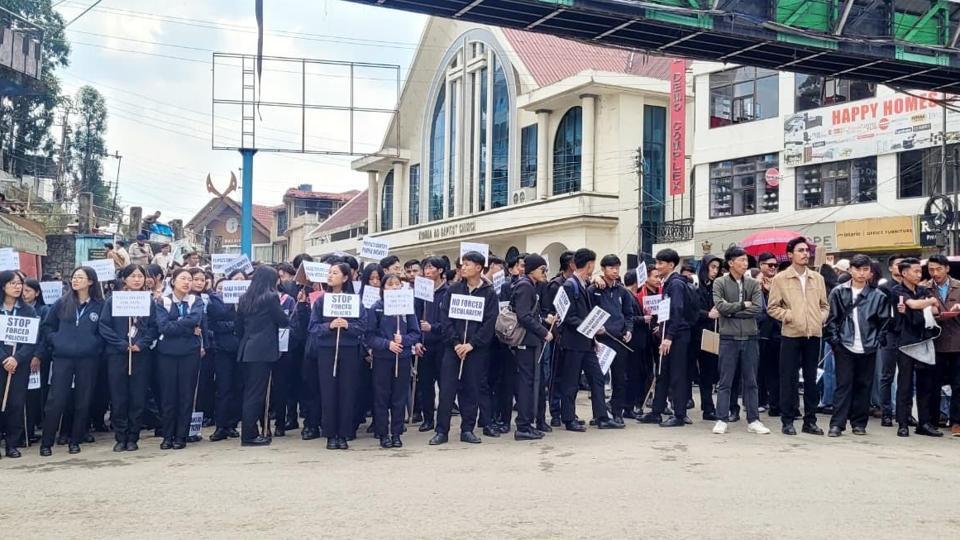
The All Naga Students’ Association Manipur (ANSAM) and the Senapati District Students’ Association (SDSA) have expressed strong opposition on the directives of the Ministry of Home Affairs mandating ‘Vande Mataram’ song prior to national anthem ‘Jana Gana Mana’ during official events and in all educational institutions.
According to the Centre’s notification last month, the MHA guidelines seek to standardise the ceremonial status of Vande Mataram, originally written by Bankim Chandra Chatterjee, and clarify the occasions on which it must be played or sung, along with the decorum to be observed by the public.
The new protocol aims to ensure uniformity and proper decorum in the observance of the National Song at official events across the country.
A statement issued by ANSAM, a Naga body, on Monday expressed “profound concern and categorical opposition” to the directives, describing it as an attempt to impose symbolic conformity without considering the historical and political sensitivities of the Naga people.
“ANSAM termed such an instruction to formulate and promulgate without due cognisance of the historical and political sensitivities of the Naga people, representing an ill-conceived attempt to impose symbolic conformity upon a society whose identity and historical consciousness are both distinct and deeply rooted”, the statement stated.
Also Read: Naga student body opposes Centre’s directive on Vande Mataram in schools
Acknowledging the constitutional framework of the Indian Union, including the obligations enshrined under Article 51A(a), ANSAM stated that it must be unequivocally emphasised that constitutional provisions cannot be interpreted as instruments of coercion.
“Educational institutions must remain citadels of intellectual liberty, moral discernment and critical inquiry. They cannot, and must not, be reduced to arenas for the enforcement of symbolic allegiance through administrative decree”, the Naga students’ body stated.
ANSAM cautioned all administrative authorities, educational boards and institutional heads operating within the Naga areas of Manipur to refrain from implementing any measure that compels the singing or observance of Vande Mataram in contravention of the sentiments and historical realities of the Naga people. Any unilateral attempt to enforce such directives will inevitably be regarded as a disregard for the collective dignity and sovereign rights of the Nagas, the release mentioned.
The association further directs all constituent units and subordinate units under its jurisdiction to maintain vigilant oversight within their respective institutions and jurisdictions. Instances of coercion, administrative excess or forced compliance must be meticulously documented and brought to the attention of the Association without delay, it mentioned.
Meanwhile, in a separate statement issued on the same day, SDSA another Naga students’ body also rejected forceful imposition of the Indian National song, Vande Mataram in educational institutions
The students’ body described the directive of the MHA as “forceful imposition” on mandating the Indian National song, Vande Mataram, be played or sung before the national anthem, Jana Gana Mana, during specific high-level official functions and impose the same on educational institutions.
It stated that while respecting the cultural and historical significance of both songs, the SDSA strongly opposed the imposition of the revised Indian National song, vande mataram, which carries deep religious and devotional connotations, in violation of the Naga peoples’ beliefs and conscience.
The SDSA urged the school authorities and administrators to refrain from implementing these guidelines within the District. And cautioned any attempt to enforce the mandate will be viewed as a violation of the community’s rights, liberty and will not be tolerated. Failure to comply will result in stringent actions against those involved, the student body warns.
SDSA appealed to the MHA to reconsider the directives and engage with diverse communities to foster a more inclusive approach that honours the richness of the sub continent cultural landscape. The student body stated to remain committed to promoting unity while safeguarding its distinct heritage.


