
 E-Paper



Mapping Metro lines criss-crossing India
Since the first metro line, which connected Esplanade and Bhowanipore in Kolkata (then Calcutta) in 1984, to the latest Aqua Line inaugurated in January to connect Noida to Greater Noida in Uttar Pradesh, the metro has come a long way as a viable public transportation system.


Since the first metro line, which connected Esplanade and Bhowanipore in Kolkata (then Calcutta) in 1984, to the latest Aqua Line inaugurated in January to connect Noida to Greater Noida in Uttar Pradesh, the metro has come a long way as a viable public transportation system.
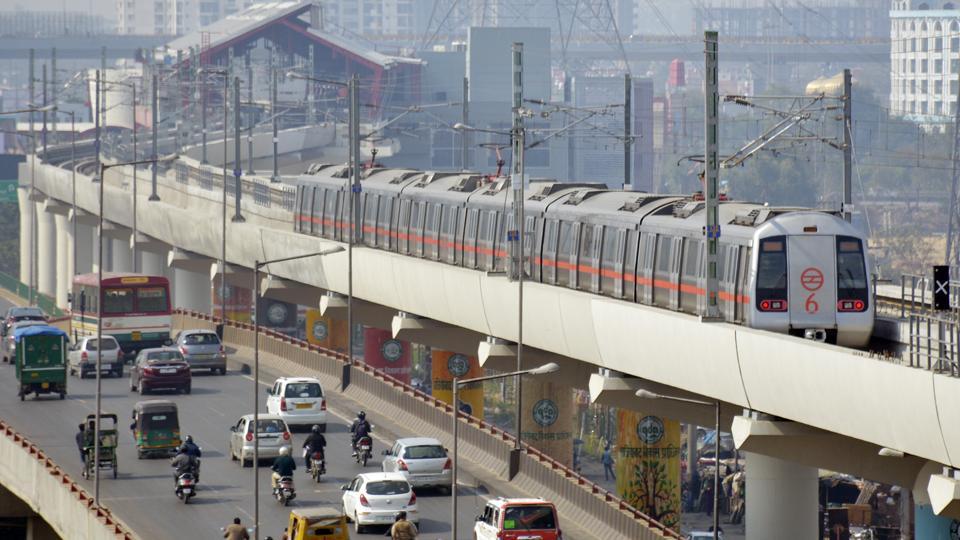
Last Thursday, the Union Cabinet Committee on Economic Affairs approved two new metro projects, in Kanpur and Agra. This will bring up the total number of approved projects to eight.
With over 326 km that have been made operational in the last five years, and 373 km in the pipeline, the metro — part of what is known as Mass Rapid Transport System that aims to provide urban commuters an alternative to private transportation — is changing the face of tier-1 and tier-2 cities across the country.
Already, lakhs of people use the metro in 10 cities, including Lucknow, Delhi and Kochi. At least ₹40,509 crore will be spent to build metro lines in first-time cities such as Nagpur, where recently, a memorandum of understanding was signed to make broad gauge railway lines metro-ready.
However, according to former head of the Delhi Metro Rail Corporation Elattuvalappil Sreedharan, known as ‘Metro Man’, the metro still has a long way to go.
Sreedharan, who was the deputy chief engineer in the first metro line built in Kolkata in 1984, said that compared to China, India’s pace of adding metro lines to its cities is “painfully slow”.
“While China is building metros at the rate of 300 km per year, India’s performance is only 25 km [per year]. For a country like India with 16 cities with more than three million population and another 20 cities with more than two million population, the metro is undoubtedly the best choice for urban transport. Metros are environmentally friendly, safe, reliable, punctual and comfortable and yet, we are slow to realise the need and benefits of a metro system to our cities. I feel sad about this,” he said.
The Metro Rail Policy, approved in 2017, stipulated that the central government will approve and aid metro rail projects only if they have private sector participation.
“Indian government still feels that the metro rail is a state subject rather than the centre’s responsibility. Centre’s investment in a metro has been limited to 20% whereas the state governments are required to shoulder a much higher share. All the operation losses [and loan repayments] are to be borne by the states,” Sreedharan said.
As per the policy, states must make the metro self-sustaining, enhance other kinds of mass rapid transport systems, such as monorails or buses, and provide last mile connectivity, between the metro station and the commuter’s destination.

For 54-year-old Rampyari Kumari, a Noida-based domestic help who travels to Gurugram to meet her family over the weekend, while the ticket cost is high, she still considers the metro the most convenient way of making the trip.
“The new line that has opened from Noida’s Botanical Garden has cut the travel time by half and it costs about ₹70-80,” she said. Earlier, she would take over two hours to reach Gurugram by metro, followed by a trip in a tempo.
But for many, this cost is prohibitive, especially if it has to be shelled out daily.
According to a 2018 Centre for Science and Environment report, Delhi is the second most unaffordable metro system globally.
Following the 2017 fare revision, there was a 46% drop in ridership. The report also found that 30% of the commuters in Delhi spent 19.5% of their total income on daily commute.
The report calculated the total journey cost of customers, and not just the cost of the metro ticket.
Transport expert and chairman of Mumbai Environmental Social Network Ashok Datar questions whether the metro should be made in every city.
“Apart from the big metropolitans there are other 3-4 smaller cities Lucknow, Jaipur and Kochi which have an extraordinarily poor performance where the ridership is less than 50,000 per day which is around the same as buses. The new metro policy states that there needs to be ridership of at least 30,000 passengers in each direction; there are 8 lines in Delhi out of which only 2 lines meet this specification. We need to seriously think whether it is the right idea to have metros in every city,” he said.


