E-Paper



Mark separate triage area for flu-like cases: Health ministry to non-Covid hospitals
The guidelines issued by the ministry are meant for health-care workers and others working in non-Covid hospitals and non-Covid treatment areas of hospitals that have Covid blocks.


The Union health ministry has directed non-Coronavirus disease (Covid-19) hospitals to identify a separate triage and holding area, away from the main outpatient department (OPD), for patients with influenza-like illnesses, to check the rising cases of health-care workers getting infected by the disease.
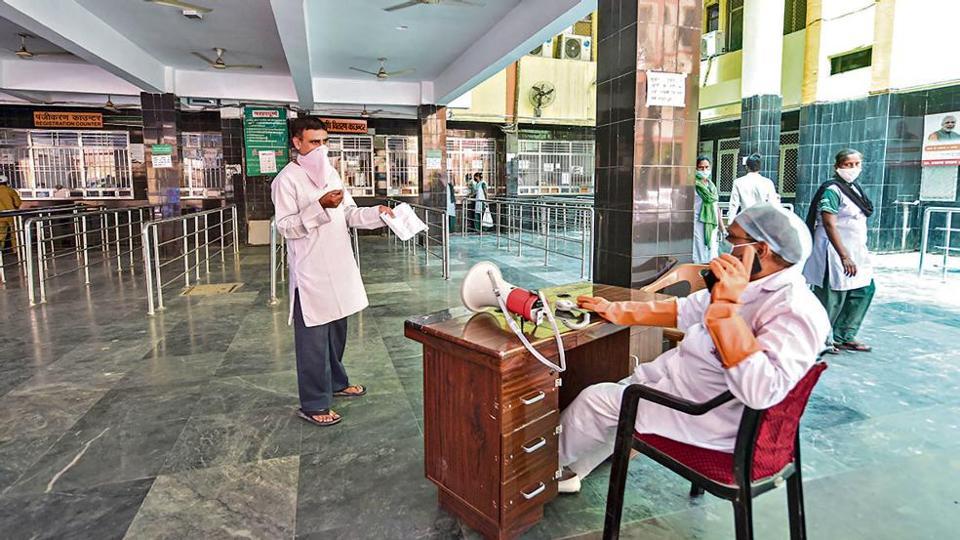
The guidelines issued by the ministry are meant for health-care workers and others working in non-Covid hospitals and non-Covid treatment areas of hospitals that have Covid blocks.
“These are precautionary guidelines that all non-Covid hospitals must follow. Not everyone needs a personal protection equipment (PPE); there has to be a rational use of these kits which is why the ministry has explained in great detail as to where all PPE kits, especially the entire set, is required to be worn mandatorily,” said a senior health ministry official, requesting not to be identified.
In the past, there have been instances of spread of infection reported from a few non-covid hospitals such as Delhi State Cancer Institute in Delhi, Brijesh Banger Memorial Hospital in Bhilwara Rajasthan, or Mumbai’s Wockhardt Hospital among others
There is a need for rational use of PPE kits based on the risk profile of the health-care worker, says the health ministry.
Technical teams working on the guidelines divide the risk profile into three categories--mild, moderate and high, wherein mostly those working in the high-risk areas need to wear the entire PPE set comprising N-95 mask, coverall, goggle, latex examination gloves and shoe cover.
As per the guidelines, all areas in the OPDs and in-patient departments (IPDs) fall under the mild to moderate categories, with N-95 masks , goggles, latex examination gloves and face shields being enough to handle patients. Even sanitation workers, who clean frequently touched surfaces, floors, and change linen, have a low risk profile that needs them to wear triple-layer medical masks and latex examination gloves.
The area in the hospital that would require healthcare workers to wear the entire PPE set because of the high risk of contracting infection is when attending to severely ill patients while performing aerosol generating procedures in the emergency department. Also, wearing a PPE set is mandated for health-care workers when they manage patients of severe acute respiratory infection (SARI) in an ambulance.
“Following overall infection control and prevention guidelines for hospitals is extremely important to reduce the risk of spread of infection. Even if there is a case reported from a hospital, the health ministry has earlier issued detailed do’s and don’ts that must be followed,” the official cited above added.
The ministry has also been reiterating the fact there was no shortage of PPE kits in India, and domestic manufactures have begun manufacturing the kits that will soon help in matching the country’s requirements.
The total projected demand for PPE kits till June has been estimated to be 20.10 million. Orders to the tune of 22.20 million have already been placed, of which orders for about 14.20 million have been placed with domestic manufacturers, and 8 million kits are being imported.